
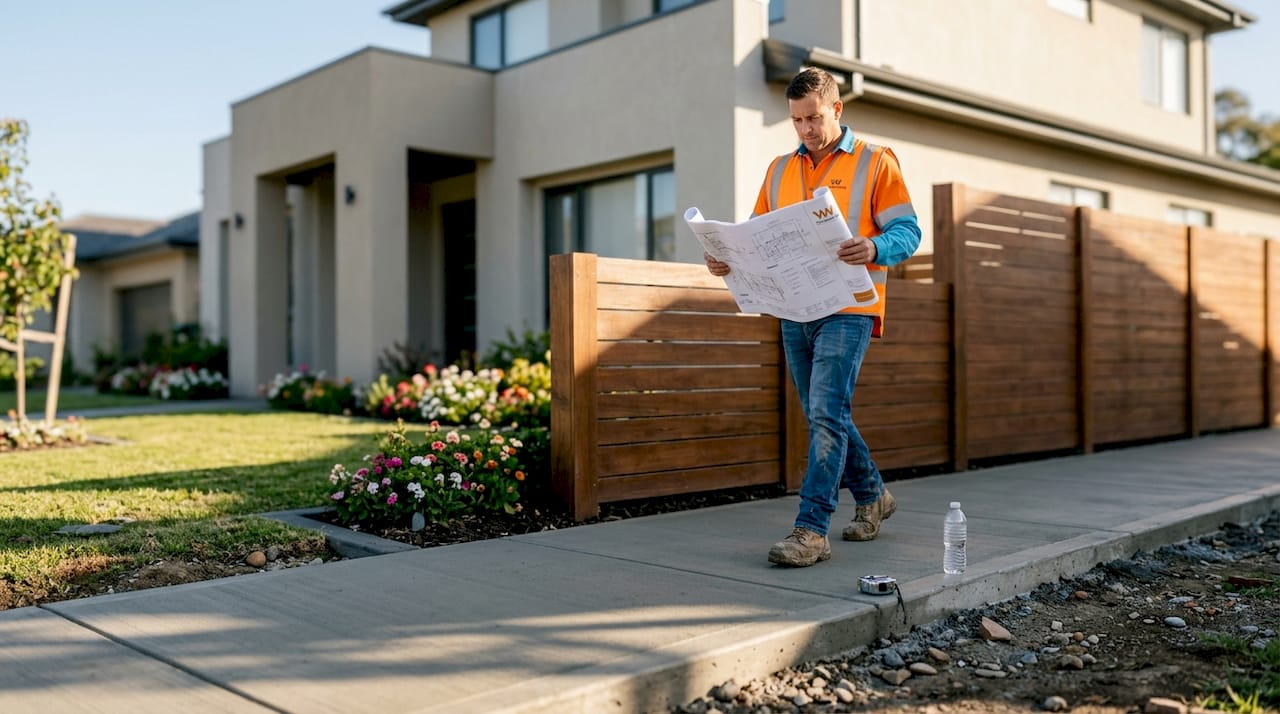
Most builders treat fencing and concreting as two separate line items. You pour the slab, move on, then schedule the fence crew weeks later as an afterthought. That sequencing costs you money, creates rework, and leaves structural performance on the table. Understanding why fencing complements concreting means recognizing that these two trades share load paths, moisture exposure, and design intent. When coordinated properly, they reinforce each other in ways that improve durability, reduce long-term maintenance, and deliver stronger outcomes for clients.
Table of Contents
- Key takeaways
- Why fencing complements concreting structurally
- Installation methods for fencing on concrete surfaces
- Project sequencing and site coordination
- Design and durability for concrete fencing systems
- How fencing enhances concrete project appeal
- What I have learned from integrating fencing and concrete on site
- Concrete and fencing done right with VW Concreting
- FAQ
Key takeaways
| Point | Details |
|---|---|
| Concrete extends fence lifespan | A concrete base prevents fence failure by blocking moisture and pest intrusion, which cause 80% of fence deterioration. |
| Surface mounting expands options | Base plates let you anchor fencing to existing slabs without digging footings, opening up patios, rooftops, and hardscaped areas. |
| Sequencing prevents rework | Coordinating formwork, steel, and fencing under one program reduces costly delays and structural conflicts on site. |
| Design details determine durability | Proper copings, drip edges, and material selection protect both the fence and the concrete surface from water damage over time. |
| Integration lifts property value | Fencing combined with concrete improves privacy, safety, and the overall appeal of any outdoor construction project. |
Why fencing complements concreting structurally
The relationship between fencing and concrete is fundamentally about load management and moisture control, not just how the finished project looks. This is the part most contractors miss.
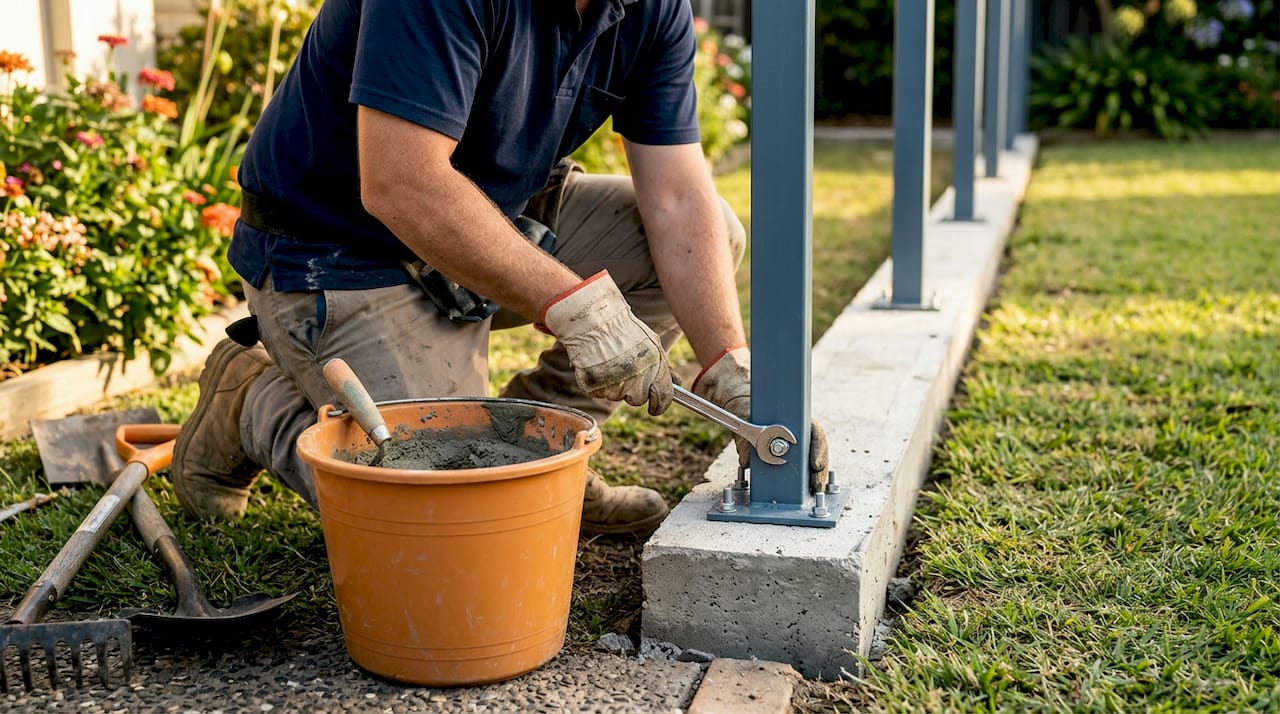
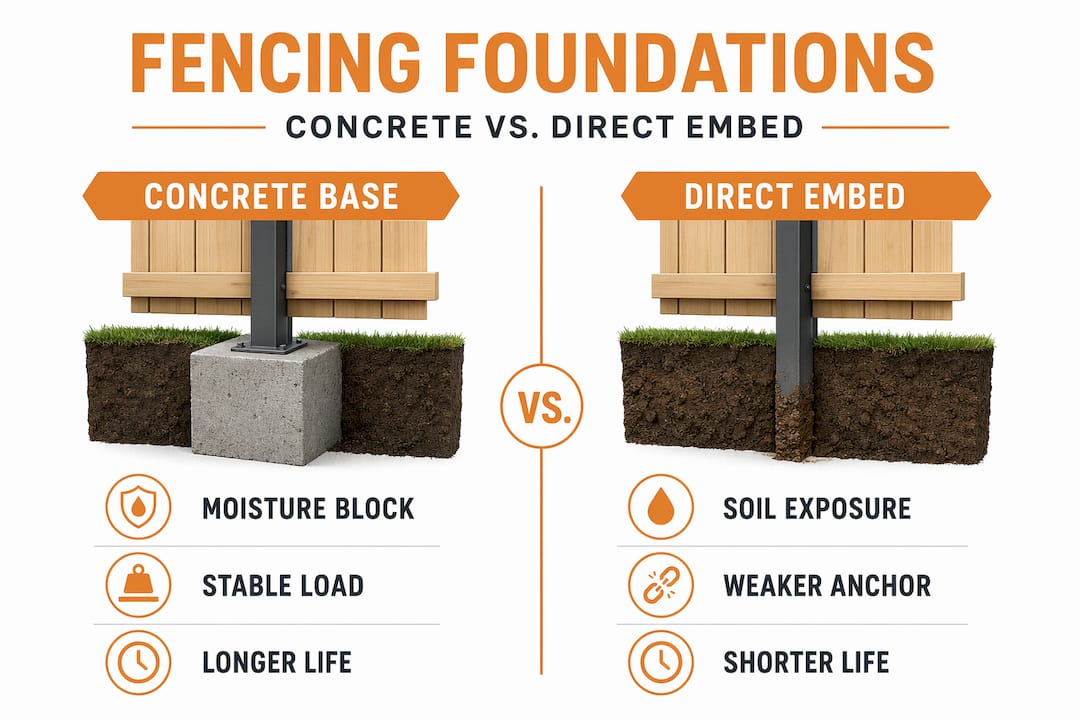
When a fence post sits directly in soil or an undersized footing, wind loads transfer into the ground inconsistently. Rain saturates the timber or steel at the base, and the rot or corrosion cycle begins. Concrete fence bases address both problems at once. They act as a physical barrier against burrowing animals and standing water, and they provide a rigid anchor point that distributes lateral loads more predictably. The data is clear: 80% of fence failures trace back to wood decay at the base, and concrete installation can extend fence lifespan by up to 30%.
Here is what concrete brings to a fencing system structurally:
- Stable anchor base. A concrete footing or slab gives fence posts a consistent surface to bear against, reducing movement under wind and impact loading.
- Moisture barrier. Concrete stops water from pooling around the post base, which is the primary cause of timber decay and steel corrosion in ground-contact installations.
- Pest resistance. Concrete physically blocks termites and burrowing rodents from accessing the post base, a factor that matters significantly in Melbourne’s outer suburban and rural fringe projects.
- Load transfer through anchor bolts. Surface-mounted base plates transfer lateral and vertical loads from fence posts through anchor bolts directly into the concrete slab, maintaining structural integrity without below-grade footings.
Compare this to traditional direct embedment. When a post is buried in soil or a small independent footing, the connection between the fence and the broader structural system is loose. It relies entirely on the strength of that single small footing. Anchor bolts into a proper concrete slab create a distributed connection across a larger mass of cured concrete, which is inherently more resistant to racking and uplift.
Pro Tip: When specifying concrete for fencing anchors, target a minimum compressive strength of 25 MPa and a slab thickness of at least 100mm. Thinner or weaker concrete will not hold anchor bolts under sustained wind loading.
Installation methods for fencing on concrete surfaces
Knowing the benefits of combining fencing and concrete is useful. Knowing how to actually execute it on site is what separates a good outcome from a callbacks job.
There are two primary methods for fencing installation with concrete, and the right choice depends on your site conditions and project type.
-
Surface-mount base plates on existing slabs. This is the preferred method when you have an existing concrete slab and cannot or should not dig into it. Base plates bolt to the slab with anchor bolts, and steel posts attach to the plates above the surface. This works well on patios, pool decks, rooftops, and commercial hardscape areas. The advantage is speed and minimal disruption. The limitation is that your slab must be structurally sound. Cracked, spalled, or undersized concrete will not hold the anchors reliably.
-
Pillar-mounted fencing on masonry columns. When your project includes concrete or masonry pillars, the fencing frames attach directly to those columns using masonry fasteners and side channels. This shifts the load path away from steel posts entirely. The masonry column carries the lateral forces, which requires custom detailing of spans and anchor schedules. It is a clean solution architecturally, but it demands more upfront engineering coordination.
-
Cast-in anchors during the concrete pour. On new construction, you can cast post anchors or base plate embeds directly into the slab or footing while the concrete is still wet. This produces the strongest possible connection because the anchor becomes part of the concrete mass itself. It requires precise layout before the pour and tight coordination between your concrete and fencing trades.
-
Independent footings alongside slabs. Where post loads are high and the existing slab is not suitable for surface mounting, you can core through the slab or pour independent post footings adjacent to it. This is common on exposed timber boundary fences next to driveways.
Pro Tip: Before specifying surface-mount base plates on any existing slab, test the concrete substrate for cracks, spalling, or insufficient thickness. Poor substrate conditions will compromise anchor hold strength. A rebound hammer or core test takes 30 minutes and can prevent a costly installation failure.
Project sequencing and site coordination
Here is where many builders lose time and money. Fencing and concreting feel like separate packages, so they get scheduled separately. The fence contractor shows up after the slab is poured, realizes the anchor positions conflict with the slab edge or the reinforcement layout, and suddenly you are cutting rebar or adding patches.
Treating formwork, steel fixing, and fencing as one coordinated program identifies these sequencing risks before they become site problems. That means getting your fencing subcontractor into the design conversation during the documentation phase, not after the slab is cured.
Key site coordination practices that deliver better results:
- Mark anchor positions on formwork drawings. If cast-in anchors are required, their positions must be confirmed before the pour. Even a 50mm error in placement can push a post out of alignment with a gate or boundary setback.
- Review slab thickness at fence lines. Slabs often taper toward edges. If your fence line runs near a slab edge or a thickened edge beam, the anchor bolt embedment depth needs to account for actual thickness at that specific location.
- Align cure schedules with fencing start dates. Concrete needs sufficient strength before anchor bolts can be torqued to specification. On most projects, this means a minimum of seven days after the pour. Rushing this step causes anchors to pull out under the first wind load.
- Document the handover between trades. When the concrete crew signs off and the fencing crew takes over, any variations in the slab surface, anchor positions, or substrate quality should be noted. Undocumented conditions become disputes later.
The risk of ignoring sequencing is not just delay. Structural issues, remediation costs, and client dissatisfaction compound quickly on projects where two trade packages compete for the same physical space.
Design and durability for concrete fencing systems
Concrete masonry fences deliver privacy, security, sound insulation, and durability when they are designed and built correctly. The word “correctly” carries more weight than most builders give it.
Fences are exposed to weather on both faces. That means rain, UV, freeze-thaw cycling, and differential moisture movement all act on the same structure simultaneously. Material selection and structural design need to account for this exposure class from the start.
Key design and maintenance factors that extend service life:
- Copings and drip edges. Properly designed copings with a minimum 12mm projection create a drip edge that directs water away from the fence face. Without this detail, water runs down the face of the concrete or masonry, causing staining and long-term surface degradation.
- Integral water repellents. Incorporating water repellents into masonry units during manufacture reduces efflorescence and slows moisture penetration. This is a cost-effective way to add durability at the material specification stage.
- Inspection cycles. Schedule visual inspections of concrete bases and anchor plates every two years on commercial installations. Look for spalling, cracking around bolt heads, and any separation between the base plate and the slab surface.
- Sealant at base plate interfaces. On surface-mounted installations, apply a compatible sealant around the base of the base plate where it meets the slab. This prevents water from tracking under the plate and sitting in contact with the anchor bolts.
| Design element | Purpose | Failure mode if ignored |
|---|---|---|
| Coping with drip edge | Directs water off fence face | Surface staining, water penetration |
| Integral water repellent | Reduces moisture ingress in masonry | Efflorescence, freeze-thaw damage |
| Anchor bolt sealant | Seals base plate to slab interface | Bolt corrosion, anchor loosening |
| Correct slab thickness | Provides anchor embedment depth | Anchor pullout under wind load |
How fencing enhances concrete project appeal
The functional and aesthetic advantages of combining fencing with concrete are most visible in residential and commercial landscaping. This is where clients experience the difference between a coordinated outdoor design and a collection of disconnected elements.
Fencing on retaining walls adds height, privacy, and fall protection without requiring a separate structural foundation, since the wall itself serves as the base. On pool decks and outdoor concrete spaces, frameless glass or aluminum infill panels mounted on concrete create a clean, resort-style boundary that you simply cannot achieve with traditional post-and-rail systems in soil.
The specific use cases where combining fencing and concrete delivers the clearest value include:
- Patios and alfresco areas. Privacy screens on concrete slabs define the space without requiring garden beds or landscaping buffers.
- Commercial screening. Powder-coated steel or aluminum frames bolted to concrete create maintenance-free perimeter screening on warehouses, car parks, and retail sites.
- Rooftop decks. Surface-mounted systems are the only practical option here, and they rely entirely on the slab quality below.
- Driveways and boundary setbacks. Colorbond or timber fencing anchored to a concrete edge beam provides a clean, defined boundary that ties the driveway aesthetic together visually.
The functional appeal of fencing and concreting together extends to sound insulation and security screening on commercial projects, where concrete masonry fences provide measurable acoustic attenuation alongside physical security. For a look at fencing material options suited to concrete-anchored installations, it is worth reviewing the design requirements for your specific site conditions early in the documentation phase.
What I have learned from integrating fencing and concrete on site
I have seen builders skip the substrate check more times than I can count. A crew shows up with base plates, drills into the slab, torques the anchor bolts, and walks away satisfied. Two months later the client calls because posts are rocking after a storm. Every single time, the problem traces back to a slab that was too thin at the fence line, or concrete that was never properly cured before anchoring.
My honest take: the role of fencing in building projects is undervalued because it gets treated as a finishing trade rather than a structural one. When you bring fencing into the design conversation at the documentation stage and coordinate it with your concrete scope, the project runs cleaner, the installation is faster, and the client gets a result that actually holds up.
The technology has improved significantly. Cast-in anchor systems and engineered base plates now give you options that did not exist 10 years ago. But better hardware does not compensate for poor planning. The substrate still has to be right, the sequencing still has to be coordinated, and the design details still have to account for water exposure.
Combining fencing and concrete is not complicated once you treat it as one integrated system rather than two separate jobs. The durability payoff and the finished quality make it worth the extra coordination effort every time.
— Vic
Concrete and fencing done right with VW Concreting
When your project needs concrete and fencing to work as one coordinated system, the quality of the result depends on the team executing both scopes with the same level of care.
VW Concreting has delivered over 145 projects across Melbourne, covering driveways, slabs, retaining walls, fencing, and landscaping. Our team understands how concrete substrate quality directly affects fencing performance, and we coordinate both trades under one plan to prevent the rework and sequencing issues that plague projects managed separately. Explore our completed projects to see how integrated concrete and fencing work looks in practice, or review our concrete retaining wall services for fence-anchored structural applications. If you are scoping driveways or slab work that will support fencing, our driveways and slabs portfolio shows the standard we hold ourselves to on every project.
FAQ
Why does concrete extend the lifespan of a fence?
Concrete acts as a barrier against moisture and pest intrusion at the post base, the two primary causes of fence failure. Research shows 80% of fence failures result from wood decay, and concrete installation can extend service life by up to 30%.
Can you install fencing on an existing concrete slab?
Yes. Surface-mount base plates bolt directly to the slab surface using anchor bolts, eliminating the need for post footings. The slab must be free of cracks or spalling and meet minimum thickness requirements for the anchor embedment to perform reliably.
What is pillar-mounted fencing and when should you use it?
Pillar-mounted fencing attaches fence frames directly to masonry or concrete columns using specialized masonry fasteners, transferring loads through the column rather than steel posts. Use it when your project already includes concrete pillars and a clean architectural finish is required.
How does project sequencing affect concrete and fencing quality?
When fencing and concreting are treated as separate packages, anchor positions conflict with slab layouts and cure schedules get ignored. Coordinating both trades under one program during documentation prevents rework and structural issues on site.
What design details protect a concrete fence from water damage?
Copings designed with a minimum drip edge projection direct water away from the fence face, and integral water repellents in masonry units reduce moisture penetration. Sealant at base plate interfaces prevents water from contacting anchor bolts and accelerating corrosion.
Leave A Comment