
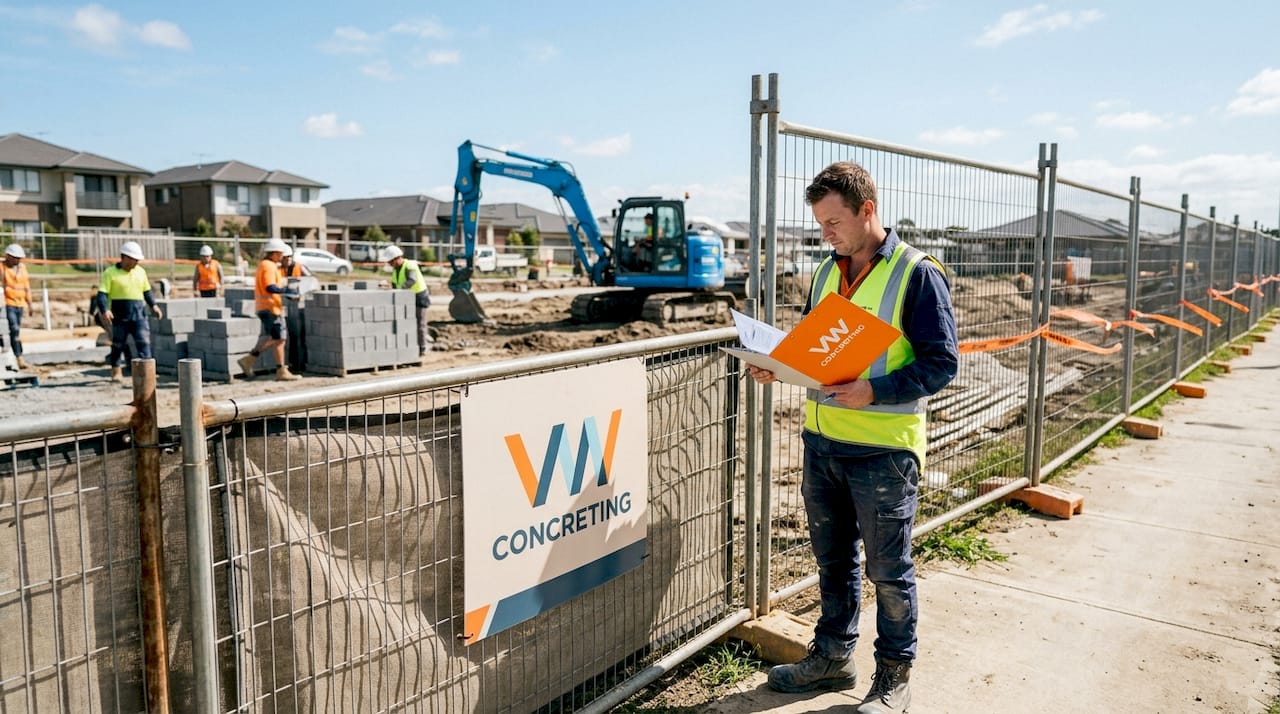
Fencing rarely gets the respect it deserves on a construction site. Most builders and project managers treat it as a line item to sort out later, something you install quickly and forget about until the project wraps. That thinking is expensive. The role of fencing in building projects extends far beyond marking where your site begins and ends. It determines whether your project runs on schedule, whether you face regulatory shutdowns, whether equipment gets stolen overnight, and whether the public and your crew stay safe. This guide breaks down exactly why fencing deserves serious planning attention from day one.
Table of Contents
- Key takeaways
- The role of fencing in building projects: safety and security
- Types of fencing for projects and how to choose
- Regulatory requirements for construction fencing
- Integrating fencing into your building project workflow
- My take on fencing and what most builders get wrong
- How VW Concreting supports your project from site to finish
- FAQ
Key takeaways
| Point | Details |
|---|---|
| Fencing is a safety and legal requirement | Inadequate fencing can trigger OSHA violations, site shutdowns, and costly project delays. |
| Fencing type should match project conditions | Select fencing based on site duration, wind exposure, pedestrian traffic, and security needs. |
| Plan fencing costs early in specs | Include fencing in Division 01/Section 01 56 00 to avoid budget conflicts during the project. |
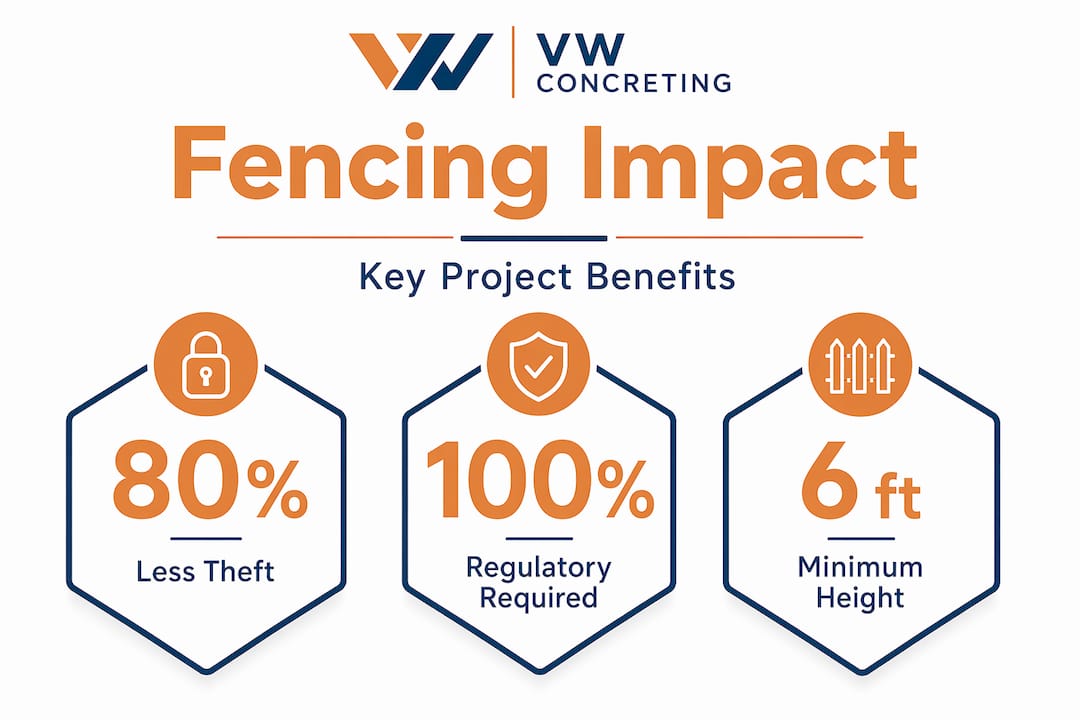
| Security fencing cuts theft significantly | Proper perimeter security can reduce theft by over 80% on high-value construction sites. |
| Fencing shapes your project’s public image | Well-chosen fencing signals professionalism and reduces community complaints about noise and dust. |
The role of fencing in building projects: safety and security
Walk onto any active construction site and the first thing you notice is what the fence is keeping out. Unauthorized pedestrians, curious kids, trespassers looking for materials to take. Construction sites are among the most hazardous environments in any city, and fencing is the physical layer that separates the controlled chaos inside from the public outside.
The numbers back this up hard. Proper security fencing reduces theft incidents by over 80% on high-value projects compared to completely unsecured sites. Think about what that means in practice. Generators, copper wiring, scaffolding components, power tools. These are not cheap items, and they walk off unsecured sites with alarming regularity.
Beyond theft, fencing and site safety are directly connected through liability. If an unauthorized person enters your site and gets injured, the legal exposure is significant. Courts have consistently held that construction companies bear responsibility for foreseeable intrusion, particularly in areas accessible to children. A properly installed perimeter fence is your first documented defense against that liability.
There is also the compliance dimension to consider. OSHA 29 CFR 1926 and equivalent local codes set minimum standards for site enclosure. Sites found to be inadequately fenced face inspector-ordered shutdowns, and inadequate fencing frequently causes costly project delays that far exceed the cost of the fence itself. A shutdown of even two to three days on a commercial build can cost tens of thousands of dollars in idle labor, equipment rental overruns, and schedule penalties.
Pro Tip: Document your fence installation with timestamped photographs before work begins. If a compliance question arises later, that documentation is your proof of due diligence.
Site security also extends to what happens inside the perimeter. Effective site security goes beyond the outer barrier. Internal zoning using secondary fencing controls access to material storage areas, fuel handling zones, and sensitive equipment. This limits who can get to what, reducing both theft risk and accident potential from workers wandering into restricted areas.
Types of fencing for projects and how to choose
Not every construction site needs the same fencing solution. A short-term utility dig on a residential street calls for something completely different than a two-year commercial tower build in a dense urban area. Understanding your options is how you match the right solution to your actual site conditions.
Here is a practical comparison of the main types of construction site fencing:
| Fencing type | Best for | Security level | Relative cost |
|---|---|---|---|
| Chain link | Long-term sites, standard perimeter | Moderate | Low to medium |
| Welded wire anti-climb mesh panels | High-security or high-traffic urban sites | High | Medium to high |
| Temporary panel (crowd control) | Short-term, event or minor works | Low to moderate | Low (rental) |
| Privacy screen fencing | Urban sites, noise and dust sensitive zones | Moderate to high | Medium |
| Post-driven permanent fencing | Long-duration or permanent boundary needs | High | High |
Welded wire anti-climb mesh panels are increasingly the preferred choice over traditional chain link for active builds. They offer superior rigidity, resist climbing far better, and connect modularly without the sag and flex that chain link develops over time. Chain link still meets minimum requirements on many projects, but if your site sits near a school or playground, or if the build carries high-value materials, anti-climb mesh is the smarter call.
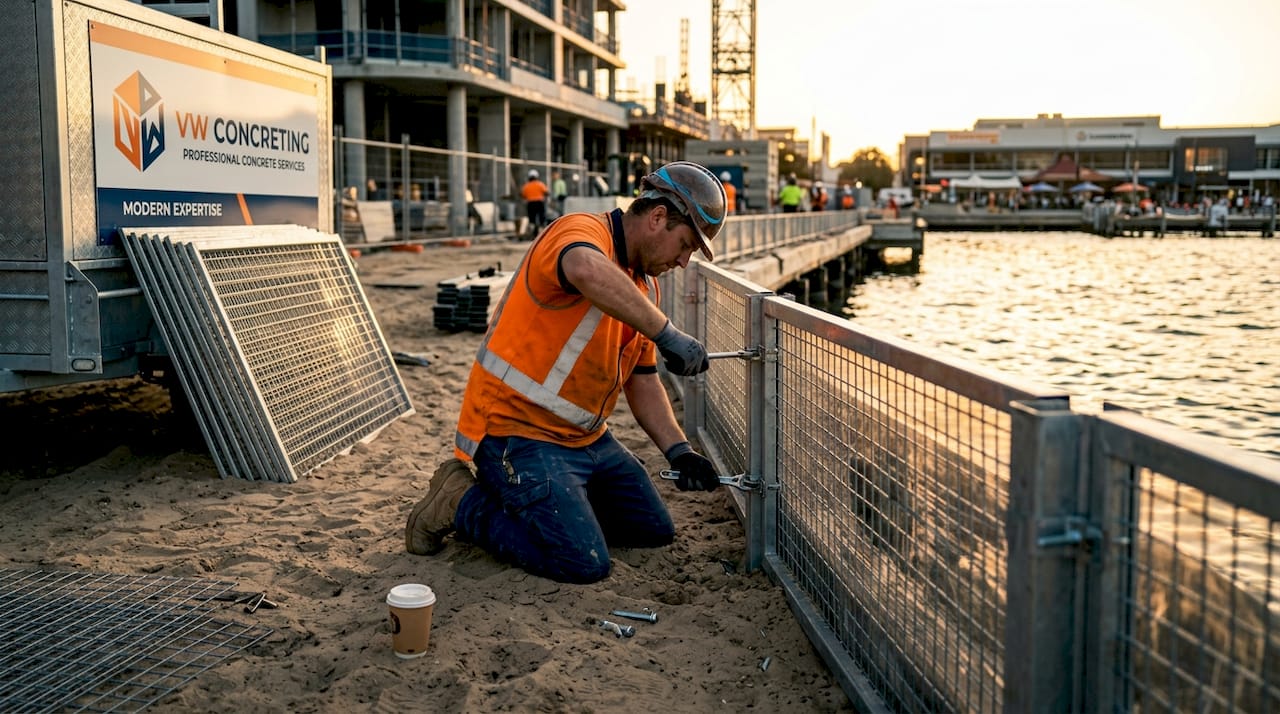
Privacy screens on your fence line do more than block sight lines. They meaningfully reduce dust and noise migration into neighboring properties, which directly affects how many complaints you receive from residents and local businesses. In urban Melbourne, that matters. The trade-off is that screens increase wind load on your fence system, which means you need additional bracing and heavier base supports, especially on exposed sites.
The decision between renting and purchasing panels depends on how often your company runs projects. Temporary fencing rental typically runs between $1.50 and $4.00 per linear foot per month, with high-security or screened systems exceeding $5.00 per linear foot before installation fees. If you are running two or more projects per year, owning your own panel inventory often pays off within 18 to 24 months. If you are working on a single large project, rental is usually the smarter financial choice.
Pro Tip: Match your fencing selection to specific project risks such as wind loads and pedestrian proximity from the start. Retrofitting heavier or more secure fencing mid-project almost always costs more than specifying correctly up front.
You can explore fencing material options in more detail if your project requires solutions beyond temporary construction panels.
Regulatory requirements for construction fencing
Compliance is not optional, and the standards are more specific than many project managers realize. Understanding the fencing requirements for construction before you design your site layout saves you from having to redo your fence configuration after an inspector flags non-compliance.
The core standards you need to know:
- A 6-foot fence is the minimum required height for most construction site perimeters under OSHA 29 CFR 1926 guidelines.
- 8-foot fencing is strongly recommended and often mandatory near schools, playgrounds, or any area with heavy pedestrian foot traffic.
- Excavations and fall hazards require specific barricade distances and warning systems beyond basic perimeter fencing.
- All site access gates must be lockable, self-closing where required, and clearly marked with site entry and hazard signage.
- Signage on the fence must include emergency contact numbers, site identification, and relevant safety warnings.
Local councils in Melbourne may impose additional requirements beyond OSHA minimums, particularly for sites near heritage zones or high-pedestrian streets. Always cross-reference your local development permit conditions against the federal baseline.
The construction site safety literature consistently emphasizes that fencing is not a passive barrier. It is an active part of your site safety management plan. Inspectors increasingly review fencing integrity during site audits, checking for gaps, damaged panels, unsecured gates, and missing signage.
Pro Tip: Include fence inspection as a standing item in your weekly site safety walkthrough. A five-minute check every week prevents the kind of deterioration that catches inspectors’ attention.
Building fencing specifications into your project contracts from the start is also smart risk management. Regulatory compliance details, including fence heights, signage, and access control, should appear in the contract scope so there is no ambiguity about who is responsible for maintaining them.
Integrating fencing into your building project workflow
The biggest mistake project managers make with fencing is treating it as a separate procurement task rather than part of the project schedule. When you plan fencing as an integral part of site mobilization, you avoid the scramble that delays project starts.
Here is a practical workflow for getting fencing right:
-
Include fencing in your project specs early. Division 01/Section 01 56 00 of the CSI specification format is where temporary facilities and controls live. Budget fencing here alongside site offices and temporary utilities so it has clear scope and cost ownership from bid day.
-
Conduct a site assessment before ordering. Walk the site perimeter and note surface types, access point locations, proximity to pedestrians, and wind exposure. This determines whether you need panel systems or post-driven solutions, and where you need additional bracing.
-
Schedule fence installation before any other site work begins. Fence installation for a site under 500 linear feet typically takes a single day. Larger sites take one to three days. Build this window into your mobilization schedule so the perimeter is secured before equipment or materials arrive on site.
-
Zone your site with internal fencing. Separate material storage from active work zones. Designate controlled access for fuel handling and hazardous material storage. This improves site flow and reduces accidents caused by workers crossing through active crane or equipment paths.
-
Assign fence maintenance responsibility. Nominate a site supervisor or safety officer who is accountable for weekly fence checks. Damaged panels, lifted base blocks, and unsecured gates are the most common compliance failures, and they are all preventable with regular monitoring.
-
Plan your demobilization in advance. Know your fence removal schedule and include it in end-of-project logistics. Late fence removal adds unnecessary rental costs and can create issues if neighboring properties have access agreements tied to the fence perimeter.
For projects where fencing and site boundaries need to perform beyond the construction phase, planning a permanent solution from the outset can also save you the cost of a second installation.
My take on fencing and what most builders get wrong
I’ve watched fencing become a last-minute scramble on more projects than I care to count. A project manager calls with the site ready to mobilize tomorrow and they’ve just realized nothing has been organized for the perimeter. What follows is a rushed rental order, incorrect panel quantities, and a fence configuration that nobody has actually thought through.
In my experience, the cost of that rushed approach almost always exceeds what proper planning would have cost. It is not just the premium you pay on short-notice rental. It is the crew time spent managing a substandard setup, the complaints from neighbors about gaps in the fence line, and occasionally a stop-work notice because the configuration did not meet inspection standards.
What I’ve learned is that fencing reflects your site culture. When your fence is neat, well-braced, properly signed, and maintained throughout the build, it tells everyone who walks past that the site is being run professionally. That has real value with councils, with neighbors, and with clients who sometimes visit the site before handover. I’ve seen projects gain better community goodwill simply because the site presentation, starting with the fence, was taken seriously.
The builders who treat fencing as a serious planning task, not a contingency item, consistently run tighter sites. And tighter sites have fewer incidents, fewer complaints, and fewer surprises at inspection time. View fencing as infrastructure. Because that is exactly what it is.
— Vic
How VW Concreting supports your project from site to finish
When your project needs more than a generic fencing quote, you need a team that understands how fencing fits into the full construction workflow.
VW Concreting has delivered full-service construction solutions across Melbourne since 2001, covering everything from site preparation and fencing coordination to concreting, decking, and landscaping. With over 145 projects completed, the team knows how to integrate the right fencing solutions into project timelines without disrupting other site activities. Whether you need temporary construction fencing, permanent timber or Colorbond boundaries, or help planning your site layout for compliance, VW Concreting brings the experience to get it right the first time. Talk to the team today about what your project needs.
You can also review the right concreting services available to coordinate fencing alongside your broader site work.
FAQ
What is the minimum fence height for a construction site?
The standard minimum is 6 feet for most construction site perimeters under OSHA 29 CFR 1926 guidelines. An 8-foot fence is recommended or required near schools, playgrounds, and high pedestrian traffic zones.
How much does temporary construction fencing cost?
Rental typically costs between $1.50 and $4.00 per linear foot per month for standard panels, with high-security or privacy-screened systems exceeding $5.00 per linear foot before delivery and setup fees.
What types of fencing work best for high-security construction sites?
Welded wire anti-climb mesh panels are the preferred option for high-security sites. They offer greater rigidity and climb resistance than standard chain link and connect modularly for easy reconfiguration.
When should fencing be installed on a construction site?
Fencing should be installed before any other site work begins. Installation for sites under 500 linear feet typically takes one day, so it can be scheduled as the first mobilization activity without significant impact on the project timeline.
How does fencing affect compliance with building regulations?
Inadequate fencing can result in stop-work orders from inspectors, creating delays that far exceed the cost of proper fencing. Including fencing specifications in Division 01 of your project contract from the start prevents compliance gaps and budget disputes.
Leave A Comment