Picking the right turf for your yard sounds straightforward until you’re standing in a nursery surrounded by samples, or scrolling through websites at midnight wondering if your backyard drainage even matters. It does. Understanding the full range of turf installation types residential projects require, before a single sod is laid, is what separates a lawn you’ll love in five years from one you’ll be ripping out in two. Whether you’re landscaping a new build, refreshing an older yard, or dealing with a post-construction site that needs covering fast, this guide breaks down everything Melbourne homeowners need to make a confident, informed choice.
Table of Contents
- Key Takeaways
- 1. How to evaluate your yard before choosing a turf type
- 2. Natural sod turf
- 3. Seeded lawns
- 4. Landscape artificial turf
- 5. Pet turf
- 6. Putting green turf
- 7. Full base excavation method
- 8. Compact base with fabric method
- 9. Turf between pavers
- 10. Comparison of turf types and installation methods
- My honest take on turf installation in Melbourne
- Get your Melbourne turf installation done right
- FAQ
Key Takeaways
| Point | Details |
|---|---|
| Know your yard first | Usage, drainage, and Melbourne’s climate should drive your turf selection before cost does. |
| Natural vs. artificial isn’t binary | Combining both turf types in different yard zones often delivers better results than choosing one exclusively. |
| Base prep determines longevity | Proper compaction and drainage prep matter more than the turf itself for long-term performance. |
| Artificial turf has real maintenance needs | Regular brushing and rinsing, especially in pet areas, keeps artificial turf looking and smelling clean. |
| Installation method shapes drainage | Compact base with fabric handles sloped or wet yards better than standard full base excavation. |
1. How to evaluate your yard before choosing a turf type
Before comparing products, you need to assess what you’re actually working with. The right turf for your yard depends on five core factors, and skipping this step is the single most common reason homeowners end up unhappy with their lawn.
Climate and sunlight. Melbourne’s weather swings between scorching summer heat and cool, wet winters. Full-sun yards in Melbourne’s western suburbs behave completely differently from shaded backyards in the southeast. Natural turf species that thrive in one setting can go yellow and patchy in the other.
How you use the space. A yard that takes daily punishment from kids and dogs needs something built for durability. A decorative front garden used mainly for curb appeal has entirely different requirements. Think about foot traffic patterns, not just square footage.
Drainage and base conditions. Poor drainage is the silent killer of both natural and artificial lawns. If your yard pools water after rain, your turf selection and installation method need to address that directly, or you’ll be dealing with soggy ground, root rot, or lifting turf seams within a year.
Maintenance willingness. Be honest with yourself here. Natural lawns require regular mowing, fertilizing, watering, and seasonal care. Artificial lawns need less work but still require routine maintenance like brushing and rinsing to stay in good shape.
Budget across the full lifecycle. Upfront cost rarely tells the whole story. A cheaper natural lawn might cost more over ten years in water bills and maintenance than a quality artificial installation.
Pro Tip: Walk your yard after a heavy rain and note exactly where water pools and where it drains freely. That map should directly influence which installation method and turf type you choose.
2. Natural sod turf
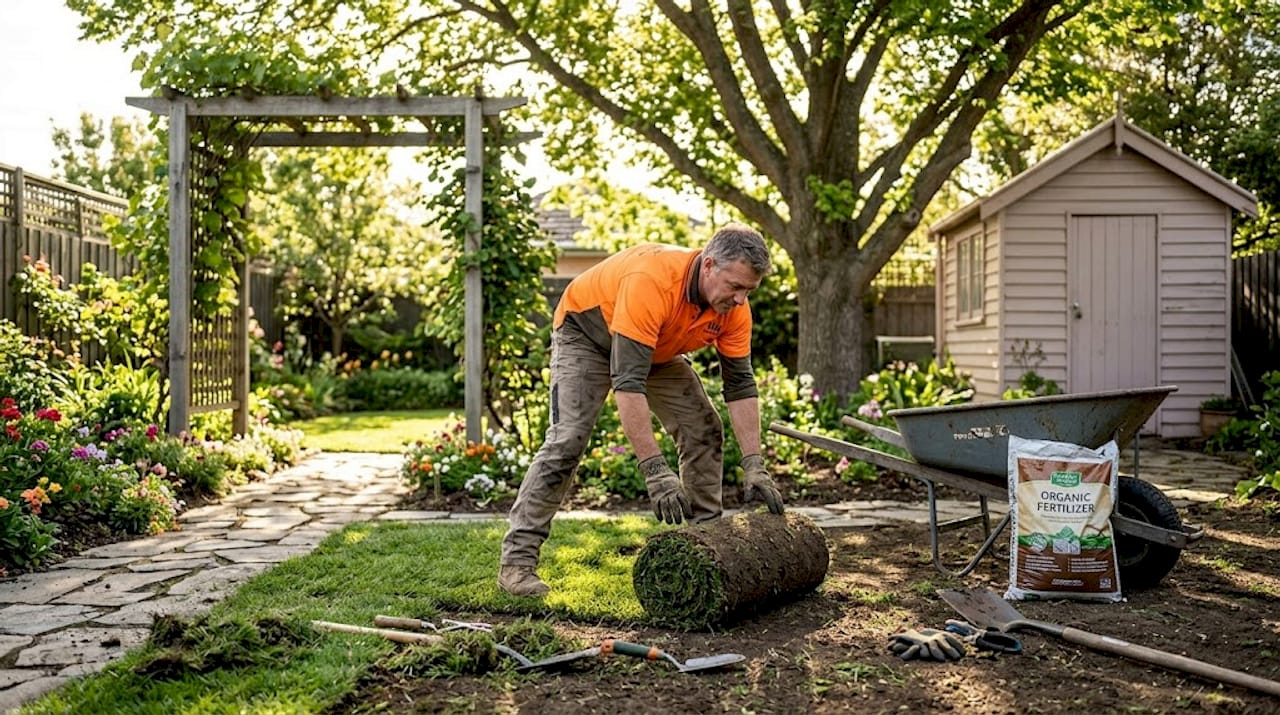
Sod is the classic choice for homeowners who want an immediate, established lawn. You’re essentially buying pre-grown grass on a thin layer of soil, which gets rolled out and roots into your prepared base within days.
The biggest selling point is speed. Sod establishes within days, which makes it ideal for homeowners who want a functional lawn quickly or are preparing a yard before an event, a rental handover, or a property sale. It also prevents erosion on slopes immediately, which seeding cannot do.
The tradeoff is cost. Sodding typically costs two to three times more than seeding for the same area. For large backyards, that gap adds up fast. You’ll also need to keep the lawn off-limits for a few weeks while the roots anchor properly, which can be frustrating with kids and pets in the house.
Popular sod varieties suited to Melbourne include Sir Walter Buffalo, Kikuyu, and Couch grass. Each behaves differently through the dry season and under shade, so species selection matters as much as the installation method.
3. Seeded lawns
Seeding is the budget-conscious path to a natural lawn. You’re sowing grass seed into a prepared soil bed and waiting for it to establish. The cost savings are real, but the timeline is not for the impatient.
Seeded lawns take 60 to 90 days before the grass can handle regular foot traffic. During that window, the area needs consistent moisture, protection from birds, and zero heavy use. For families with active kids or dogs, that waiting period often makes sod the more practical choice despite the higher price.
Seeding works best for large flat areas where budget is the primary constraint and there’s no immediate urgency. Slopes, high-traffic zones, and areas that need quick coverage are better served by sod.
4. Landscape artificial turf
Landscape artificial turf is the most widely installed synthetic option in Melbourne residential projects. It’s designed to replicate the look and feel of a natural grass lawn without the mowing, watering, or seasonal die-back.
Modern landscape turf uses polyethylene fibers in various pile heights and densities. Higher pile heights look more realistic but cost more. The aesthetic gap between budget and premium artificial turf is significant, so if the visual result matters to you, invest in a sample before committing.
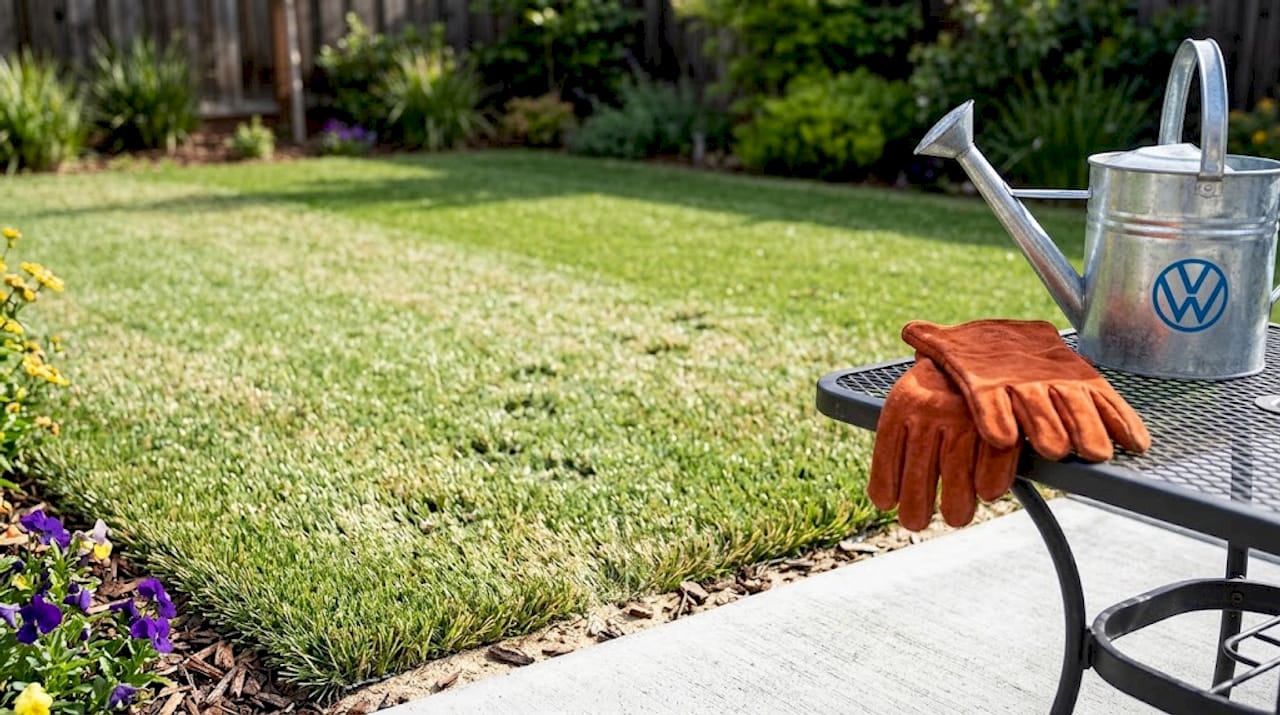
A hybrid approach that combines artificial turf in high-traffic zones with natural grass elsewhere gives you the best of both options. You get the durability where you need it and the natural feel and cooling benefits in areas that see less wear.
Artificial turf does require regular rinsing and brushing to stay clean and keep fibers standing upright. In Melbourne’s summer heat, a surface temperature difference between artificial and natural turf is noticeable underfoot, which is worth factoring in if you have young children.
5. Pet turf
Pet turf is a specialized category of artificial turf engineered specifically for yards with dogs or cats. The fiber structure, infill material, and backing are all optimized for drainage and odor control rather than just appearance.
Pet turf drains efficiently and controls odors far better than standard landscape turf, which makes it a genuinely practical choice rather than just a marketing category. Standard artificial turf can trap urine in the infill over time, leading to odors that are difficult to eliminate. Pet-specific turf uses antimicrobial infill and higher drainage rates to prevent that buildup.
If you have multiple large dogs using the same area daily, pet turf paired with a proper drainage base is the most low-maintenance option available.
6. Putting green turf
Putting green turf is a specialty category for homeowners who want a functional practice surface in their backyard. The fiber is shorter, denser, and designed to allow a golf ball to roll at a consistent speed.
This is not a general-purpose lawn product. The installation requires precise base work to achieve the right slope and firmness, and the surface is designed to be walked on with golf shoes, not bare feet or running kids. If you want a multi-use yard, putting green turf should be zoned into a specific dedicated area rather than used as your main lawn surface.
7. Full base excavation method
Full base excavation is the standard installation method for most residential artificial turf projects. It involves removing existing soil to a depth of around 50 to 100 millimeters, compacting the subbase, and laying crushed aggregate before the turf goes down.
This method delivers a stable, level surface and moderate drainage performance. It suits most standard Melbourne backyards where drainage is adequate and the ground is relatively flat. The excavation adds cost and labor, but skipping it or cutting it short is one of the most common installation mistakes that leads to uneven surfaces, lifting seams, and reduced turf lifespan.
Proper compacted aggregate base preparation is critical. Even minor irregularities in the base can cause air pockets under the turf that result in wrinkles or trip hazards after installation, and those problems are very difficult to fix without pulling everything up and starting over.
8. Compact base with fabric method
The compact base with landscape fabric method is the better choice for yards with slope, poor drainage, or consistently wet conditions. Instead of relying solely on aggregate depth, this method adds a permeable fabric layer that channels water away from the turf surface more aggressively.
Compact base plus fabric offers high drainage performance suited specifically to sloped or wet yards. For Melbourne properties that flood under heavy rain or have clay-heavy soil, this installation method can mean the difference between a turf surface that drains within an hour and one that stays soggy for days.
The fabric layer also serves as a weed barrier, which addresses another common turf installation mistake: the absence of weed suppression that causes plants to push through the turf over time.
Pro Tip: If your yard has clay soil, which is common in Melbourne’s western and northern suburbs, opt for the compact base plus fabric method even if your yard looks flat. Clay restricts drainage significantly and a standard base may not compensate.
9. Turf between pavers
Turf between pavers is a design-focused technique that combines hardscape and softscape in the same surface. You install strips or patches of turf in the gaps between concrete or stone pavers to create a mixed visual effect.
The installation requires extra precision. Consistent gap spacing, landscape staples, construction adhesive at edges, and silica sand infill all work together to keep the turf fibers upright and prevent movement over time. If any of those steps are skipped, the turf shifts, gaps open up, and the look deteriorates quickly.
This technique works well in entertaining areas, pathway borders, and front garden designs where a purely paved surface feels too hard or a purely grass surface would wear badly under furniture.
10. Comparison of turf types and installation methods
| Turf type or method | Cost level | Maintenance | Drainage | Best residential use |
|---|---|---|---|---|
| Natural sod | High upfront | High ongoing | Depends on base | Full lawns needing quick coverage |
| Seeded lawn | Low upfront | High ongoing | Depends on soil | Large flat areas, budget-conscious projects |
| Landscape artificial turf | Medium to high | Low | Moderate to high | General residential lawns |
| Pet turf | Medium to high | Low | High | Yards with dogs and cats |
| Putting green turf | High | Very low | Low | Dedicated golf practice zones |
| Full base excavation | Medium labor | None | Moderate | Standard flat residential yards |
| Compact base with fabric | Higher labor | None | High | Sloped or wet Melbourne yards |
My honest take on turf installation in Melbourne
I’ve watched homeowners make the same mistake repeatedly. They spend hours comparing turf brands and pile heights, then barely think about the base until installation day. That’s backwards. In my experience, the base prep and drainage planning account for about 70% of how well a turf installation performs over time. The turf itself is almost secondary.
The other thing I’ve learned is that choosing just one turf type for an entire yard is rarely the right call. I’ve seen Melbourne backyards where the area near the back fence gets natural turf because it’s shaded and cool, the kids’ play zone gets durable artificial turf, and the entertaining area near the deck uses a hybrid surface. That kind of zoned thinking produces results that work harder and look better than a one-size-fits-all approach.
Cost comparisons between natural and artificial turf also frustrate me when they only account for installation. Natural lawns in Melbourne require mowing, fertilizing, seasonal overseeding, and consistent watering through summer. Artificial turf has a higher entry price but typically pays for itself within three to five years when you factor in those ongoing costs honestly.
My biggest practical warning: don’t let a contractor skip the compaction step to save time. Once the turf is down, you’ll see every air pocket and uneven spot, and fixing it means starting over.
— Vic
Get your Melbourne turf installation done right
If this guide has confirmed that turf selection and installation is more nuanced than you expected, you’re not alone. Most Melbourne homeowners who try to manage it without professional input end up either under-preparing the base or choosing a turf type that doesn’t suit their yard’s actual conditions.
VW Concreting has completed over 145 outdoor projects across Melbourne, handling everything from synthetic turf installation to full landscaping builds. The team understands how Melbourne’s clay soils, seasonal rainfall, and varying block sizes affect which turf type and installation method will actually perform. Whether you need a simple backyard lawn, a pet-friendly surface, or a complete outdoor landscaping package, VW Concreting offers site evaluations and tailored recommendations. Reach out directly to talk through your yard’s specific needs before making any product decisions.
FAQ
What are the main turf installation types for residential projects?
The main options are natural sod, seeded lawns, landscape artificial turf, pet turf, and specialty putting green turf. Each suits different uses, budgets, and yard conditions.
How long does seeded turf take compared to sod?
Seeded lawns take 60 to 90 days before they handle foot traffic, while sod establishes within days. Sod costs two to three times more but delivers immediate results.
Which artificial turf installation method works best for wet Melbourne yards?
The compact base with landscape fabric method is best for wet or sloped yards because it provides high drainage and includes a weed barrier layer.
Does artificial turf need maintenance?
Yes. Artificial turf requires regular rinsing and brushing, especially in pet areas, to prevent odors and keep fibers standing upright over time.
Can you mix natural and artificial turf in the same yard?
A hybrid approach combining both in different zones is often the most practical choice, balancing aesthetics, durability, and maintenance across different areas of your yard.
Leave A Comment