
A well-planned landscape can completely change how you use your outdoor space. Whether you have a compact backyard, a sloping garden or a larger Melbourne property, thoughtful landscaping can make the area more practical, comfortable and connected to the rest of your home.
Modern landscaping is no longer just about planting a few trees and laying grass. Melbourne homeowners are increasingly looking at complete outdoor spaces that combine turf, paving, fencing, retaining walls, decking and garden areas.
If you are considering a landscaping service in Melbourne, it helps to plan the project around how you want to use the space rather than starting with individual materials.
Start With How You Use Your Outdoor Space
Before choosing plants, paving or turf, think about what you want the finished area to do.
Do you need more room for entertaining? A safe area for children? A low-maintenance backyard? Better access between the house and garden?
Your answers can influence the entire layout.
For example, an entertaining area might benefit from paving or decking close to the house, while a family backyard may need a combination of lawn, garden beds and open space. A sloping block may require retaining walls to create more usable levels.
Starting with function helps prevent the landscape from becoming a collection of unrelated features.
Choose Materials That Suit Melbourne Conditions
Melbourne properties can experience hot summers, cooler winters and periods of heavy rainfall. Materials and plants should therefore be selected with the property’s location and exposure in mind.
Hard landscaping can include paving, concrete, retaining walls and decking, while soft landscaping includes turf, plants, garden beds and other living elements. Combining both can create a more balanced outdoor area. Victorian building guidance recognises landscaping as a broad category covering both these types of outdoor work.
Think about how much sunlight the area receives, how water moves across the property and how much ongoing maintenance you are prepared to handle.
Consider Low-Maintenance Landscaping
Low-maintenance outdoor spaces are becoming an important consideration for Melbourne homeowners.
That does not mean creating a garden that requires no care. Instead, it means choosing materials, plants and layouts that reduce unnecessary maintenance.
This could include:
- Artificial or natural turf suited to the site
- Simple garden bed layouts
- Durable paving
- Carefully selected plants
- Defined pathways
- Practical edging
- Reduced areas of difficult-to-maintain lawn
Current Melbourne landscaping trends show growing interest in gardens designed to look attractive while reducing ongoing work.
The goal should be a landscape that fits your lifestyle rather than creating another large maintenance task.
Think About Turf and Lawn Areas
Turf can make a major difference to the appearance and usability of a backyard.
Natural turf can provide a soft, traditional lawn area, while synthetic turf may be considered where homeowners want a more consistent appearance or have difficult growing conditions.
The right choice depends on sunlight, drainage, expected foot traffic, pets, maintenance preferences and how the space will be used.
Turf also works best when it is planned alongside the surrounding landscape. Connecting lawn areas with paving, garden beds, retaining walls or decking can create a more deliberate layout.
Use Paving to Define Outdoor Zones
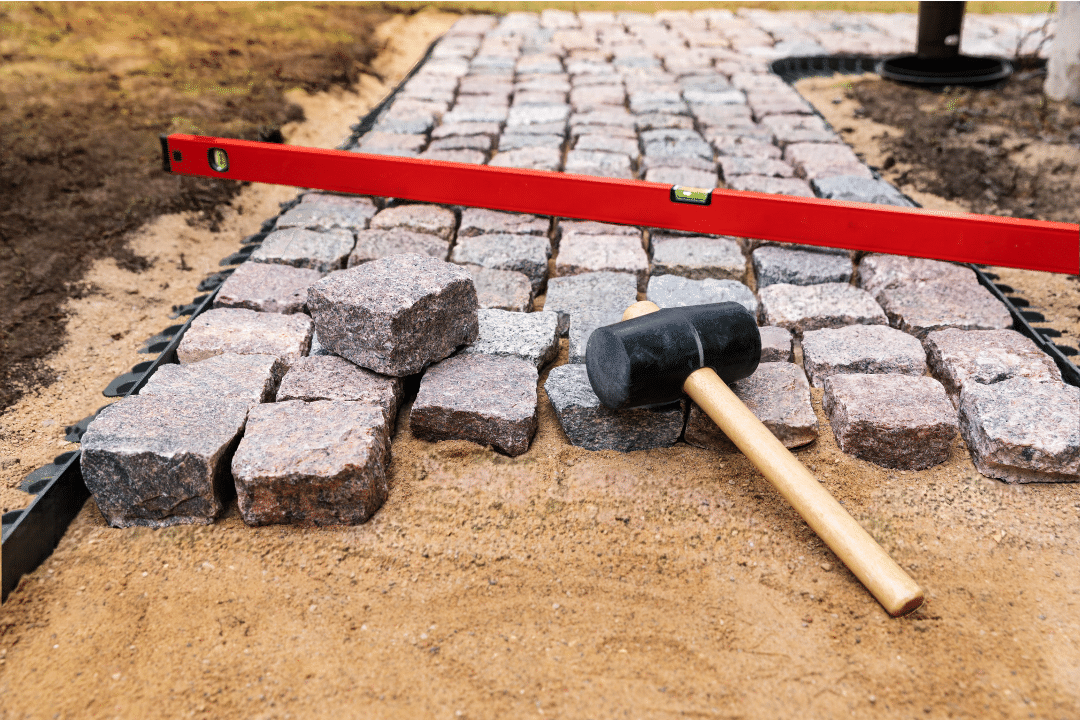
Paving can provide structure to an otherwise open garden.
A paved area can become an outdoor dining zone, pathway, entrance area or connection between different parts of the backyard.
Current 2026 outdoor design trends show increased interest in large-format paving, warm natural tones and combinations of paving with lawn, gravel and garden areas.
However, appearance should not be the only consideration. Base preparation, levels, drainage and transitions between different surfaces are important for a practical result.
Don’t Ignore Sloping or Uneven Ground
Uneven ground can make part of a backyard difficult to use.
Retaining walls can help create more defined levels, but their design needs to suit the site and the amount of soil being retained. Drainage and the relationship with neighbouring properties should also be considered.
Victorian guidance states that some retaining walls require building permits, particularly walls 1 metre or more high or those constructed near boundaries where there is a risk of damage to adjoining property. Requirements can vary, so local advice should be obtained before work begins.
A landscape project should address the underlying site conditions rather than simply covering them with new materials.
Plan Decking, Fencing and Other Features Together
Outdoor features generally work better when they are considered as part of one overall design.
A deck can extend an entertaining area, fencing can provide privacy, and retaining walls can create usable garden levels. Combining these elements with turf and paving can make the property feel more cohesive.
For example, a backyard might use decking near the house, paving around an entertaining area, turf through the centre and planting around the boundaries.
This type of zoning can make a relatively small Melbourne backyard feel more organised without filling every available section.
Think About Drainage Before Landscaping Starts
Drainage is easy to overlook when the existing yard is being transformed.
Changes to ground levels, paving and retaining structures can influence where rainwater travels. Water should not simply be redirected toward the house or neighbouring property.
Victorian authorities specifically advise homeowners to consider how landscaping and paving may affect drainage and water flow.
Good planning should therefore consider levels and drainage before hard surfaces are installed.
Check Permits and Local Requirements
Not every landscaping project has the same approval requirements.
Victorian guidance states that some structural landscaping work, including certain decks, retaining walls and fences, can fall under domestic building work and may require a registered practitioner or building permit depending on the circumstances.
Consumer Affairs Victoria also recommends having detailed plans, checking with your local council about planning and building permits, and using a written contract for outdoor building projects.
Because requirements can differ between properties and councils, it is sensible to confirm what applies before construction starts.
Choosing a Landscaping Approach for Your Melbourne Home
Good landscaping should balance appearance with everyday practicality.
Consider how you use the property, how much maintenance you want, the existing ground levels, drainage, access and the relationship between different outdoor features.
When choosing landscaping in Melbourne, it can be useful to think about the entire outdoor area rather than treating turf, paving, fencing, decking and retaining walls as separate projects.
At VW Concreting, landscaping-related outdoor solutions can be coordinated with services such as turf installation, paving, decking, fencing, retaining walls and concrete to help create a more connected result.
Why Choose VW Concreting?
At VW Concreting, we provide residential concreting solutions across Melbourne and surrounding suburbs, including Truganina, Werribee, Hoppers Crossing, Rockbank and Sunbury.
Our services include exposed aggregate, slate-look concrete and outdoor concrete surfaces.
We help homeowners explore suitable finishes for their properties, whether they’re planning a new driveway or improving an existing outdoor area.
Looking for a reliable concrete driveway service in Melbourne?
Contact VW Concreting today to discuss your project and request a free quote.
Call: 0410 718 900
Leave A Comment