
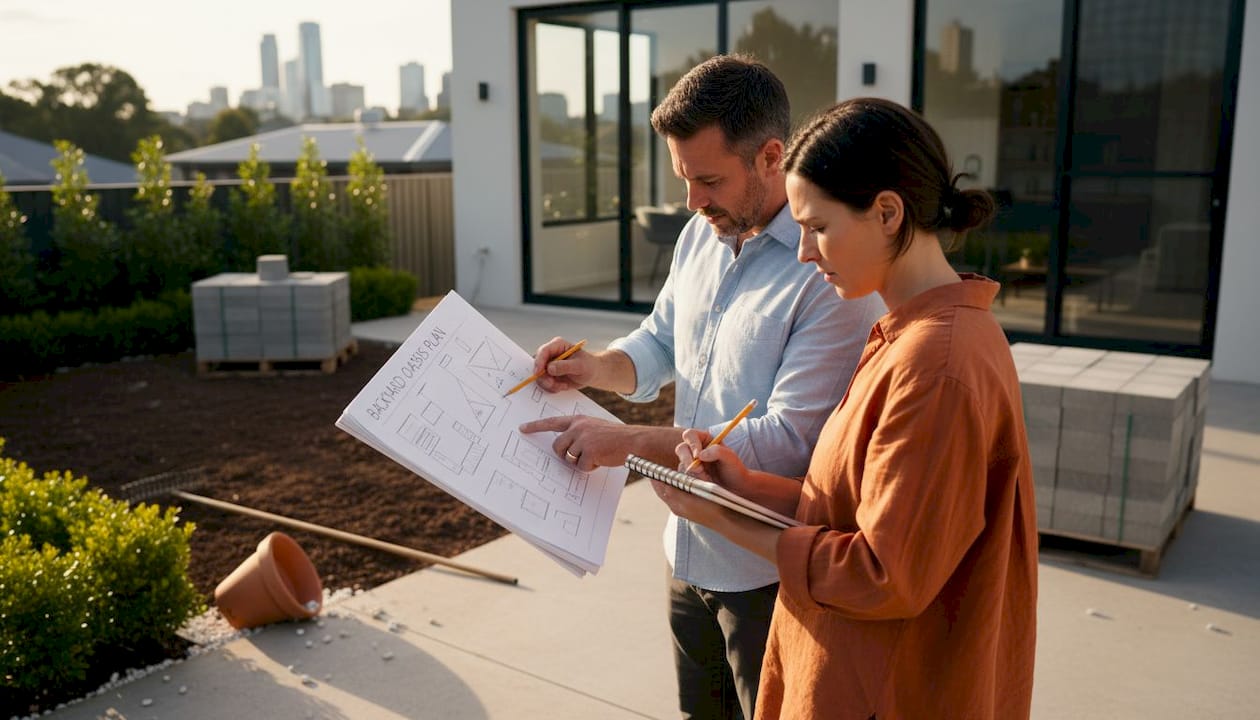
Moving into a newly built Melbourne home often means stepping out into a blank concrete pad or bare dirt block, a space with enormous potential but zero personality. Turning that empty canvas into a functional, beautiful outdoor area is one of the most exciting parts of new homeownership, but it’s also where costly mistakes happen. The right landscaping choices depend on your specific site conditions, your lifestyle, and your long-term plans for the property. This guide walks you through the key criteria, the most popular options, and how to compare them so you can make confident decisions and build an outdoor space you’ll actually enjoy for years.
Table of Contents
- How to evaluate landscaping options for new homes
- Popular hardscape options: paving, decking, and concrete features
- Garden and courtyard landscaping: maximizing space and privacy
- Comparing landscaping options for Melbourne homes
- Expert advice: What most landscaping guides get wrong
- Turn your vision into reality with Melbourne’s outdoor experts
- Frequently asked questions
Key Takeaways
| Point | Details |
|---|---|
| Prioritize site criteria | Evaluate drainage, slope, and sun exposure before selecting landscaping features. |
| Choose durable hardscapes | Concrete and pavers offer long-term value and strength for Melbourne homes. |
| Layer for privacy | Combine geometric structure, evergreen plants, and vertical elements to maximize courtyard space and privacy. |
| Integrate drainage | Design retaining walls with drainage to protect structural integrity and avoid water issues. |
| Seek expert help | Consult professionals for site-specific solutions, especially with complex drainage or sloped sites. |
How to evaluate landscaping options for new homes
Before you start researching paving styles or fence colors, you need to look at what your block is actually telling you. New home sites in Melbourne’s outer suburbs, places like Truganina, Point Cook, or Mount Cottrell, often have compacted clay soils from the construction process. That matters a great deal when you’re choosing plants, deciding on drainage, or planning where to pour concrete.
Start with these site assessment points:
- Slope and levels: Even a gentle slope changes how water moves across your yard and whether you’ll need retaining walls or level changes.
- Soil type: Heavy clay drains slowly; sandy loam drains fast. Both affect plant selection and concrete base preparation differently.
- Sun and shade: Track how sun moves across your outdoor area at different times of day. North-facing areas suit outdoor entertaining; south-facing spots need shade-tolerant plants.
- Intended use: Do you want a kids’ play zone, a low-maintenance entertainer’s courtyard, a veggie garden, or all three? Each use has different surface and plant requirements.
- Drainage observations: Look for puddles after rain. Check where water pools and how long it takes to clear.
That last point is more important than most landscaping guides admit. Drainage decisions should be driven by observed site conditions such as puddling, wet soils, and runoff, because installing drainage poorly can create ongoing problems rather than solving them. Don’t default to laying drainage everywhere just because a builder’s plan includes it. Check your actual conditions first.
Pro Tip: Walk your block after heavy rain and take photos. Real-world evidence of how water behaves on your site is more valuable than any soil report when planning drainage and planting zones.
A well-rounded assessment also factors in privacy, how your outdoor space connects to neighboring properties, and how landscaping features will integrate visually. For more background on available options, our landscape material overview covers a range of surface and garden choices suited to Melbourne conditions.
Popular hardscape options: paving, decking, and concrete features
Once you know your site’s demands, you can choose hardscapes that meet both practical and aesthetic goals. Hardscaping refers to all the non-plant elements of a landscape, think paving, walls, paths, decks, and concrete areas. These features form the structural backbone of your outdoor space and they’re typically the most permanent decisions you’ll make.
Pavers are one of the most popular choices for patios, paths, and pool surrounds in Melbourne. They come in concrete, bluestone, travertine, and porcelain finishes. Pavers offer flexibility because individual pieces can be removed and reset if ground movement occurs, which is a real concern on clay-heavy Melbourne soils. Well-laid paver installation can handle heavy foot traffic, tolerate Melbourne’s freeze-thaw seasonal shifts, and deliver a clean, high-end finish with relatively low ongoing maintenance.
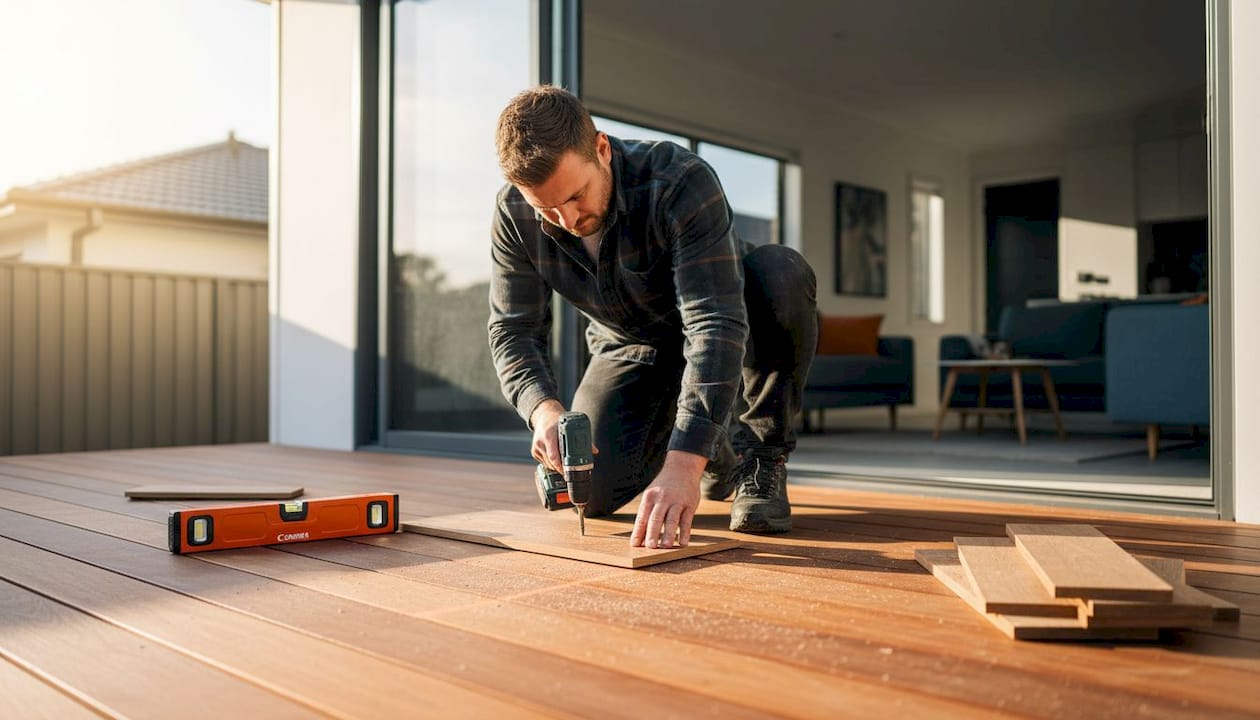
Decking is the go-to choice when you want warmth, texture, and a seamless indoor-outdoor feel. Timber and composite decking both work well in Melbourne climates, though composite materials resist warping, splitting, and the gray weathering that natural timber eventually shows. Decking is also practical on sloped sites because it can be built level over uneven ground, avoiding the cost of major earthworks. Think of it as the softer, more tactile option compared to hard paving surfaces.
Concrete remains the workhorse of outdoor construction. For driveways, shed bases, garage slabs, and utility paths, exposed aggregate and decorative concrete finishes deliver strength without sacrificing appearance. Choosing premium driveway finishes in exposed aggregate or broom-finished concrete gives you a surface that handles vehicle loads, Melbourne weather, and daily use for decades.
Retaining walls are non-negotiable on sloped new builds. They hold back soil, create usable flat zones, and define the structure of a garden. But they’re also one of the most technically demanding features because retaining walls need a proper drainage system for structural integrity, including weep holes and drain pipes built in from the start. A wall built without integrated drainage will face soil pressure from waterlogged ground and eventually fail. This is one area where cutting corners always costs more in the long run.
| Feature | Best use | Maintenance level | Approximate lifespan |
|---|---|---|---|
| Concrete pavers | Patios, paths, pool areas | Low | 25-40 years |
| Composite decking | Outdoor living zones | Low to medium | 20-30 years |
| Exposed aggregate | Driveways, entertaining slabs | Very low | 30+ years |
| Retaining walls | Sloped sites, raised garden beds | Low (with drainage) | 20-50 years |
For design inspiration on how hardscaping pairs with outdoor living areas, there are some creative pool house landscaping ideas that show how pavers and structural elements can frame entertaining zones beautifully.
Garden and courtyard landscaping: maximizing space and privacy
Hardscapes form a foundation, but lush gardens and clever courtyards deliver the finishing touches and privacy so many homeowners crave. This is especially true in Melbourne’s newer outer suburbs and inner-city townhouse developments, where outdoor spaces tend to be compact. A small courtyard garden, done well, can feel far more generous than its actual square meterage suggests.
The key is structure. Courtyard designs that use defined structure, geometric shapes, repetition, and evergreen palettes create visual order that makes compact spaces feel intentional and larger. When every plant and surface has a clear role, the eye reads the space as cohesive rather than cramped.
Here’s how to build a layered, private courtyard garden:
- Start with structure planting: Choose a small feature tree or architectural shrub as the anchor. Olive trees, Japanese maples, and ornamental grasses work beautifully in Melbourne’s temperate climate.
- Add mid-layer evergreens: Repeat one or two species through the space. Repetition creates rhythm and a sense of deliberate design, not randomness.
- Use vertical elements: Climbers on wire panels, bamboo screens, or tall feature pots add height and privacy without taking up floor space. These are especially useful when neighbors are close.
- Choose courtyard paving solutions that complement the planting: Warm-toned sandstone pavers pair well with Mediterranean planting; cool gray concrete suits modern, minimalist garden styles.
- Plan for year-round interest: Combine evergreen structure with a few seasonal performers. You want the garden to look good in July, not just October.
| Garden element | Effect | Melbourne-suited examples |
|---|---|---|
| Feature tree | Anchor and focal point | Olive, Japanese maple, dwarf magnolia |
| Evergreen shrubs | Structure and repetition | Buxus, Westringia, Pittosporum |
| Climbers/screens | Vertical privacy | Star jasmine, climbing rose, bamboo |
| Ground cover | Texture and weed suppression | Liriope, native violet, thyme |
The concept of maximizing small spaces through layered design and intentional structure applies across different property styles, from compact townhouse gardens to generous suburban blocks with defined zones.
Pro Tip: Before buying plants, check Melbourne’s average annual rainfall and temperature swings. Species that need consistent moisture will struggle through summer without irrigation; evergreen natives tolerate the seasonal dry periods far more reliably.
Comparing landscaping options for Melbourne homes
With each option laid out, let’s directly compare and decide what suits your Melbourne home best. The smartest approach isn’t to pick one landscaping style across the whole property. Most successful outdoor spaces mix hardscaping with garden zones, balancing function with visual appeal.
| Option | Pros | Cons | Ideal for |
|---|---|---|---|
| Pavers | Flexible, repairable, versatile | Higher upfront cost | Patios, paths, poolside |
| Decking | Warm feel, levels uneven sites | Needs sealing and occasional maintenance | Outdoor living, sloped yards |
| Exposed concrete | Extremely durable, low maintenance | Less flexible once poured | Driveways, large slabs |
| Garden beds | Add privacy, beauty, and biodiversity | Ongoing maintenance needed | Borders, courtyard planting |
| Retaining walls | Transforms sloped blocks | Complex installation required | Sloped properties |
Expert recommendation: For sloped new builds, design your retaining wall system and drainage features together from day one. Treating them as separate projects almost always creates structural headaches and expensive repairs within a few years.
This integrated approach is backed by clear evidence. Drainage failure is a major cause of retaining wall problems in new builds, and the solution is always the same: design the wall and drainage as a single system, not two separate afterthoughts.
Four steps to choose the right landscaping features for your home:
- Set your priorities: Write down the three things you most want from your outdoor space, whether that’s low maintenance, entertaining space, privacy, or a garden for the kids.
- List your site constraints: Note slope, drainage issues, soil type, and any builder-imposed limitations like easements or setbacks.
- Review ongoing maintenance: Be honest about how much time you’ll spend on garden upkeep. Some features need very little; others require consistent attention.
- Choose features that integrate: A paved entertaining area looks better next to a well-structured garden bed than next to bare lawn. Plan the hardscape and softscape together from the beginning.
Expert advice: What most landscaping guides get wrong
Here’s something we’ve seen consistently across more than two decades of outdoor construction work in Melbourne: most landscaping guides treat their advice as universal, when the reality is that every single block is different.
Generic plant lists ignore the difference between a clay-heavy Truganina block that stays saturated through winter and a sandy loam site in the outer southeast that dries out fast in February. Generic drainage recommendations don’t account for the fact that drainage is not automatically required for every garden, and that wrong installation can create new problems where none existed before. We’ve seen homeowners spend thousands installing French drains on sites that didn’t need them, and then wonder why their garden beds stay too dry.
The same logic applies to structural features. One-size-fits-all retaining wall specs work fine on textbook sites. On real Melbourne blocks with variable fill material, unexpected slope angles, and proximity to drainage easements, the textbook solution often falls short. Our team building custom retaining walls always starts with a site-specific assessment, not a standard template.
The honest advice? Invest in a proper site evaluation before making any major landscaping decisions. Talk to experienced local contractors who know Melbourne’s soil conditions, not just a salesperson moving product. Your outdoor space will reflect that upfront investment for decades.
Turn your vision into reality with Melbourne’s outdoor experts
Ready to take the next step? Here’s how you can turn the insights above into a stunning outdoor transformation.
At VW Concreting, we’ve been delivering outdoor construction and landscaping solutions across Melbourne since 2001, with over 145 projects completed. We understand Melbourne’s clay soils, its seasonal extremes, and the specific needs of newly built homes in suburbs across the metro area.
Whether you’re starting with a bare block or refining an existing layout, our team can design and install everything from paving and concrete to full garden builds. Explore our comprehensive landscaping solutions to see what’s possible, or take a closer look at our decking services Melbourne if you’re ready to create a warm, functional outdoor living area. Visit VW Concreting to learn more about our full range of services and get in touch with our team for a site-specific consultation.
Frequently asked questions
Do all new Melbourne homes need garden drainage?
Drainage is not always necessary; if you observe puddling or persistent wet soil after rain, consult an expert before installing any drainage system to avoid creating new issues.
What’s the best hardscape material for durability?
Concrete and high-quality pavers are top choices for longevity on Melbourne’s varied soils, especially when installed with a proper base and structural drainage where required.
How can small courtyard gardens feel larger?
Use geometric structure, layered planting, and vertical elements like climbers or screens to add depth; defined design principles create a sense of space that goes well beyond the actual square meters available.
How do I prevent retaining wall failure?
Design wall and drainage features together from the start; water buildup behind walls is the leading cause of failure, so proper outlets and material selection are essential from day one.
Leave A Comment