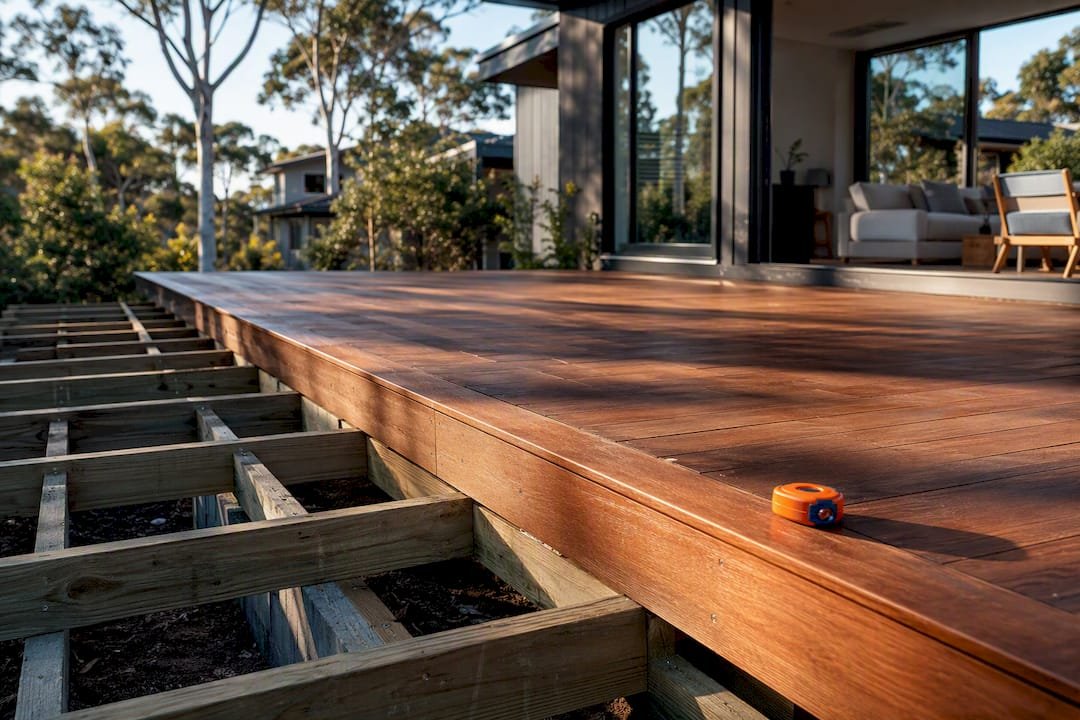
Merbau decking in Melbourne typically runs at supply-only prices in a moderate range per linear meter, or roughly $190 to $370 per square meter for the boards alone, once you factor in offcuts and set lengths. Fully installed, most homeowners pay a mid-range price per square meter including subframe, fasteners, and labor. Get three written quotes before committing, and hire a licensed installer for any deck over 1 meter high or with steps, rails, or tricky site access.
TL;DR:
- The installed cost of Merbau decking in Melbourne generally ranges from $320 to $580 per square meter, depending on project complexity and site conditions.
- Costs can increase significantly with additional features such as stairs, balustrades, or when building above 1 meter, due to code requirements and labor.
- Choosing hardwood subframes reduces the risk of bounce but increases upfront costs, while site complexity like sloped land or poor soil can significantly raise footing expenses.
- DIY installation can save money but risks issues such as splitting boards, corrosion, improper spacing, and drainage problems, which are costly to fix later.
- Ongoing maintenance involves annual oiling and pressure washing, with tannin bleed requiring weathering and thorough cleaning before sealing to prevent permanent stains.
Table of Contents
- How Much Does Merbau Decking Cost in Melbourne?
- What Changes Your Final Merbau Decking Cost
- DIY or Hire a Pro for Merbau Decking?
- Merbau Maintenance Costs and the Tannin Bleed Problem
- What to Expect From Quote to Finished Deck
- Questions to Ask Before You Sign a Decking Quote
- VW Concreting’s Fixed-Price Merbau Decking Costs
- Why We Recommend Merbau for Some Melbourne Decks, Not All
- Ready for a Fixed-Price Merbau Decking Quote?
- Primary Sources for Merbau Decking Pricing
- Sources
How Much Does Merbau Decking Cost in Melbourne?
The gap between buying Merbau boards and paying someone to install them is bigger than most homeowners expect, and it catches a lot of first-time deck builders off guard.
Supply-only pricing depends on board width. The two sizes you’ll see most often at timber yards and hardware stores are 90mm and 140mm boards, both typically sold in 19mm thickness. Supplier price lists show these priced per linear meter, and the wider board costs more per meter but covers ground faster, so the per-square-meter math often lands closer together than you’d guess.
Installed figures track closely with Melbourne cost guides reporting the $315–$580/m² band for supply-plus-install jobs across the city. A separate Melbourne timber market analysis puts installed Merbau closer to $320–$550/m², with the note that Merbau’s traditional price advantage over Spotted Gum has narrowed as supply has tightened.
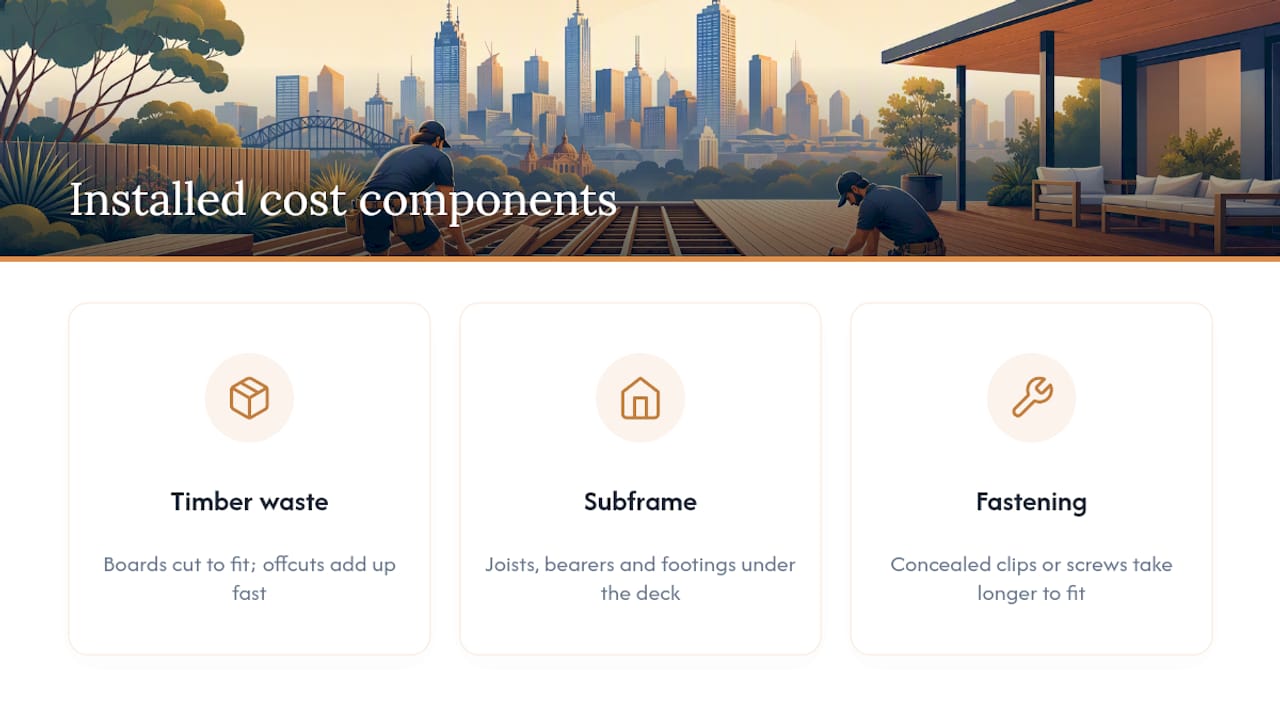
Why does installed cost roughly double or triple the raw material price? Three things: waste (boards get cut to fit, and offcuts add up fast on angled or curved decks), the subframe underneath (joists, bearers, and footings you never see once the boards go down), and fastening (concealed clips or screws that take longer than a nail gun ever could). None of that shows up in a per-meter timber price, but all of it shows up on your invoice.
What Changes Your Final Merbau Decking Cost
Two decks the same size can land $3,000 apart, and it’s rarely the timber that explains the difference. Here’s what actually moves the number on a quote.
Subframe material and spacing. Treated pine subframes cost less than hardwood but need closer joist spacing (typically 450mm centers for Merbau boards) to stop bounce and sagging over time. A hardwood subframe holds a wider span but adds material cost upfront.
Site prep and footings. A flat, accessible backyard with easy footing access is the cheapest scenario. Sloped blocks, poor soil, existing structures needing demolition, or a deck that has to clear drainage and services can push footing costs up considerably before a single board goes down.
Board grade and finish. Kiln-dried, sanded, and select-grade Merbau costs more than standard mill-run boards, and longer board lengths reduce waste but carry a price premium. Fastener choice matters too:
- Stainless steel concealed fixings cost more than galvanized screws but resist corrosion and staining far longer.
- Hidden clip systems add labor time but leave a cleaner, screw-free surface.
- Standard exposed screws are the cheapest option and the fastest to install.
Labor complexity. A single-level, ground-hugging deck is straightforward. Add steps, balustrades, handrails, or a raised platform over 1 meter and both material and labor costs climb, partly because Australian Building Codes require specific rail heights and load ratings once a deck reaches certain elevations.
DIY or Hire a Pro for Merbau Decking?
A 10 to 15 square meter deck bought as materials only might cost a few thousand dollars in Merbau boards, subframe timber, and fixings. Installed by a professional, that same deck typically costs noticeably more. Step up to a 20 to 30 square meter deck and material-only costs increase accordingly, while installed pricing can approximately double depending on complexity.
That gap looks tempting if you’re handy with a drill. It closes fast when things go wrong.
- Splitting boards. Merbau is dense and prone to splitting near the ends if you don’t pre-drill, especially in the drier months when the timber has shrunk slightly.
- Fastener corrosion. Cheap galvanized screws react with Merbau’s natural tannins and streak or fail within a couple of years.
- Incorrect joist spacing. Get this wrong and boards bounce, cup, or crack under normal foot traffic within a season or two.
- Drainage and fall mistakes. A deck built dead flat pools water and rots the subframe from underneath, often years before you notice it from above.
Hire a professional outright if the deck sits above 1 meter, includes stairs or balustrades, or ties into an existing structure that needs council sign-off. Building code compliance isn’t optional on elevated structures, and a failed inspection costs more to fix than it would have to hire it out correctly the first time.
Pro Tip: If you’re set on some DIY involvement, do the demolition and site clearing yourself and pay a professional for the subframe and board-laying. That split cuts labor cost without touching the parts of the job where mistakes get expensive.
Merbau Maintenance Costs and the Tannin Bleed Problem
Merbau isn’t a set-and-forget timber, and the ongoing cost of keeping it looking good is where a lot of budgets get thrown off.
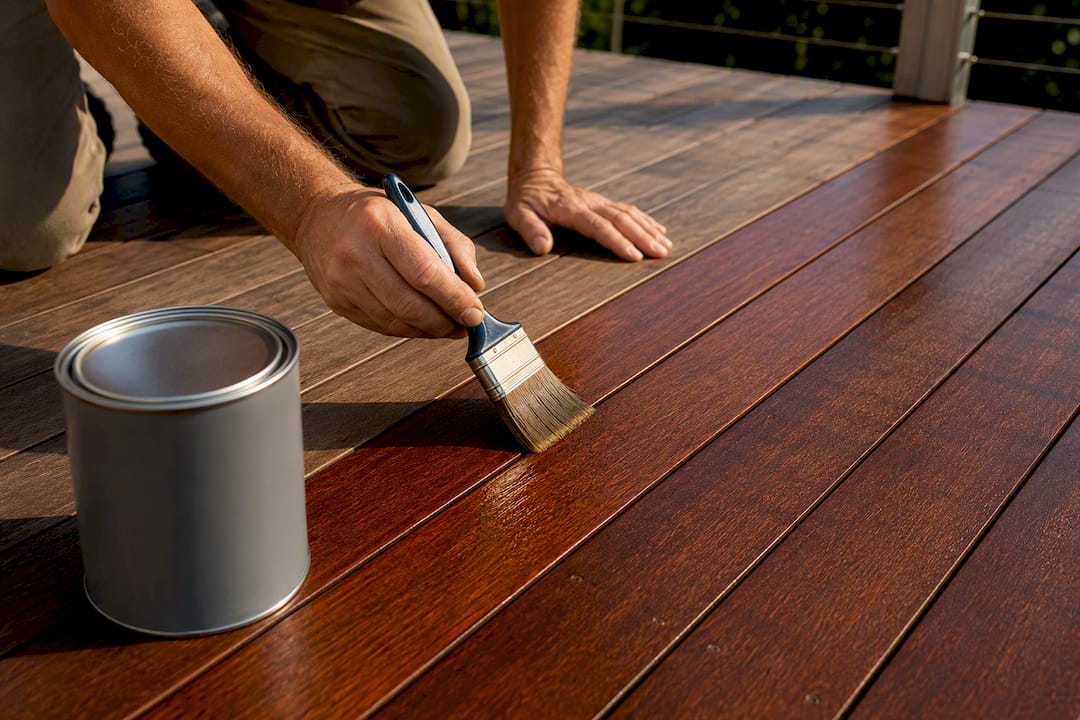
Plan on oiling the deck once or twice a year, more often in full-sun positions where UV exposure fades color fastest. A basic oil and re-coat for a mid-sized deck typically costs $300 to $700 in materials and labor if you hire someone, or considerably less if you do it yourself with a quality decking oil and a weekend.
- Sweep and wash the deck every few weeks to stop grime building into the grain.
- Sand back any raised or splintered sections before recoating, not after.
- Reapply oil before the old coat fully wears away, not once it’s already gray and dry.
- Check fastener heads annually for corrosion or lifting, especially near garden beds and downpipes.
Tannin bleed is Merbau’s signature problem. Fresh Merbau releases tannins when it gets wet, and that runoff stains light-colored pavers, concrete, and rendered walls a rusty brown that’s genuinely difficult to remove. The fix is straightforward: let new boards weather for a couple of weeks before sealing, and pressure wash the deck thoroughly before the first oil coat locks any residual tannin into the surface. Skip this step and you risk permanent staining on anything light-colored sitting below or beside the deck.
Over a 10 to 15 year span, Merbau’s ongoing oiling and re-coating costs add up to noticeably more than composite decking, which needs occasional cleaning but no staining or sealing. Composite costs more upfront and Merbau costs more over time. Which one wins depends on whether you’d rather pay now or pay in installments.
What to Expect From Quote to Finished Deck
Most Melbourne homeowners can expect the full process, from first quote request to a finished deck, to take 2 to 4 weeks. Here’s roughly how that breaks down.
- Quote and site visit (a few days to a week): a contractor assesses ground conditions, access, and drainage before pricing the job.
- Timber lead time (a few days to two weeks): Merbau board availability varies with supply, so confirm stock before locking in a start date.
- Build days: a straightforward 20 square meter deck typically takes 3 to 5 days on site once materials arrive and footings are set.
- Sign-off and final coat: any oiling or sealing usually happens after a short weathering period.
On permits, most councils treat decks under a certain height (commonly around 1 meter) as exempt from formal approval, though rules vary by municipality and by whether the structure is attached to the house. Treat this as planning guidance rather than legal advice and confirm directly with your local council before you build.
Before signing anything, confirm what’s actually included: footings, balustrades if needed, rubbish removal, and warranty length. A quote that’s silent on any of these is a quote with hidden costs waiting to surface later.
Questions to Ask Before You Sign a Decking Quote
A comparable quote is one where every contractor priced the exact same job. Vague scopes are how one “cheap” quote turns into the most expensive deck on the street.
- Does the price include footings and subframe, or are those quoted separately?
- What board width and grade of Merbau is specified, and where is it sourced from?
- Are fasteners stainless steel or galvanized, and is that reflected in the price?
- Is disposal of old decking or excavated soil included?
- What’s the warranty length on labor versus materials?
- Can you provide references or photos from a similar recent Melbourne job?
- Are you licensed and insured for this type of structural work?
- Who handles council permit checks if the deck needs one?
- What’s your current lead time for materials and start date?
- How many days on site should I expect for a deck this size?
- What happens if you hit rock, poor soil, or services during footing digging?
- Is the quote fixed-price, or could the final invoice change?
That gap almost always means something’s been left out, not that you found a bargain.
Pro Tip: Ask every contractor the same twelve questions in the same order. It sounds rigid, but it’s the only way to know whether a $6,000 quote and a $9,000 quote are actually pricing the same job.
VW Concreting’s Fixed-Price Merbau Decking Costs
VW Concreting quotes decking work across Melbourne at a fixed-price site cost of $250 to $600 per square meter, which lines up with the broader installed cost ranges reported across the industry while accounting for site-specific factors like access, footing conditions, and finish level.
That range typically includes subframe construction, board supply and installation, and standard fastening, with site-specific items like extensive footings, steps, or balustrades assessed during a site visit rather than guessed at from photos. For Merbau projects specifically, that means sourcing quality board stock, checking it against your site’s exposure and drainage before installation, and flagging any council permit questions early rather than after the build starts.
Why We Recommend Merbau for Some Melbourne Decks, Not All
Merbau earns its place when a homeowner wants a warm, rich hardwood look at a lower entry cost than premium domestic species, and doesn’t mind the annual oiling that comes with it. Where we steer clients toward alternatives is when supply volatility has pushed Merbau pricing close to composite or when a client flat out wants a low-maintenance surface and would rather skip tannin bleed and re-oiling altogether.
Fifteen years and more than 145 completed outdoor projects across Melbourne have shown us that the right timber choice depends more on how a homeowner plans to live with the deck than on which timber looks best in a showroom sample.
— Vic
Ready for a Fixed-Price Merbau Decking Quote?
If you’ve read this far, you already know Merbau pricing swings on site conditions more than on the timber itself. Com cuts through that by quoting a fixed site price after an actual visit, not a phone estimate based on square footage alone.
A decking service request starts with a site visit where we check ground levels, access, drainage, and any council considerations before we put a number on paper. That estimate covers subframe, board supply, installation, and fastening, so you’re not chasing down separate quotes for footings or finishing later. Browse completed outdoor projects for a sense of finish quality, then request a site visit to get your own fixed-price number. If you’re weighing decking against other outdoor upgrades, our outdoor entertainment area checklist covers drainage and setup details worth planning alongside a new deck.
Primary Sources for Merbau Decking Pricing
The cost figures in this guide draw from the following sources:
- Merbau supplier price list, for linear-meter board pricing by size.
- Melbourne Timber Supplies’ decking cost ledger, comparing Merbau against Spotted Gum and other hardwoods.
Sources
- MER_PRICE_02-07-26 – Merbau decking price list (supplier PDF)
- The 2026 Melbourne decking ledger: Cost breakdown for Merbau, Spotted Gum, and premium hardwood – Melbourne Timber Supplies
Leave A Comment