

Fencing styles in residential construction are defined as the combination of materials, structural designs, and finish choices used to enclose or define a residential property. Wood dominates the market at approximately 55% of new installations, with costs ranging from $12 to $45 per linear foot. Vinyl, chain link, aluminum, and composite each fill specific roles based on privacy needs, budget, and architectural context. The right choice depends on four factors: privacy requirements, maintenance commitment, design fit, and total cost. This guide covers the most important fence styles for homes so you can make a confident, informed decision.
1. What are the most popular fencing materials for residential construction?
The five dominant materials in residential fence construction are wood, vinyl, chain link, aluminum or iron, and composite. Each carries a distinct cost profile, maintenance load, and visual character.
- Wood is the most widely used material, accounting for 55% of new installs. It delivers a warm, traditional look and accepts paint or stain in any color. The trade-off is ongoing upkeep: wood requires sealing or staining every few years to prevent rot and warping.
- Vinyl has grown steadily in popularity, especially in HOA communities. Vinyl and aluminum require virtually zero routine maintenance compared to wood. Vinyl resists moisture, insects, and fading without any coating.
- Chain link is the most affordable option, with installation costs starting at $8 to $18 per linear foot. It offers no privacy but works well for security perimeters, dog runs, and utility areas.
- Aluminum and wrought iron deliver an ornamental, upscale appearance. They suit front yards and pool enclosures where visibility matters more than screening.
- Composite blends wood fiber and recycled plastic. It looks like timber but resists rot and requires far less maintenance than natural wood.
Pro Tip: If you own a rental property, avoid wood fencing. Vinyl or aluminum will save you hundreds of dollars in maintenance calls over a five-year period.
2. How do fence styles fit with residential architecture?
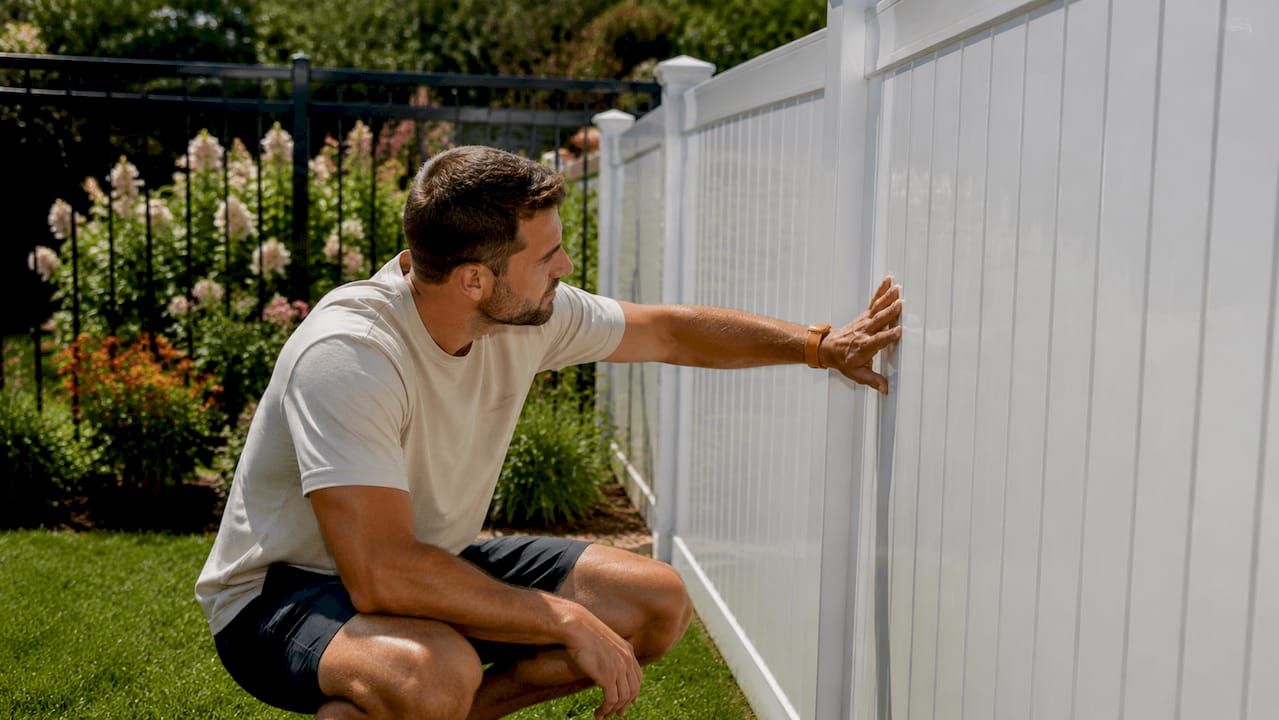
Homeowners consistently prioritize how well a fence complements their home’s architecture over pure functionality. A fence that clashes with the home’s exterior reads as an afterthought, not a design decision.
Modern homes favor horizontal slat designs, dark powder-coated steel frames, and minimal hardware. Black steel frames with composite or aluminum infill create a clean, monolithic appearance that pairs naturally with concrete facades and timber cladding. The result looks intentional rather than generic.
Established neighborhoods tell a different story. Design fit and neighborhood consistency often outweigh trendiness in areas with older housing stock. Craftsman-style cedar picket fences and ornamental steel suit period homes far better than a stark horizontal slat panel.
Mixing materials is a practical way to add depth without overspending. A concrete footing with a timber panel above it, or a steel frame with composite boards, creates texture and visual interest. Fencing is increasingly treated as an extension of the home’s design palette rather than a boundary afterthought.
- Match fence height and color to the home’s dominant exterior tones
- Use horizontal slats for contemporary or minimalist architecture
- Choose ornamental steel or cedar for craftsman, federation, or traditional homes
- Mix materials to add depth while keeping the overall look cohesive
3. What are the main functional fence styles and how do you choose?
A fence’s primary function should drive the material and style choice before any other consideration. Choosing a decorative picket fence when you need a privacy screen is one of the most common and costly mistakes homeowners make.
The four functional categories are privacy, semi-privacy, ornamental, and security.
- Privacy fences use solid panels with no gaps. They are the standard choice for backyard living areas, pools, and properties on busy roads. Timber and vinyl are the most common materials.
- Semi-privacy fences use spaced slats or louvered boards. They allow airflow and partial sightlines while still reducing direct views. Good for side yards and front boundaries where full screening feels too closed off.
- Ornamental fences use metal pickets or decorative steel panels. They define a boundary without blocking views. Common for front yards, driveways, and garden edges.
- Security fences prioritize height and anti-climb features. Chain link with added height, or steel palisade fencing, fits commercial-adjacent residential properties and high-value homes.
Pro Tip: For rental properties or new developments, semi-privacy vinyl is the most practical choice. It satisfies tenant privacy needs, meets most HOA requirements, and costs almost nothing to maintain.
Avoid the common mistake of choosing a high-maintenance material for a property you won’t actively manage. A cedar privacy fence looks excellent on day one but deteriorates fast without regular care.
4. How do local regulations and maintenance affect your fence choice?
Local zoning rules directly limit what you can build before you spend a dollar. Front yard fences are commonly capped at 3 to 4 feet, while backyard fences are typically limited to 6 feet. These limits vary by jurisdiction, so checking with your local council or municipality before ordering materials is non-negotiable.
Permit requirements add another layer. Some jurisdictions require a building permit for any fence over a certain height. Others require setback compliance, meaning the fence must sit a defined distance from the property line. Skipping this step can result in forced removal and significant cost.
HOA communities add their own layer of restrictions. Most HOAs favor vinyl or ornamental aluminum because both materials maintain a consistent appearance without painting or staining. Wood is often restricted or requires specific colors and finishes.
- Confirm height limits for front and rear yards with your local authority
- Check whether a permit is required before installation begins
- Review HOA guidelines for approved materials and colors
- Factor in long-term maintenance when choosing between wood, vinyl, and metal
Maintenance commitment is a practical filter. Wood requires sealing or staining on a regular cycle. Vinyl and aluminum need only occasional washing. Composite sits in the middle: it resists rot but may need periodic cleaning to prevent mold buildup in shaded areas.
5. How to compare the best fencing options for your project
The table below compares the five main residential fence materials across the factors that matter most to homeowners and developers.
| Material | Cost per linear foot | Maintenance | Privacy | Best use |
|---|---|---|---|---|
| Wood | $12–$45 | High | Full | Backyards, traditional homes |
| Vinyl | $20–$40 | Very low | Full or semi | HOA communities, new builds |
| Chain link | $8–$18 | Very low | None | Utility, security perimeters |
| Aluminum/Iron | $25–$60 | Low | None to partial | Front yards, pool fencing |
| Composite | $25–$50 | Low | Full | Modern homes, low-maintenance builds |
Cost is not the only variable. A chain link fence costs the least upfront but adds no privacy and minimal curb appeal. Wood costs more and demands ongoing maintenance but delivers warmth and character that vinyl cannot fully replicate. Composite sits at a premium price point but pays back over time through reduced upkeep.
For new residential developments, fencing in building projects is increasingly planned alongside concreting and landscaping as a single coordinated scope. That approach avoids costly rework and produces a more cohesive result.
- Small urban lots: Vinyl or composite privacy panels maximize space without maintenance burden
- Large suburban properties: Wood or composite suits the scale and allows full customization
- Investment properties: Chain link or vinyl minimizes ongoing cost
- Prestige homes: Ornamental aluminum or steel with composite infill delivers the best visual result
Consistent finish on both sides of the fence is a detail that separates professional installations from amateur ones. Hardware-free, uniform panels on both the street-facing and neighbor-facing sides prevent disputes and maintain a polished appearance from every angle.
Key takeaways
The best fencing style for residential construction depends on matching material, function, and maintenance commitment to the specific property, not on following trends.
| Point | Details |
|---|---|
| Wood leads the market | Wood covers 55% of new installs but demands regular sealing or staining to last. |
| Function drives material choice | Identify whether you need privacy, security, or aesthetics before selecting any material. |
| Regulations come first | Check local height limits and permit requirements before ordering or installing any fence. |
| Low-maintenance materials suit rentals | Vinyl and aluminum require virtually no upkeep, making them the practical choice for investment properties. |
| Design fit matters as much as cost | A fence that matches the home’s architecture adds curb appeal and long-term property value. |
What I’ve learned after years of watching fence decisions go wrong
The most common mistake I see is homeowners choosing a fence based on a photo rather than a function. A horizontal slat cedar fence looks stunning in a design magazine. On a south-facing boundary with no maintenance plan, it looks weathered and gray within three years.
The second mistake is ignoring the neighbor-facing side. Both sides of a fence should carry a uniform, hardware-free finish to avoid disputes and maintain a professional result. Most homeowners only think about the side they see from their own yard. The neighbor sees the other side every day.
My honest advice: start with your local council’s height and setback rules, then filter by maintenance commitment, then choose aesthetics. That order saves money and prevents regret. Developers building multiple lots should treat fencing as part of the site plan from day one, not as a finishing item added under budget pressure.
Emerging materials like composite and powder-coated steel are worth the premium for most residential projects. The upfront cost is higher, but the lifecycle cost is lower and the visual result holds up far better over time. Timber fencing still has a place, but only when the homeowner is genuinely committed to maintaining it.
— Vic
Complete your residential project with Com
A well-chosen fence only reaches its full potential when the surrounding construction is executed to the same standard. Com, trading as VW Concreting, has completed over 145 residential projects across Melbourne since 2001, delivering concreting, landscaping, and fencing as a coordinated scope rather than separate trades.
Quality fencing sits on quality ground. Driveways, slabs, and site preparation done right give your fence a stable, level base that holds its line for decades. Com’s team handles the full outdoor build, from concrete footings to fence installation to finished landscaping. If you are planning a residential construction project in Melbourne, contact Com for a professional consultation and get every element working together from the start. Visit vwconcreting.com.au to learn more.
FAQ
What is the most popular fencing material for residential homes?
Wood is the most widely used material, accounting for approximately 55% of new residential fence installations. It suits traditional and craftsman-style homes but requires regular sealing or staining to maintain its appearance.
How much does residential fence installation cost?
Costs vary by material. Chain link starts at $8 to $18 per linear foot, wood runs $12 to $45, and aluminum or composite can reach $60 per linear foot depending on design complexity.
Do I need a permit to install a residential fence?
Most jurisdictions require a permit for fences above a certain height. Front yard fences are typically limited to 3 to 4 feet and backyard fences to 6 feet, but rules vary by location.
What is the lowest-maintenance fence for a rental property?
Vinyl and aluminum are the best choices for rental properties. Both materials require virtually zero routine maintenance compared to wood, reducing long-term costs significantly.
How do I choose the right fence style for my home’s architecture?
Match the fence material and design to your home’s dominant exterior style. Modern homes suit horizontal slats and dark steel frames, while traditional or craftsman homes pair better with cedar picket or ornamental steel designs.
Leave A Comment