
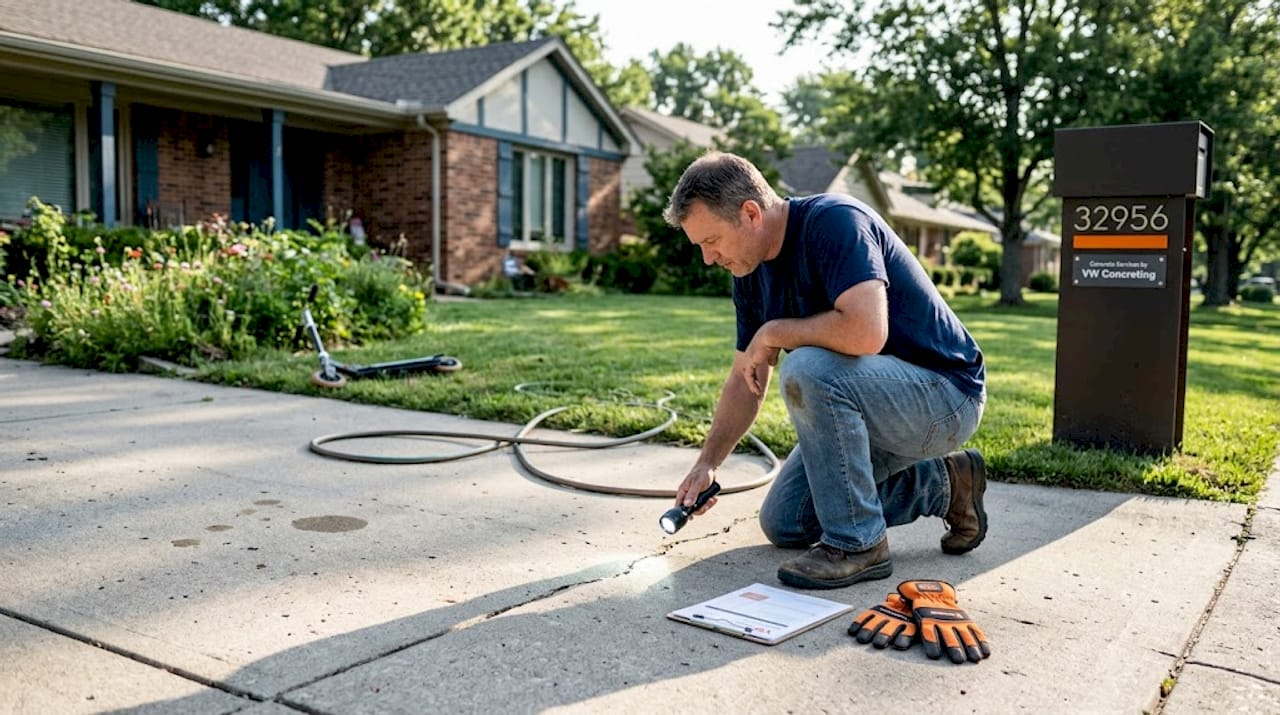
You pour money into a new concrete driveway, and within three or four years, hairline cracks start appearing. It’s one of the most common frustrations Melbourne homeowners share with us. Most assume it’s just the weather doing its thing, or that concrete simply ages that way. But here’s what most people don’t realize: the majority of driveway cracks are preventable. The real causes trace back to installation decisions, drainage habits, and maintenance routines that are entirely within your control. This guide breaks down exactly why cracks form and what you can do about it.
Table of Contents
- Understanding why driveways crack: The main culprits
- How poor installation practices speed up driveway cracking
- The hidden role of water and weather in driveway damage
- Best practices for driveway maintenance and preventing cracks
- Why most driveways crack, and what Melbourne homeowners rarely hear
- Protect your driveway with the right local experts
- Frequently asked questions
Key Takeaways
| Point | Details |
|---|---|
| Joint placement matters | Most driveway cracks come from incorrect joint spacing, not just aging or weather. |
| Water is a hidden threat | Sealing your driveway and managing runoff are essential to prevent water-related cracking. |
| Regular maintenance pays off | Proactively sealing and repairing small cracks extends driveway life and reduces costly repairs. |
| Proper installation prevents issues | Choosing skilled professionals and asking the right questions reduces the risk of premature cracking. |
Understanding why driveways crack: The main culprits
Now that you know cracks aren’t just bad luck or age, let’s look at what really causes them.
A lot of Melbourne homeowners assume that concrete cracking is just a natural part of owning a driveway. That’s partly true, but it’s also a convenient excuse that lets poor workmanship and neglect off the hook. The reality is that most cracks trace back to a handful of controllable factors, and understanding them puts you in a much stronger position to prevent damage.
The biggest causes of driveway cracking include:
- Improper control joint placement or spacing
- Water infiltration beneath the slab
- Ground movement and soil settlement
- Extreme temperature swings and freeze/thaw cycles
- Heavy vehicle loads beyond the slab’s design capacity
- Rushing the concrete curing process during installation
One of the most underappreciated issues is joint placement. Improper joint spacing should follow the 24 to 36 times the slab thickness rule, and when it doesn’t, random cracking replaces the controlled cracking that joints are designed to manage. Instead of cracks forming where they’re supposed to, they appear wherever the concrete is weakest.
“Not all cracks are the same. A hairline crack on the surface is very different from a structural crack that runs through the full depth of the slab. Knowing the difference helps you decide whether to monitor, patch, or call a professional.”
Here’s a quick breakdown of crack types:
- Hairline cracks: Thin surface cracks, often cosmetic, but worth sealing early to prevent water entry
- Expansion cracks: Occur at joints or edges where concrete expands and contracts with temperature
- Structural cracks: Run deep through the slab, often caused by ground movement or overloading, and require professional repair
Understanding which type you’re dealing with is the first step toward the right solution. Ignoring any of them, even hairline cracks, gives water a path into the slab where it can cause far bigger problems over time.
How poor installation practices speed up driveway cracking
With the main causes clear, let’s dig into how improper installation magnifies the problem.
A driveway’s long-term durability is largely decided before the first car ever rolls over it. The decisions made during installation, including joint placement, base preparation, material quality, and curing time, set the stage for everything that follows. When those decisions are rushed or cut short, you end up with a driveway that starts failing far earlier than it should.
Proper vs. improper jointing: A direct comparison
| Factor | Proper installation | Improper installation |
|---|---|---|
| Joint spacing | 24 to 36 times slab thickness | Random or missing joints |
| Crack behavior | Controlled, predictable cracking at joints | Random cracking across the slab |
| Long-term outcome | Manageable maintenance, longer lifespan | Premature structural failure |
| Repair cost | Low to moderate over time | High, often requiring full replacement |
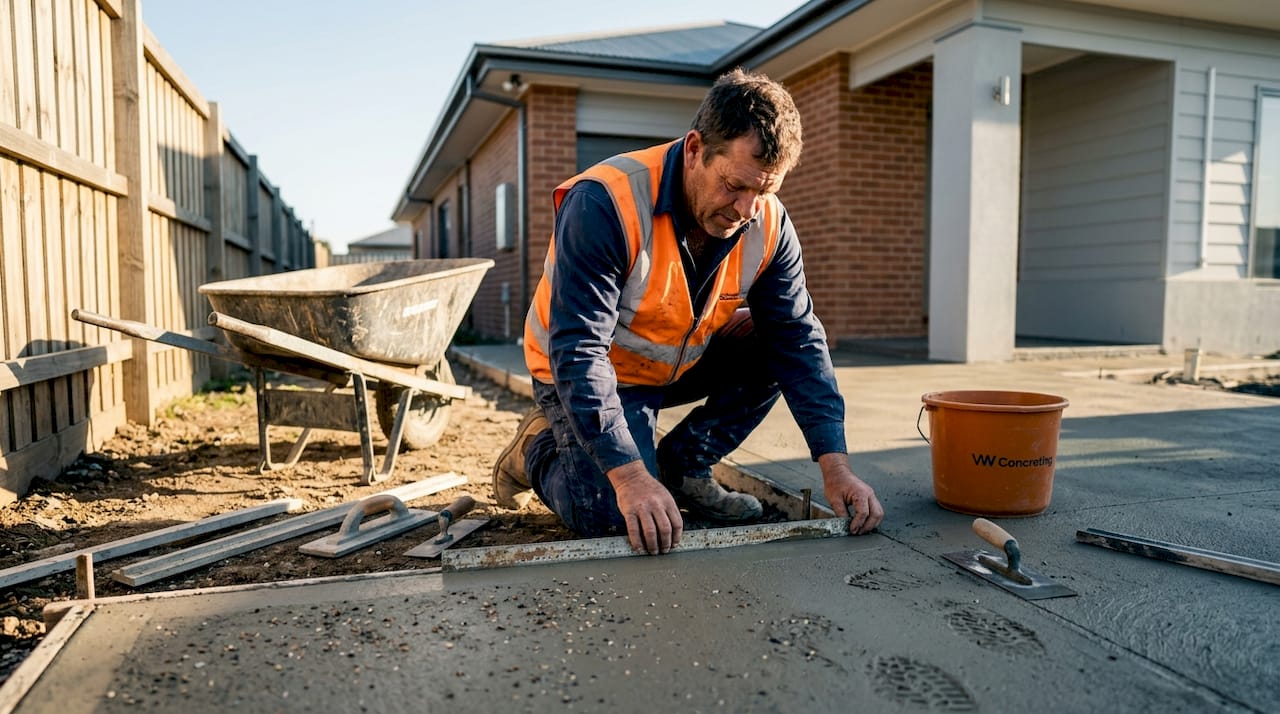
Improper joint placement is one of the most common installation mistakes, and it’s one that homeowners rarely think to ask about. When joints are placed too far apart or skipped entirely, the slab has no controlled release point for stress. Cracks form wherever the concrete is weakest, which is unpredictable and often in the worst possible spots.
Beyond joints, other installation problems that lead to early cracking include:
- Poor base preparation: A compacted, well-graded sub-base is essential. Soft or uneven ground beneath the slab leads to differential settlement, where one section sinks faster than another and the slab cracks under the stress.
- Low-quality concrete mix: Using the wrong water-to-cement ratio weakens the slab. Too much water makes it easier to pour but dramatically reduces strength.
- Rushing the cure: Concrete needs time to gain strength. Driving on a new slab too early, or allowing it to dry out too fast in hot weather, creates internal stress that leads to surface and structural cracking.
- Inadequate slab thickness: A residential driveway typically needs at least 100mm of thickness. Thinner slabs crack under normal vehicle loads.
Pro Tip: Before your concreter starts work, ask them specifically about joint spacing, base depth, and how they plan to manage the curing process. A professional who can answer these questions clearly is one who takes the job seriously. If you’re exploring premium finishes, slate driveway solutions are worth considering for both durability and visual appeal.
The hidden role of water and weather in driveway damage
Even perfect installation can’t save a driveway from what comes after, especially when water and weather come into play.
Water is the most persistent enemy of any concrete driveway. It doesn’t announce itself. It seeps into hairline cracks, works its way under the slab, softens the base material, and then freezes and expands when temperatures drop. By the time you see the damage on the surface, the problem beneath has often been building for months or even years.
How water affects your driveway over time
| Water source | How it causes damage | Prevention method |
|---|---|---|
| Surface pooling | Saturates the slab and base, causing erosion | Improve surface grading and drainage |
| Downspout runoff | Concentrates water at one point, undermining the base | Redirect downspouts away from the driveway |
| Subsurface moisture | Softens the sub-base, leading to settlement | Proper drainage channels during installation |
| Freeze/thaw cycles | Water expands when frozen, widening existing cracks | Seal cracks promptly and apply surface sealer |
Melbourne’s climate sits in an interesting middle ground. It doesn’t get the brutal winters of colder climates, but it does experience enough temperature variation to stress concrete. Overnight frosts in winter, followed by warm days, create repeated expansion and contraction cycles that gradually widen small cracks into larger ones.
Key water-related issues to watch for:
- Water pooling on or near the driveway surface after rain
- Gutters or downspouts directing water toward the driveway
- Soft or spongy ground near the slab edges
- Efflorescence (white mineral deposits) on the surface, which signals water moving through the concrete
One of the most effective and affordable things you can do is seal your driveway regularly. Sealing every 2 to 3 years blocks water from penetrating the slab and prevents the cycle of damage from starting. It’s a small investment compared to the cost of resurfacing or replacing a cracked driveway.
Pro Tip: Walk your property after a heavy rain and check where water flows. If it’s heading toward your driveway instead of away from it, that’s a drainage problem you need to fix before it becomes a concrete problem. For exposed aggregate surfaces, check out these aggregate driveway tips for specific maintenance guidance.
Best practices for driveway maintenance and preventing cracks
With the risk factors clear, here’s how to keep your driveway in top condition for years to come.
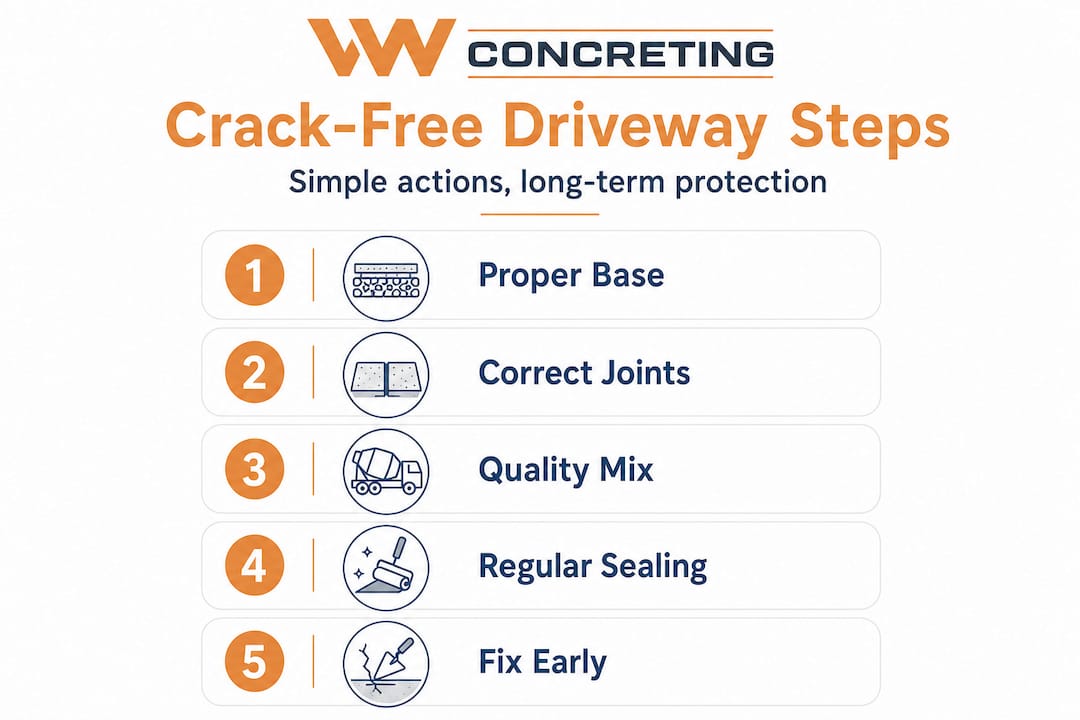
The “set and forget” approach to driveways is one of the most expensive mistakes a homeowner can make. A driveway that gets regular attention will outlast a neglected one by a decade or more. The good news is that the maintenance required isn’t complicated or time-consuming. It just needs to happen consistently.
Your driveway maintenance schedule
- Seal the surface every 2 to 3 years. In Melbourne’s conditions, this is the single most impactful thing you can do. A quality penetrating sealer blocks moisture, reduces surface wear, and makes cleaning easier. Sealing and early crack repair with flexible fillers prevents small issues from becoming expensive ones.
- Inspect for cracks twice a year. Spring and autumn are ideal times to do a thorough walkover. Look for new hairline cracks, changes in existing cracks, and any sections that feel uneven underfoot.
- Fill hairline cracks promptly. Use a flexible polyurethane or epoxy filler for small cracks. These materials move with the concrete as it expands and contracts, rather than cracking again like rigid fillers do.
- Clear debris from joints and edges. Leaves, soil, and organic matter that pack into control joints hold moisture against the concrete and accelerate deterioration.
- Check gutters and downspouts seasonally. Make sure water is being directed well away from the driveway. A downspout extension is a cheap fix that can prevent significant damage.
- Avoid heavy vehicle overloading. If you’re regularly parking a large truck or trailer on a residential driveway, the slab may not be designed for that load. Talk to a professional about whether reinforcement is needed.
Maintenance dos and don’ts:
- Do clean oil and chemical spills quickly. These weaken the surface and allow water to penetrate faster.
- Do use a pressure washer annually to remove surface grime, but keep the pressure moderate.
- Don’t use metal snow shovels or sharp tools near the surface.
- Don’t apply de-icing salts, which are corrosive to concrete and accelerate surface spalling (flaking).
- Don’t ignore cracks longer than 3mm wide or any cracking that runs along the full length of a slab section.
For colored and plain concrete maintenance, the sealing schedule is especially important because UV exposure can fade the finish over time. When in doubt about the severity of a crack or the right repair approach, reach out to professional concreting services rather than guessing.
Pro Tip: Keep a simple photo log of your driveway’s condition each year. A quick photo taken from the same spot twice a year makes it easy to see whether a crack is growing or stable. That information is invaluable when talking to a professional about whether repair or replacement is the right call.
Why most driveways crack, and what Melbourne homeowners rarely hear
Here’s the perspective that doesn’t always make it into the standard advice: driveway cracking in Melbourne is as much a local story as it is a concrete story.
Melbourne sits on a mix of clay-heavy soils that expand when wet and shrink when dry. That constant movement beneath the slab creates stress that even well-installed driveways have to manage. Add to that the city’s pattern of hot, dry summers followed by wet winters, and you have a climate that puts concrete through a real workout year-round. Most generic advice about driveways doesn’t account for this. It treats all concrete the same, regardless of what’s underneath it or what weather it’s enduring.
What we’ve seen across hundreds of projects is that the driveways that hold up best aren’t necessarily the most expensive ones. They’re the ones where the installer took the time to get the base right, placed joints correctly, and where the homeowner followed through with basic sealing and drainage maintenance. It really does come down to those fundamentals.
The other thing most people don’t hear is that early intervention is dramatically more cost-effective than waiting. A hairline crack that costs almost nothing to fill today can become a structural failure that requires full slab replacement in a few years if water gets in and the base softens. The math is simple, but the urgency doesn’t feel real until the damage is visible.
We’ve seen driveways in Melbourne suburbs near concrete solutions in Mount Cottrell where the soil movement alone would have cracked any slab without proper joint planning. The lesson isn’t that cracking is inevitable. It’s that prevention requires understanding your specific site conditions, not just following a generic checklist.
Protect your driveway with the right local experts
If you’ve made it this far, you already know more about driveway maintenance than most Melbourne homeowners. That knowledge is powerful, but putting it into practice is where the real difference gets made.

At VW Concreting, we’ve been working on Melbourne driveways since 2001, and we know how local soil conditions, drainage patterns, and weather cycles affect concrete over time. Whether you’re dealing with existing cracks or planning a new installation, getting a professional assessment before committing to repairs or replacement can save you significant money. Browse our driveway project solutions to see the range of work we deliver, or learn more about concreting services in Melbourne and what to look for when choosing a contractor. If you’re interested in premium finishes that combine durability with style, our slate driveway experts can help you find the right solution for your property.
Frequently asked questions
What is the most common cause of driveway cracking?
Improper joint spacing during installation is a leading cause, as it forces cracks to form randomly across the slab rather than at controlled release points.
How often should I seal my driveway to prevent cracks?
Most experts recommend sealing every 2 to 3 years to block water infiltration, which is especially important in Melbourne’s variable climate.
Is it normal for new driveways to crack within a few years?
Small hairline cracks can appear as concrete settles, but frequent or large cracks often point to preventable installation issues like poor joint placement, inadequate base preparation, or rushed curing.
Can I fix small driveway cracks myself?
Many hairline cracks can be filled with flexible fillers as a DIY repair, but cracks wider than 3mm or those that are growing should be assessed by a professional.
Does Melbourne’s weather make driveways more prone to cracking?
Yes. Melbourne’s clay soils, seasonal moisture swings, and temperature cycles create ongoing stress on concrete slabs, making proactive sealing and drainage management more important here than in more stable climates.
Leave A Comment