Garden paving in Melbourne typically runs $60 to $160 per square meter installed, depending on material, with concrete pavers sitting around $60–$110/m² and natural stone climbing to $90–$160/m². The real budget swing comes from what’s underneath the pavers and how hard your site is to access, not the material itself. Get two or three itemized quotes before you commit, and treat any figure without a base spec as incomplete.
TL;DR:
- Base preparation depth and site access significantly influence the overall cost, with thicker bases and difficult terrain adding thousands of dollars.
- Natural stone, especially premium materials like bluestone, can triple in price compared to standard concrete pavers due to material and cutting variations.
- Site conditions such as reactive clay soils, steep slopes, or poor drainage can increase costs by requiring additional work like retaining walls or specialized base layers.
- Requesting detailed quotes that specify excavation depth, edge restraints, jointing, and permits helps avoid hidden costs and scope misunderstandings.
- Most Melbourne paving projects typically range from $2,000 to $12,000 depending on project size, material choice, site complexity, and access conditions.
Table of Contents
- How Much Does Garden Paving Cost Per Square Meter in Melbourne?
- What Do Installation and Base Preparation Cost?
- Why Do Site Conditions Change Your Paving Quote So Much?
- What Does a Typical Paving Project Actually Cost?
- What Should Be in a Written Paving Quote?
- How Long Does a Paving Project Take From Start to Finish?
- What Does VW Concreting Bring to a Paving Project?
- What Warranty and Maintenance Costs Should You Budget For?
- Why the Base Matters More Than the Pavers
- Ready to Get an Itemized Paving Quote?
- Sources
How Much Does Garden Paving Cost Per Square Meter in Melbourne?
Material choice sets your starting point, but quality tier moves the number just as much as the material family does. A budget concrete paver and a premium sawn bluestone slab can both be called “natural stone paving” in a rough quote, and the price gap between them is enormous.
Here’s what supply-only pricing looks like across the materials Melbourne homeowners ask about most:
- Exposed aggregate concrete: Often priced similarly to premium concrete pavers, but the exposed stone finish and sealing add a noticeable premium over plain gray slabs.
- Porcelain pavers: Usually priced close to mid-tier natural stone, reflecting the manufacturing precision required for large-format outdoor tiles.
- Permeable pavers: A moderate premium over standard concrete pavers, offset over time by reduced stormwater management needs on some sites.
Thicker pavers built for driveways cost more than thin patio-grade stock, and large-format or irregular-cut stone always carries a cutting premium. Maintenance costs follow the same pattern: natural stone needs periodic sealing to resist staining, while dense concrete pavers are largely set-and-forget beyond an occasional pressure wash.
What Do Installation and Base Preparation Cost?
Labor and base work is where most paving budgets actually go, and it’s the part homeowners underestimate most. Installed concrete paving in Victoria commonly costs $60–$110/m² once you add base preparation, laying, and jointing to the supply cost. Simple running-bond patterns on flat, easy-access sites sit at the low end. Herringbone patterns, curved edges, or steps push labor rates up because they take longer and generate more offcuts.
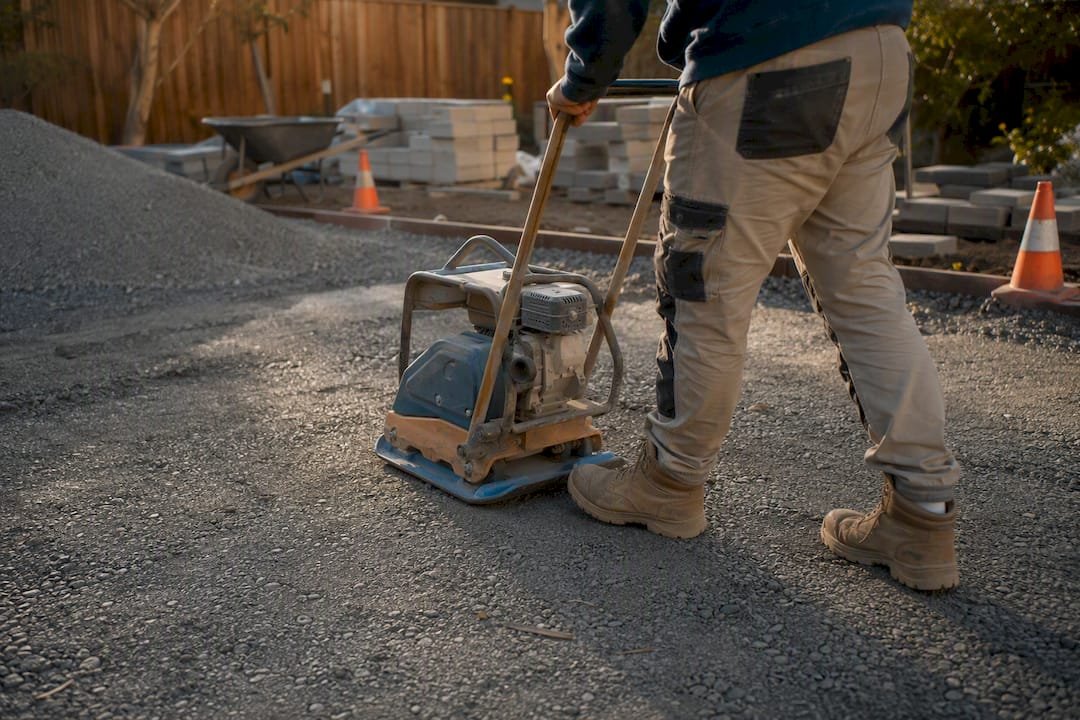
Base depth matters more than most people realize. A pedestrian patio needs a properly compacted crushed rock sub-base, but a vehicle-rated driveway needs a thicker, more heavily compacted base with different edge restraints entirely to handle the load without cracking or subsiding.
Quotes that look suspiciously cheap usually leave something out. Watch for these common omissions:
- Edge restraints (concrete haunching or steel edging) to stop pavers spreading over time
- Jointing sand or polymeric jointing compound
- Sealing, especially for natural stone or exposed aggregate
- Spoil removal after excavation
Pro Tip: Ask every contractor to quote base depth in millimeters, not just “compacted base included.” A 50mm base and a 150mm base are priced completely differently, and only one of them will survive a Melbourne winter without shifting.
Why Do Site Conditions Change Your Paving Quote So Much?
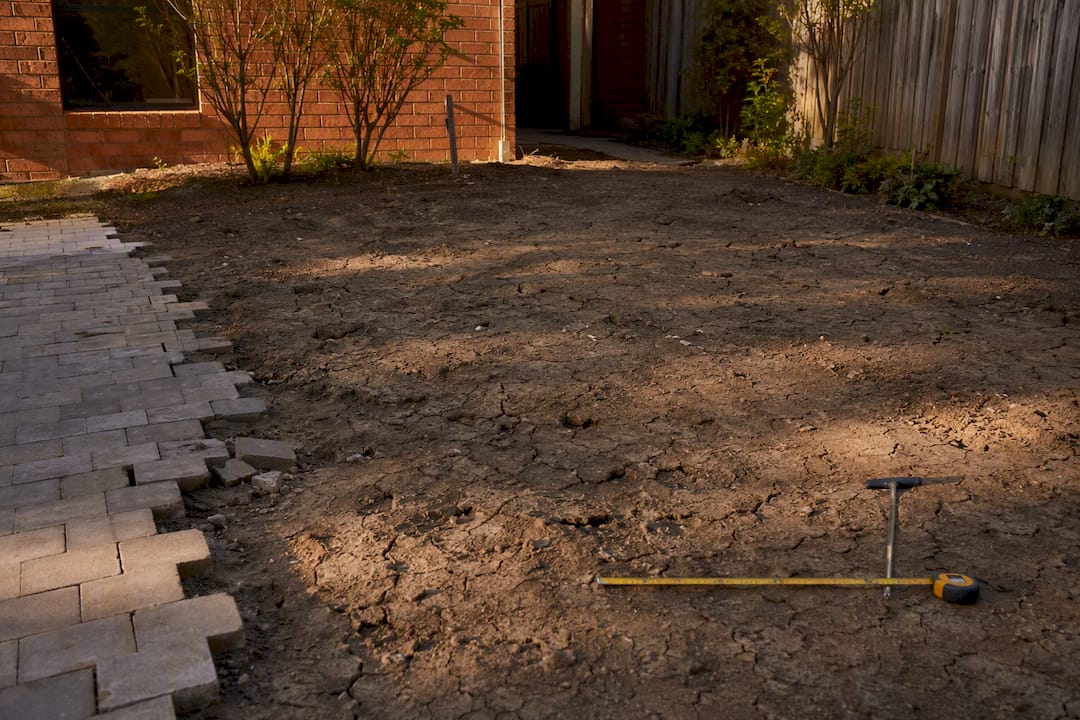
Slope changes the math too. A yard with any meaningful grade may need retaining structures or stepped paving sections to keep the surface level and draining correctly, which is a different scope entirely from a flat-site quote.
Before you compare prices, check these site factors:
- Soil type: Reactive clay requires deeper, better-specified base than sandy or well-drained soil.
- Slope and retaining: Anything beyond a gentle grade may need a retaining wall or terracing.
- Drainage: Poor natural drainage may need agricultural drains or graded falls built into the base.
- Crossovers and permits: Any work touching a vehicle crossing or nature strip usually needs council sign off.
Ask directly whether your contractor has priced for manual handling if a machine can’t reach your paving area. That single question exposes more lowball quotes than any other.
What Does a Typical Paving Project Actually Cost?
Per-square-meter figures only mean something once you attach them to a real job size. Here’s how the numbers translate for common Melbourne projects, assuming standard base preparation and reasonable access.
| Project | Size | Typical Total | What Pushes It Higher |
|---|---|---|---|
| Stepping path | 8–15m² | $500–$1,500 | Natural stone, curved layout |
| Small patio | 30m² | $2,000–$4,000 | Herringbone pattern, sealing |
| Standard patio | 50m² | $4,000–$8,000 | Natural stone, poor access |
| Vehicle-rated driveway | 50–60m² | $6,000–$12,000 | Thicker base, steep slope, premium stone |
Small jobs carry a higher per-square-meter rate than large ones because mobilization, base setup, and edge work cost roughly the same whether you’re paving 10m² or 40m². That’s simply the fixed-cost reality of any trade job.
The jump from “typical” to “high” in each row almost always comes down to three things: switching from concrete to natural stone, adding a complex pattern or curves, or dealing with a sloped or clay-heavy site. Run every quote you receive against the itemized checklist below before assuming a number is accurate.
What Should Be in a Written Paving Quote?
Quotes that only list a total dollar figure are the single biggest source of budget blowouts in paving projects, because scopes of work vary enormously between contractors even when the headline price looks similar. Use this checklist with every tradie you speak to:
- Excavation depth and spoil removal stated separately, including where the spoil goes and whether disposal is included.
- Base material and depth specified in millimeters, not just “compacted base.”
- Edge restraints named by type (concrete haunching, steel, timber).
- Drainage provisions, including falls and any agricultural drains needed.
- Jointing and sealing, with the product named if it’s a premium sealant.
- Permit responsibility — who applies for any council permit and who pays the fee.
- Warranty terms in writing, including what’s covered and for how long.
- Material sourcing — confirm whether the contractor supplies pavers or you do.
Before signing anything, verify the contractor’s license and insurance directly with the relevant authority rather than taking their word for it. A quote that dodges specifics on any of these eight points is worth a follow-up call, not a signature.
How Long Does a Paving Project Take From Start to Finish?
Most homeowners are surprised by how much of the timeline is prep and curing, not laying pavers. Small patios and paths typically take 1–3 days on site, covering excavation, base compaction, and paver laying. Larger patios and vehicle-rated driveways run 3–7 days because the base needs more compaction passes and the paved area is bigger.
Sealing and curing add extra days before the surface can take full foot or vehicle traffic, and Melbourne’s wet-season weather can push that out further if rain interrupts compaction work.
Before the crew arrives:
- Clear access paths and move parked cars away from the work zone
- Flag any known underground services (irrigation lines, cables) in the paving footprint
- Confirm which day sealing happens, since that area needs to stay traffic-free
At handover, walk the finished surface with the contractor and check joints, falls, and edge restraints before final payment.
What Does VW Concreting Bring to a Paving Project?
VW Concreting has been working in Melbourne’s concreting and outdoor construction industry since 2001, with more than 145 completed projects across driveways, patios, and garden paving…
A written quote from VW Concreting typically includes a site inspection to assess soil and access, a specified base depth appropriate to reactive clay conditions, drainage provisions where the site needs them, and clear warranty terms. That level of detail is what separates a quote you can compare against others from one you’re just hoping is accurate… Explore the pavers Melbourne service page for a look at typical project scope.
What Warranty and Maintenance Costs Should You Budget For?
A workmanship warranty is standard on most professional paving jobs in Melbourne, typically covering base failure, subsidence, or paver movement for a set period after installation. Get the warranty term in writing before the job starts, not as a verbal assurance, and confirm whether it covers materials, labor, or both.
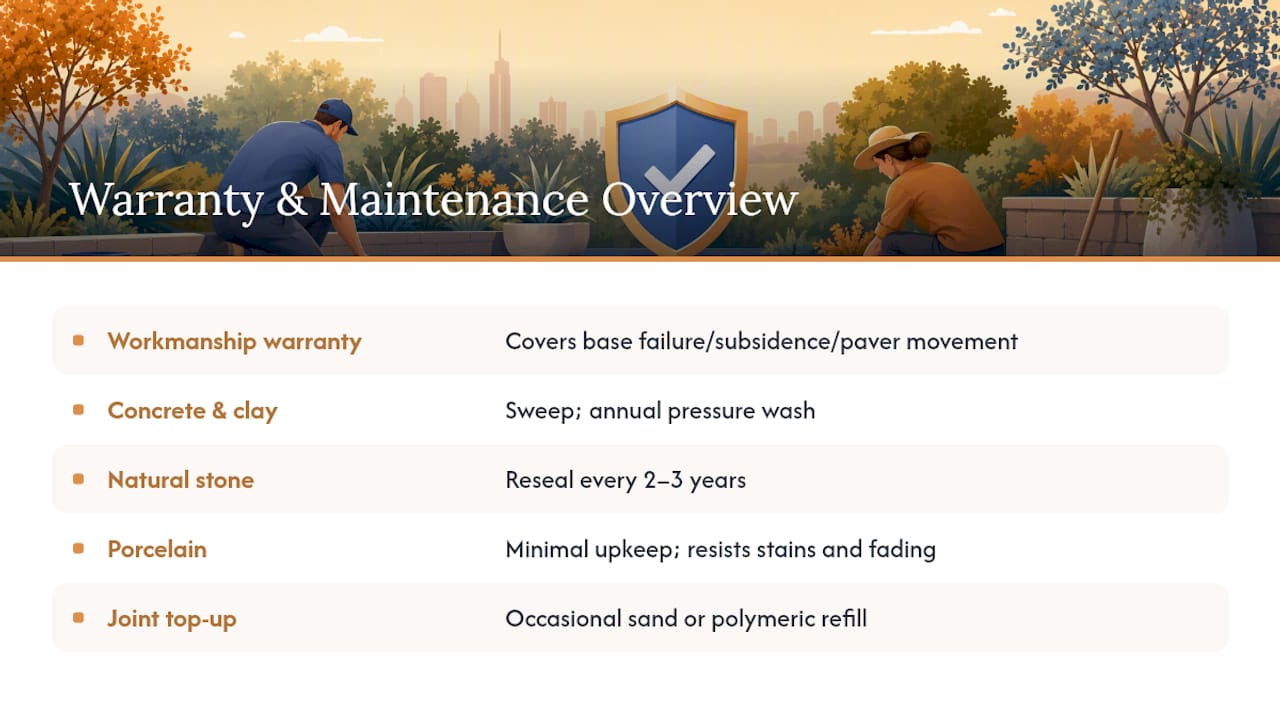
Ongoing maintenance costs vary by material more than by installer. Concrete and clay pavers generally need only occasional sweeping and an annual pressure wash to stay looking sharp. Natural stone needs periodic resealing, usually every two to three years depending on foot traffic and sun exposure, to prevent staining and moisture penetration. Porcelain is the lowest-maintenance option of the group, resisting stains and fading with minimal upkeep.
Melbourne’s freeze-thaw cycles are mild compared to colder climates, but heavy winter rain still tests drainage and base quality every year. A correctly specified crushed rock base is what prevents joint movement and paver lift over time, which is why skimping on base depth to save money upfront often costs more in repairs within a few years. If you’re weighing paving against other exterior surfaces, the ongoing cost comparison in this driveway maintenance checklist for heritage homes is worth a read for context on how surface choice affects long-term upkeep.
Budget an occasional joint top-up as sand or polymeric compound wears from traffic and weather. It’s a minor, inexpensive task that keeps weeds out and pavers locked in place, and it’s far cheaper than relaying a section that’s shifted from neglected joints.
Why the Base Matters More Than the Pavers
Most paving guides spend their energy comparing materials, as if the choice between bluestone and concrete is the decision that makes or breaks a project. It isn’t. The base is. A cheap paver on a correctly specified crushed rock base will outlast an expensive stone slab on a shallow, poorly compacted one, and Melbourne’s clay soils make that gap wider than it would be almost anywhere else in the country.
The conventional advice to “get quotes and compare prices” undersells how different those quotes can be in scope. Two contractors pricing the same 30m² patio can be $2,000 apart and both be honest, simply because one priced a 100mm base with edge restraints and the other priced a 50mm base with none. Homeowners who compare bottom-line numbers without reading the base spec are comparing two different products, not two prices for the same job.
If there’s one thing to prioritize first, it’s asking every contractor to write down base depth and material before you look at the total figure at all.
— Vic
Ready to Get an Itemized Paving Quote?
VW Concreting gives Melbourne homeowners something most paving quotes skip: a base and drainage spec written down before you commit a dollar, backed by more than 145 completed projects across the city’s clay soils and tight inner-suburb blocks.
Requesting a quote is straightforward. Reach out through the contact page with your rough site size, the material you’re leaning toward, and any known access constraints (side gate width, slope, parked cars), and a site inspection can be arranged from there. If you’re also weighing a driveway alongside garden paving, the driveways and slabs project page shows the kind of vehicle-rated base work involved. Whatever you decide, get two or three written quotes before signing anything, and use them to check that VW Concreting’s itemized breakdown lines up with what else is on the table. Start by requesting a site inspection and a written quote through the contact page above.
Leave A Comment