
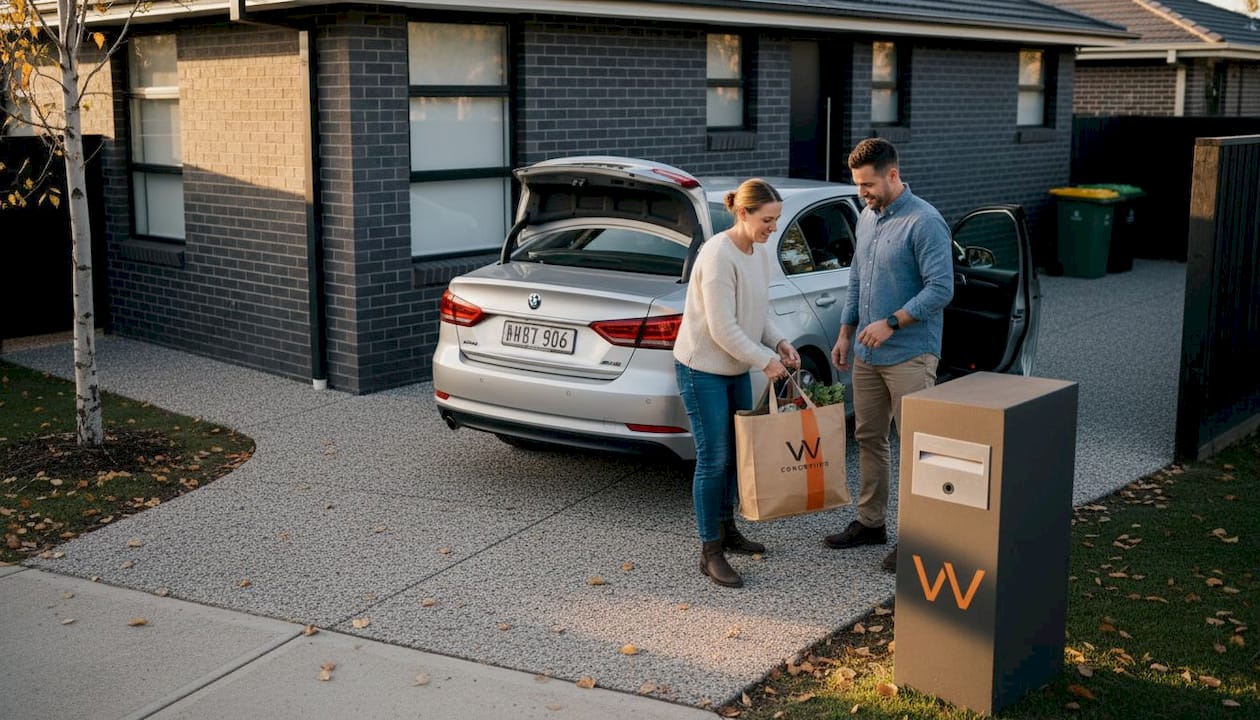
Choosing a driveway material in Melbourne feels harder than it should. You want something that looks sharp from the street, holds up under daily car traffic, survives the city’s notorious weather swings and doesn’t demand constant attention. Plain concrete can feel flat and uninspiring. Pavers shift and crack. Asphalt fades fast.
That’s why many homeowners are now choosing exposed aggregate driveways Melbourne properties can truly benefit from. They sit in a different category entirely, offering a surface that genuinely delivers on style, strength and long-term value.
Unlike traditional finishes, exposed aggregate driveways Melbourne homeowners install provide a textured, premium appearance while also handling heavy vehicle use and changing weather conditions with ease. This article breaks down every major advantage so you can make a confident decision for your home.
Table of Contents
- What is an exposed aggregate driveway?
- Top benefits of exposed aggregate driveways
- How exposed aggregate compares to other driveway options
- Is an exposed aggregate driveway right for your home?
- Our take: Why exposed aggregate driveways are a Melbourne must-have
- Ready to transform your Melbourne driveway?
- Frequently asked questions
Key Takeaways
| Point | Details |
|---|---|
| Style and customization | Exposed aggregate driveways offer a wide range of colors and textures to enhance any Melbourne home. |
| Durability and safety | Their resilient, slip-resistant surface handles heavy use and wet weather with ease. |
| Low maintenance | Simple upkeep keeps these driveways looking great for decades. |
| Cost-effective value | They combine affordable installation with longevity and higher curb appeal. |
| Versatile fit | Exposed aggregate adapts to different property styles and homeowner needs across Melbourne. |
What is an exposed aggregate driveway?
Before diving into benefits, it’s worth being clear about what exposed aggregate actually is and how it differs from other driveway materials you might be considering.
Exposed aggregate driveways consist of concrete with decorative stones and pebbles exposed at the surface, creating a textured, visually rich finish that standard concrete simply cannot replicate. The process works like this: a concrete mix containing decorative stones, pebbles, or crushed rock is poured and leveled. Before it fully cures, the top layer of cement paste is washed or brushed away, revealing the natural aggregate underneath. The result is a durable, grippy, and genuinely attractive surface.
This is fundamentally different from plain concrete, which leaves a smooth gray surface with no visual texture. It’s also distinct from stamped concrete, which uses molds to press patterns into the surface but doesn’t expose the underlying aggregate. The installation techniques used for exposed aggregate require skill and timing. The wash-off process has to happen at exactly the right stage of curing. Too early, and the stones shift. Too late, and the paste hardens before it can be removed properly.
Here’s a quick look at how exposed aggregate compares at a glance:
| Feature | Exposed aggregate | Plain concrete | Stamped concrete |
|---|---|---|---|
| Visual appeal | High, natural texture | Low, flat gray | Medium, patterned |
| Slip resistance | Excellent | Poor to moderate | Moderate |
| Durability | Very high | High | Moderate |
| Customization | High (stone, color) | Low | Medium |
| Maintenance needs | Low | Low | Medium |
Key distinguishing features of exposed aggregate include:
- Natural stone variety: You choose the type, size, and color of aggregate, from river pebbles to crushed granite.
- Unique finish: No two driveways look exactly alike because natural stone varies.
- Built-in texture: The surface texture is structural, not just decorative, which directly affects grip.
- Depth of color: Aggregate driveways hold color better over time than painted or stained surfaces.
Top benefits of exposed aggregate driveways
Now that you know what defines an exposed aggregate driveway, let’s look at why so many Melbourne homeowners are choosing it as their surface of choice.
Aesthetic versatility that matches any home style
One of the biggest reasons homeowners gravitate toward exposed aggregate is the sheer range of visual options. You’re not locked into one look. Want warm, earthy tones to complement a brick facade? Choose river pebbles in amber and rust. Prefer a modern, monochromatic feel? Opt for crushed granite in charcoal or white. The stone selection, the base concrete color, and the aggregate size all combine to create something genuinely personal to your property.
This level of customization means exposed aggregate works with Federation homes, contemporary builds, and everything in between. It doesn’t fight against your landscaping or your home’s exterior. It complements it.
Superior durability under real-world conditions
Melbourne weather is no joke. Scorching summer days, sudden downpours, and cool winters all put stress on driveway surfaces. Exposed aggregate performs well in changing weather because the aggregate stones embedded in the concrete add structural integrity that a plain surface doesn’t have. The texture also prevents water from pooling on the surface, which reduces the freeze-thaw cracking risk that plagues smoother driveways.
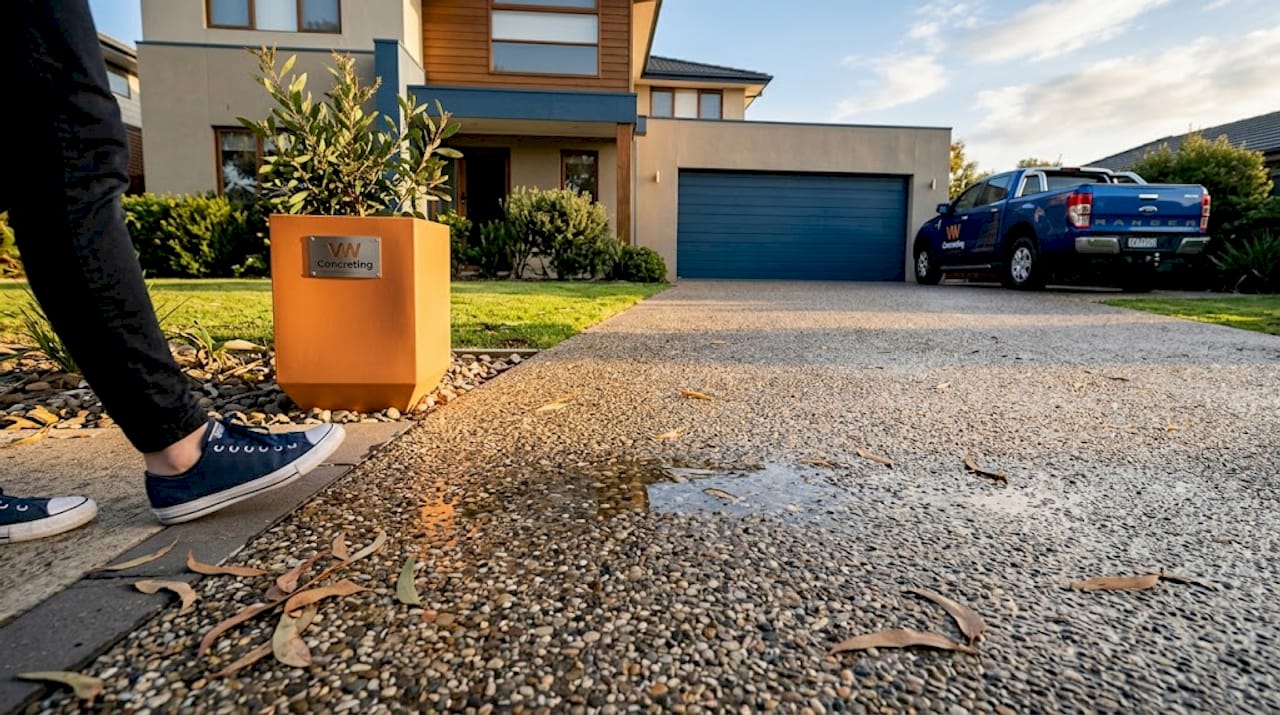
Under heavy vehicle use, exposed aggregate holds its own. The stones distribute load more effectively across the surface, and the overall concrete mix used for exposed aggregate is typically stronger than standard residential concrete. Well-installed, durable driveways in Hoppers Crossing and across Melbourne’s western suburbs demonstrate how this surface handles years of daily use without significant wear.
Safety through slip resistance
This benefit often surprises homeowners who haven’t thought about it. A smooth concrete driveway can become genuinely dangerous when wet. The exposed stone surface creates natural friction underfoot and under the tire, reducing the risk of slipping when you step out of your car in the rain.
The slip-resistant surface quality of exposed aggregate is built into the material itself, not applied as a coating that can wear off. This matters especially if your driveway has any slope, or if elderly family members or young children use the space regularly.
“Exposed aggregate is slip-resistant due to its textured surface, making it a practical and safe choice for residential driveways.” — VW Concreting, Eynesbury project
Low maintenance over the long haul
Exposed aggregate driveways are genuinely easy to maintain. The main tasks are occasional pressure washing to clear dirt and debris from between the stones, and resealing every three to five years to protect the surface and keep the colors vibrant. That’s it. There’s no repainting, no re-leveling individual pavers, and no patching crumbling asphalt.
Pro Tip: Seal your exposed aggregate driveway within the first month after installation and then reseal every three to five years. This simple step dramatically extends the life of the surface and keeps the stone colors looking fresh.
The low maintenance demand is a real financial advantage over time. Pavers need re-sanding and re-leveling. Asphalt needs regular sealing and eventual resurfacing. Exposed aggregate just needs basic care.
Adds genuine curb appeal and property value
First impressions matter when it comes to property value. A well-finished exposed aggregate driveway signals quality and care to anyone approaching your home. Real estate agents consistently note that street appeal influences buyer perception before they even step inside. A distinctive, well-maintained driveway contributes to that impression in a way a cracked or stained plain concrete surface simply cannot.
The investment in a quality driveway surface pays back over time, both in enjoyment while you live there and in buyer appeal when you eventually sell.
How exposed aggregate compares to other driveway options
Having outlined the benefits, it’s useful to see how exposed aggregate measures up against other surface options common in Melbourne.
Cost factors such as installation expenses and lifespan should be compared carefully between options like exposed aggregate and plain concrete, because the upfront price difference often disappears when you account for long-term maintenance and replacement costs.
| Surface type | Upfront cost | Lifespan | Maintenance | Slip resistance | Aesthetics |
|---|---|---|---|---|---|
| Exposed aggregate | Medium-high | 30+ years | Low | Excellent | High |
| Plain concrete | Low-medium | 25-30 years | Low | Poor | Low |
| Concrete pavers | Medium-high | 20-25 years | Medium | Good | Medium-high |
| Asphalt | Low | 15-20 years | High | Moderate | Low |
Plain concrete driveways are the most budget-friendly upfront, but they offer no texture, no visual interest, and a surface that can become slippery and stained over time. They’re a functional choice, but not an inspiring one.
Concrete paver driveways look attractive and allow for individual paver replacement if one cracks, but the joints between pavers can shift, weed, and require ongoing attention. Installation is also labor-intensive, which drives up costs.
Asphalt is the cheapest option upfront but demands the most ongoing maintenance and has the shortest lifespan. It also softens in extreme heat, which is a real issue during Melbourne summers.
Pro Tip: When comparing quotes for different driveway materials, ask each contractor to break down the 10-year total cost, including installation, sealing, repairs, and cleaning. Exposed aggregate often wins on that longer view even when its upfront price is higher.
Exposed aggregate sits in a strong position across every category. It’s not the cheapest to install, but it offers the best combination of aesthetics, durability, safety, and low maintenance of any residential driveway option available.
Is an exposed aggregate driveway right for your home?
Every home is different. Here’s how to decide if exposed aggregate fits what you need now and in the future.
The choice of driveway material affects both short-term costs and long-term property value, so it’s worth thinking through your specific situation before committing. Work through these questions honestly:
- What are your design goals? If you want a driveway that looks distinctive and complements your home’s exterior, exposed aggregate gives you far more creative control than plain concrete or asphalt.
- How much traffic will it handle? If multiple vehicles use the driveway daily, you need a surface built for heavy use. Exposed aggregate handles this well.
- What’s your realistic budget? Exposed aggregate costs more upfront than plain concrete but less than premium pavers in many cases. If your budget is tight, get a detailed quote before ruling it out.
- How much maintenance are you willing to do? If you want a truly low-effort surface, exposed aggregate is one of the best choices available. Occasional cleaning and periodic sealing is manageable for most homeowners.
- What are your long-term goals for the property? If you plan to sell within five to ten years, a quality driveway surface directly supports your property’s street appeal and perceived value.
- Does your driveway have a slope? If yes, slip resistance becomes even more important. Exposed aggregate’s natural texture makes it one of the safest choices for sloped driveways.
You can see examples from Sunbury and other Melbourne suburbs to get a real sense of how exposed aggregate looks in residential settings similar to yours. Seeing finished projects helps you visualize the outcome far better than looking at material samples alone.
Pro Tip: Before finalizing your driveway decision, visit a completed exposed aggregate installation in person if possible. Photos capture color well, but they don’t convey the texture and depth of the surface the way standing on it does.
If you answer yes to most of these questions, exposed aggregate is very likely the right fit. If budget is the primary constraint, it’s still worth getting a quote because the long-term cost savings on maintenance often justify the upfront investment.
Our take: Why exposed aggregate driveways are a Melbourne must-have
Here’s something most articles won’t tell you: the biggest mistake Melbourne homeowners make with driveways isn’t choosing the wrong material. It’s underestimating how much the driveway affects their daily experience of their own home.
We’ve worked on over 145 projects across Melbourne since 2001, and the pattern is consistent. Homeowners who chose plain concrete to save money often come back five or ten years later wanting to upgrade. The surface looks tired, it stains easily, and it never quite delivered the curb appeal they hoped for. Meanwhile, homeowners with exposed aggregate driveways rarely regret the choice.
The conventional wisdom says exposed aggregate is a premium option for people who care about aesthetics. That framing misses the point. The texture isn’t just decorative. It’s functional. Melbourne gets heavy rain. Driveways get wet. A surface that becomes slippery when wet is a genuine safety hazard, not just an inconvenience. The slip resistance built into exposed aggregate is a practical feature that matters every single wet morning.
We’ve also seen how weather-ready driveways perform through Melbourne’s full seasonal range. The combination of hot summers and wet winters is hard on surfaces. Exposed aggregate handles both because the stone aggregate distributes thermal stress more effectively than a plain surface, and the texture prevents water from sitting and working its way into the slab.
The other thing most articles skip is the emotional return on investment. A driveway you’re proud of changes how you feel about coming home. That’s not a small thing.
Ready to transform your Melbourne driveway?
If you’re convinced an exposed aggregate driveway could be the upgrade your home needs, here’s how to take the next step with proven local experts.
At VW Concreting, we’ve been delivering quality driveways across Melbourne since 2001, with a portfolio of successful projects in Sunbury and dozens of other suburbs. Our team handles everything from design advice and stone selection through to installation and sealing, so you get a finished result that matches your vision and your home’s character. Explore the full range of VW Concreting’s services or browse our landscaping and concreting services to see what’s possible. Reach out today for a consultation and a detailed quote tailored to your property.
Frequently asked questions
How long does an exposed aggregate driveway last?
With proper installation and minimal maintenance, exposed aggregate driveways can last 30 years or more, making them one of the most durable residential driveway options available.
Is exposed aggregate slippery when wet?
No. The textured stone surface provides natural grip underfoot and under tire, making it slip-resistant even during Melbourne’s wet weather.
How does exposed aggregate handle Melbourne’s weather?
Exposed aggregate driveways are highly durable and well-suited to Melbourne’s variable climate, with the stone aggregate helping the surface resist weather damage from heavy rain, heat, and temperature swings.
Can you choose custom colors and stones for your driveway?
Yes. Homeowners can select from a wide variety of stone types, pebble sizes, and base concrete colors to create a finish that complements their home’s exterior and personal style.
How much maintenance does an exposed aggregate driveway need?
Routine pressure washing to clear debris and resealing every three to five years are typically all that’s needed to keep an exposed aggregate driveway in excellent condition.
Leave A Comment