
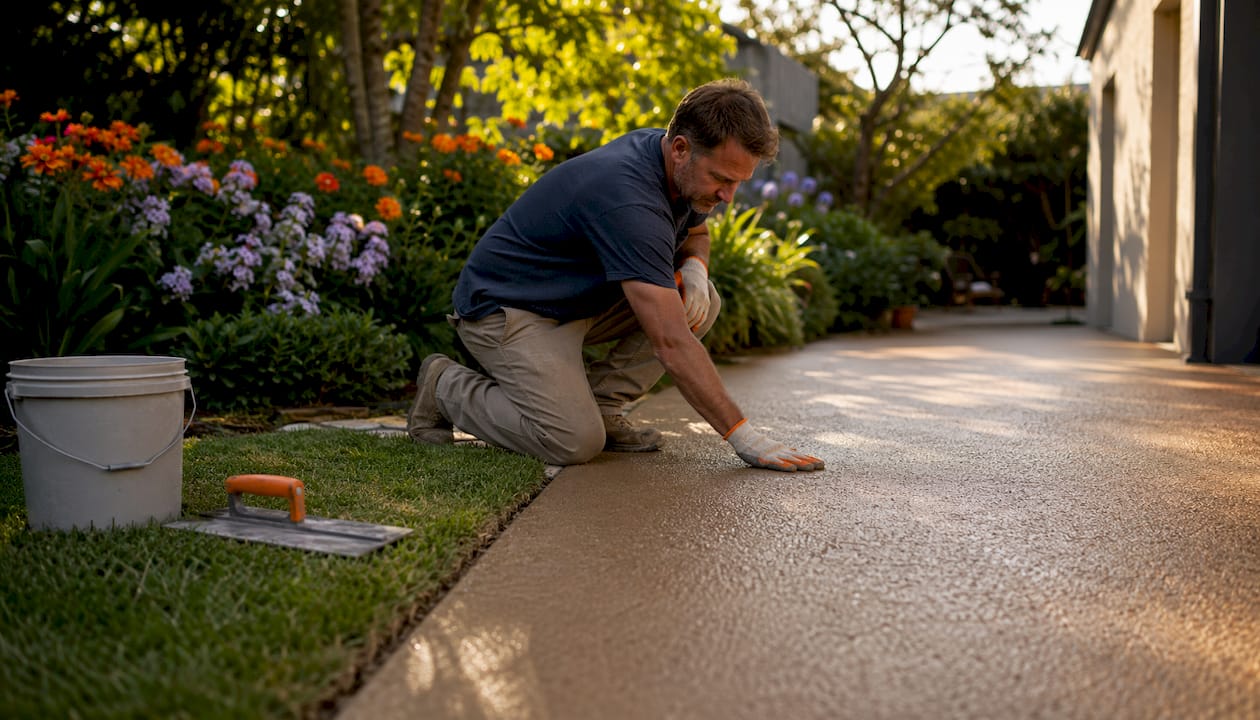
Colored concrete driveways are one of the best upgrades you can make to your home’s exterior. The color is permanent, integrated throughout the entire slab, and won’t peel, chip, or fade the way surface coatings do. You get a surface that handles decades of vehicle traffic, freeze-thaw cycles, and UV exposure while still looking intentional and finished. Here’s what that means in practice:
- Permanent, fade-resistant color that runs through the full depth of the slab, not just the surface
- Stronger curb appeal that ties your driveway to your home’s exterior materials and landscaping
- Superior durability comparable to plain concrete, with added resistance to staining and surface wear
- Lower long-term maintenance than painted or coated surfaces, with resealing needed only every 2–3 years
- Wide design flexibility across colors, textures, patterns, and finishes to match any architectural style
How colored concrete compares to plain gray concrete
Plain gray concrete does the job. It holds weight, drains water, and lasts a long time. But it’s a missed opportunity, especially when the driveway is the first thing anyone sees when they pull up to your home.
Colored concrete costs 30–50% more upfront than standard gray, with the premium varying depending on method and complexity. That gap narrows quickly when life-cycle costs and durability are factored in. Painted or coated gray driveways need reapplication every few years; integral color in concrete never needs recoating because the pigment is part of the slab itself.
Stain resistance is another area where color earns its keep. Darker tones like charcoal or slate hide tire marks and oil drips far better than bare gray. A plain gray driveway shows every stain; a well-chosen colored surface absorbs those visual imperfections into the overall tone. Architecturally, the difference is even more pronounced. A gray slab sits in front of your home. A colored driveway connects to it, picking up tones from the siding, roof, or stone accents and pulling the whole exterior together.
Popular colors and design options for your driveway
Earth tones dominate residential colored concrete in 2026. Tan, buff, sandstone, and terra cotta are the most requested shades because they work across a wide range of home styles, from craftsman bungalows to Mediterranean stucco. Modern grays and deep charcoals have also gained ground, particularly for contemporary builds where the driveway needs to read as a clean, architectural element rather than a decorative one.
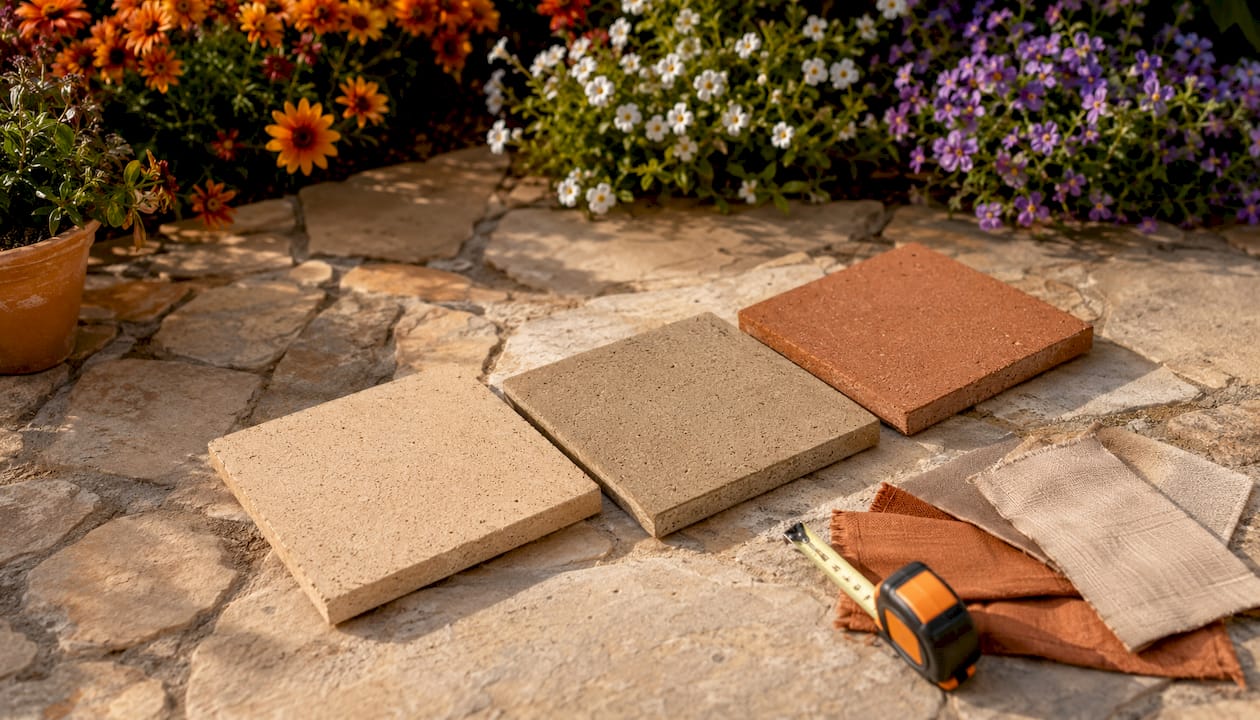
Pro Tip: Match your driveway color to at least two existing exterior elements, such as your roof, trim, or stone veneer. A terra cotta driveway next to a red-brick home looks intentional; the same color next to white siding can look jarring.
Beyond color, you have real flexibility in finish and texture:
- Integral color mixed throughout the slab for consistent, full-depth tone
- Color hardeners applied to the surface for a richer, denser finish
- Acid stains that react with the concrete to create organic, variegated patterns
- Stamped finishes that replicate slate, cobblestone, or brick at a fraction of the material cost
- Exposed aggregate that reveals natural stone within the surface for texture and contrast
- Custom borders and inlays that frame the driveway and define its edges against the lawn
| Color Category | Best For | Maintenance Note |
|---|---|---|
| Tan, buff, sandstone | Craftsman, farmhouse, ranch styles | Shows light dirt; seal regularly |
| Terra cotta, warm red | Mediterranean, Spanish, brick homes | Vibrant; UV-stable with iron oxides |
| Charcoal, slate gray | Modern, contemporary, industrial | Hides tire marks and road grime well |
| Warm brown, chocolate | Rustic, wooded, natural settings | Pairs well with timber and stone |
| Off-white, light beige | Coastal, Hamptons, traditional | Reflects heat; shows stains more |
For a closer look at how these finishes translate to real projects, VW Concreting’s concrete driveway finishes gallery shows seven options across different home styles.
Durability, maintenance, and how long colored driveways last
Colored concrete driveways last as long as plain concrete when installed correctly, which means multiple decades under normal residential use. The color itself doesn’t shorten that lifespan. Integral pigments chemically bond with cement, becoming a permanent part of the crystalline matrix rather than sitting on top of it. A chip or scratch in the surface reveals the same color underneath, not a gray core.
Maintenance is straightforward. Modern colored concrete mixes require occasional resealing, similar to the maintenance frequency of most plain concrete driveways. The sealer protects against moisture intrusion, UV bleaching, and oil staining. Between reseals, a rinse with a garden hose and occasional sweeping is all most driveways need.
Here’s a practical maintenance sequence to follow:
- Sweep regularly to remove grit and debris that can scratch the sealed surface under tire pressure.
- Rinse with water after heavy rain or if oil or chemicals spill on the surface.
- Reseal every 2–3 years using a penetrating or film-forming sealer suited to your finish type.
- Address cracks early by filling hairline cracks before water infiltrates and widens them through freeze-thaw cycles.
- Avoid de-icing salts in winter; use sand or kitty litter for traction instead, since salt accelerates surface scaling.
“The permanence of integral concrete coloring means a significant life-cycle cost saving compared to the expense of applying and maintaining toppings, coatings, stains, or painted finishes.” — Davis Colors Technical Notes
Colored concrete also handles climate stress well. Lighter shades reflect heat in hot climates, keeping the surface cooler underfoot, while darker tones absorb solar radiation and can help melt snow faster in cold regions. Color choice, in other words, isn’t purely aesthetic.
Methods for adding color to concrete: integral pigments, hardeners, and stains
Three main techniques achieve color in concrete, and each has a different performance profile. Understanding the differences helps you pick the right method for a driveway, which takes more abuse than a patio or walkway.
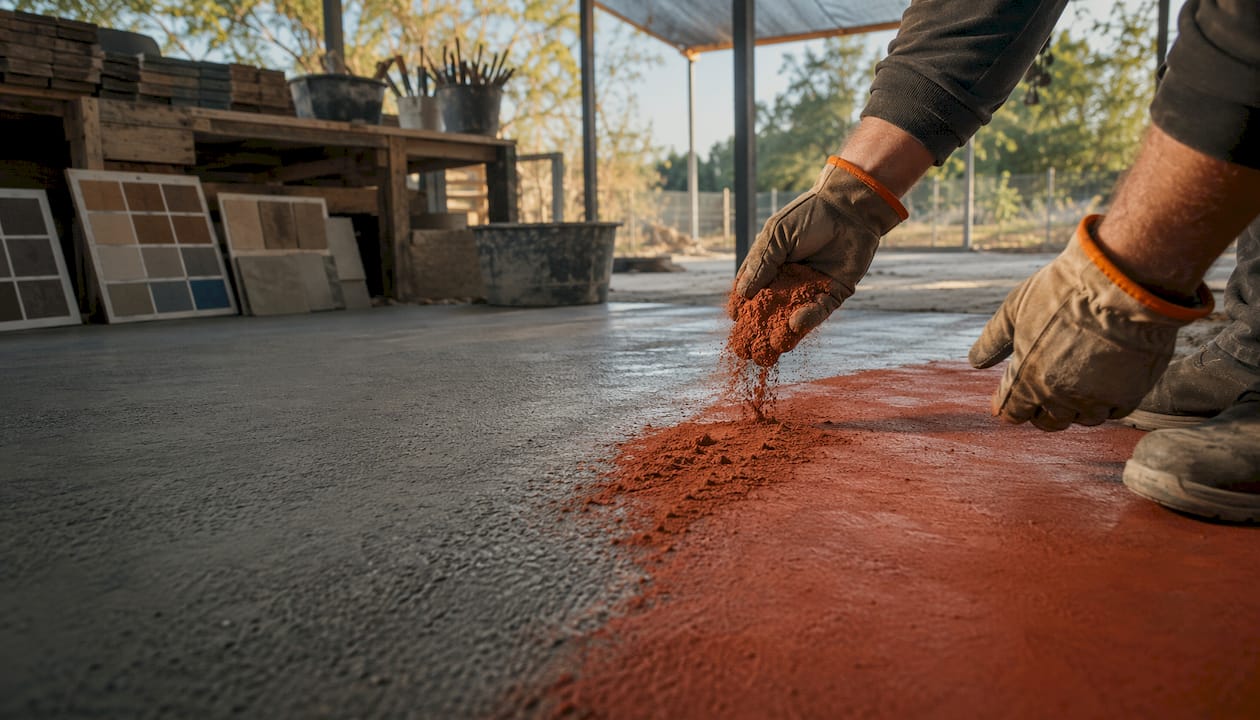
- Integral color mixes iron oxide pigments directly into the concrete before pouring. The color runs through the full depth of the slab, so wear and minor surface damage don’t expose a gray layer underneath. This is the most durable option for driveways and the lowest-maintenance long term.
- Color hardeners are dry-shake pigments broadcast onto the surface while the concrete is still wet, then troweled in. They produce a richer, more saturated color than integral alone and create a denser, harder surface layer. The trade-off is that color is concentrated near the top, so deep chips will show a lighter core.
- Acid stains and dyes penetrate an existing slab and react with the concrete to produce variegated, organic tones. They work well for resurfacing projects but offer less UV durability than integral pigments on new pours.
The strongest result comes from combining integral color with color hardeners. You get full-depth color from the integral mix and a richer, harder surface from the hardener. For a high-traffic driveway, that combination is the standard worth asking your contractor about.
Pro Tip: For driveways specifically, always specify integral color as the base. If you want a richer finish, add a color hardener on top. Stains alone on a new driveway pour are a shortcut that will cost you more in maintenance within five years.
Why a colored driveway functions as an architectural feature
A driveway isn’t just a parking surface. It’s the first thing a visitor, a neighbor, or a potential buyer sees. A colored driveway acts as a visual anchor, grounding the property and connecting exterior elements like timber cladding, window frames, and stone accents into a coherent whole.
The pigments that make this possible are mineral oxides, the same compounds responsible for color in natural stone and earth. They don’t fade the way organic dyes do because they’re chemically inert under UV exposure. Davis Colors, Solomon Colors, and other established pigment manufacturers produce iron oxide formulations specifically rated for outdoor concrete, and a quality installation uses those materials rather than cheaper alternatives.
“Coloured driveways shift the perception from mere utility to architectural statement, especially when paired with coordinated colors and materials.” — Cornerstone Concrete
Properties with bespoke colored driveways attract stronger buyer interest and often sell faster than comparable homes with plain gray slabs. The driveway signals that the rest of the property has been maintained and considered. VW Concreting has seen this pattern across Melbourne projects: a well-executed colored driveway changes how the entire home reads from the street, not just the entry.
Environmental impact and sustainability of colored concrete driveways
Concrete is already one of the more durable paving materials available, which matters environmentally because longevity reduces the frequency of replacement and the waste that comes with it. A colored concrete driveway that lasts 40–50 years generates far less material waste over its life than an asphalt surface that needs replacement every 10–20 years.
Permeable concrete formulations take the sustainability case further. These mixes allow water to pass through the surface, reducing stormwater runoff and supporting natural groundwater recharge. For homeowners in areas with strict stormwater management requirements, permeable decorative concrete can satisfy both aesthetic and regulatory goals in one pour.
Color choice also has a thermal dimension. Lighter-colored concrete reduces surface temperature in hot climates, which lowers the urban heat island effect in dense neighborhoods. Darker tones absorb more heat, which can reduce the energy needed to melt snow and ice in colder regions. Neither effect is dramatic at the scale of a single driveway, but across a neighborhood, the aggregate impact on local temperatures is measurable.
Cost and long-term value of colored concrete driveways
Colored concrete costs more than plain gray at installation, with the premium depending on the coloring method, finish complexity, and project size. Integral color alone sits at the lower end of that range; stamped and textured finishes with color hardeners push toward the higher end. That’s a real upfront difference, and it’s worth being honest about.
The long-term math, though, favors color. Painted or coated driveways need reapplication every few years at ongoing cost. Integral color never needs recoating. Asphalt driveways typically last 10–20 years before requiring significant repair or replacement; a properly installed concrete driveway runs 40–50 years. Over that span, the higher initial cost of colored concrete spreads thin.
Resale value adds another layer. Decorative concrete is perceived as a high-end finish, and homes with upgraded exterior hardscape consistently attract stronger buyer interest. For a full picture of how colored and plain concrete options compare in practice, VW Concreting’s colored and plain concrete service page breaks down the real-world differences. Matching your driveway color to your home’s architecture also matters to valuers; a cohesive exterior reads as intentional investment, not just cosmetic spending.
Design styles and how colored concrete fits different homes
Colored concrete adapts to almost any architectural style, which is one reason it has replaced plain gray as the default choice for new residential builds in many markets.
Contemporary and modern homes pair well with charcoal, slate, or cool gray tones. The monolithic look of a single-color, broom-finished slab suits clean-lined architecture without competing with it. Exposed aggregate in gray or black stone reads as textured but restrained.
Craftsman, farmhouse, and ranch styles work best with warm earth tones. Buff, sandstone, or a warm brown stamped to resemble flagstone or slate connects the driveway to natural materials like wood siding and stone foundations. A decorative border in a contrasting tone adds definition without overwhelming the look.
Mediterranean and Spanish colonial homes are natural fits for terra cotta and warm red tones. The color echoes the clay roof tiles and stucco walls that define those styles. Stamped patterns that mimic cobblestone or Saltillo tile reinforce the regional character.
Coastal and Hamptons-style homes often use lighter off-white or pale gray tones that reflect the sandy, bleached palette of coastal landscapes. Lighter colors also keep the surface cooler underfoot, which matters when the driveway doubles as a barefoot path to the beach. For homeowners thinking about how the driveway connects to the broader outdoor space, VW Concreting’s landscaping and concreting integration guide covers how to coordinate both elements from the start. Builders in other markets, like AJC & Son Builders in the UK, apply the same principle: matching driveway tone to the home’s dominant exterior material is the single most reliable way to get the color choice right.
Potential drawbacks of colored concrete and how to handle them
Colored concrete isn’t perfect, and knowing the limitations upfront saves you from expensive surprises.
Color variation is the most common complaint. Concrete color can vary slightly between pours, between batches, or even across a single slab due to differences in water content, curing conditions, and finishing technique. This is normal and, with an experienced contractor, manageable. Specifying the same pigment batch for the entire project and using consistent curing methods minimizes the variation. Understanding why concrete color fades outdoors helps you set realistic expectations before installation.
UV fading affects surface-applied colors more than integral pigments. Stains and dyes on an existing slab will fade faster than iron oxide pigments mixed into a new pour. Sealing the surface with a UV-resistant sealer slows this process significantly, but it doesn’t eliminate it entirely for surface-applied treatments.
Higher upfront cost is real, as noted earlier. For homeowners on a tight budget, integral color alone (without stamping or hardeners) delivers most of the aesthetic benefit at the lower end of the cost range.
Cracking affects all concrete, colored or not. Proper sub-grade preparation, correct slab thickness, strategic placement of control joints, and adequate steel reinforcement are what prevent cracking, not the color itself. A colored driveway installed on a poorly prepared base will crack just as readily as a gray one.
Key Takeaways
Colored concrete driveways deliver permanent, low-maintenance color with architectural impact that plain gray concrete simply cannot match.
| Point | Details |
|---|---|
| Color is permanent | Integral iron oxide pigments bond with cement and won’t peel, chip, or require recoating. |
| Maintenance is manageable | Resealing every 2–3 years is all most colored driveways need to stay protected. |
| Lifespan reaches 40–50 years | Properly installed colored concrete outlasts asphalt by decades under normal residential use. |
| Upfront cost runs 30–50% higher than plain gray concrete, with the premium narrowing over time as maintenance needs and longevity are factored in. | |
| Color choice affects performance | Lighter tones reduce surface heat in hot climates; darker tones aid snow melt in cold regions. |
Ready to see what a colored concrete driveway looks like on a real project? VW Concreting has completed over 145 projects across Melbourne, from simple integral-color slabs to fully stamped and textured driveways. Browse the driveways and slabs project gallery to find a finish that fits your home.
Leave A Comment