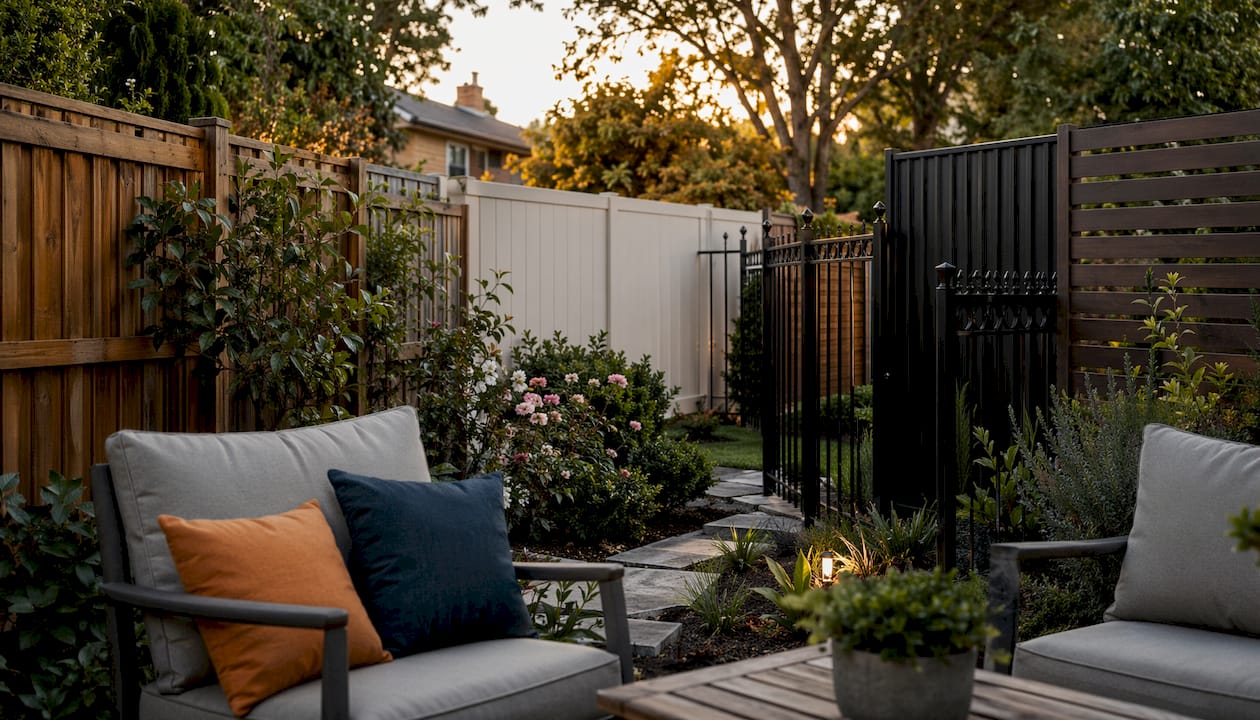
Types of residential outdoor fencing are distinct categories of materials and designs that serve specific functions: privacy, security, boundary definition, or visual appeal. Melbourne homeowners face a wide range of residential fence options, from classic timber to low-maintenance vinyl and long-lasting wrought iron. The right choice depends on your property goals, local regulations, and how much upkeep you are willing to commit to over time. This guide covers the most popular garden fences and residential fencing styles so you can make a confident, informed decision.
1. What are the most popular types of residential fences?
Residential fencing, known in the building industry as boundary or perimeter fencing, covers any freestanding barrier that defines a property line, screens a yard, or controls access. The main material categories are wood, vinyl, chain link, aluminum, wrought iron, composite, and specialty options like bamboo or masonry. Each material carries a different profile of cost, durability, and visual character.
Wood fencing is the most widely used residential fence option in Melbourne’s suburban areas. It suits privacy-first applications and blends naturally with garden landscaping. Styles include picket, shadowbox, board-on-board, and solid panel.
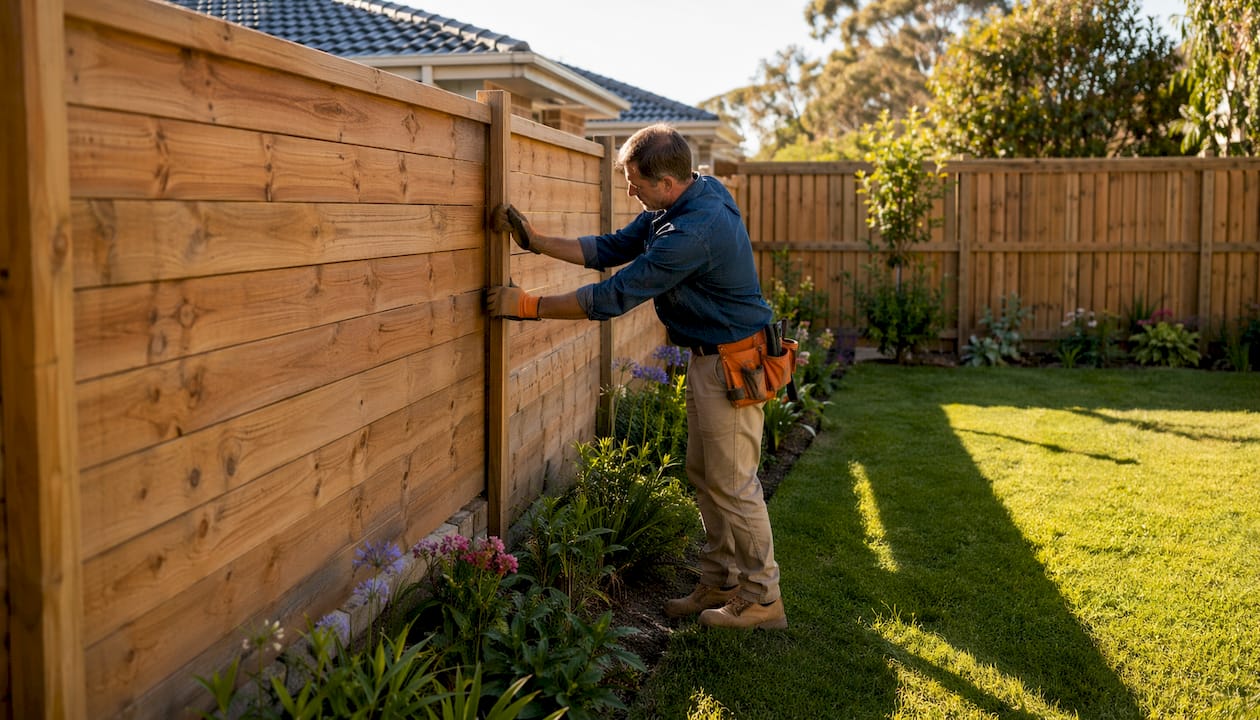
Vinyl fencing delivers a clean, painted look without the paint. Vinyl fences neither rot, yellow, rust, warp, nor splinter, making them a strong pick for homeowners who want minimal upkeep. Chain link is the go-to for boundary definition and pet containment where visibility matters more than screening.
Aluminum and wrought iron suit decorative and security applications. Both offer an open, elegant profile that works well at front boundaries. Composite fencing combines recycled wood fiber and plastic for a material that looks like timber but resists moisture and insects. Bamboo and masonry fencing serve niche roles: bamboo for a natural garden aesthetic, masonry for permanent, high-security boundaries.
2. How does each fencing material compare in durability and maintenance?
Lifespan varies significantly across fence materials for homes. Wrought iron exceeds 50 years, while vinyl and cedar or redwood last 20–30 years, and pressure-treated wood lasts 15–25 years. That gap in longevity directly affects the true cost of ownership.
Wood fencing durability depends heavily on AWPA UC4A or UC4B treatment ratings for any posts in ground contact. Without proper treatment, rot sets in within a few years, especially in Melbourne’s wetter seasons. Corrosion-resistant fasteners, such as hot-dipped galvanized steel, are equally critical for long-term performance.
The true cost of fencing includes maintenance: wood requires regular sealing or staining every 2–3 years, while vinyl and aluminum need only occasional washing. Homeowners who focus only on the upfront price often underestimate the cumulative cost of wood maintenance over a decade.
Aluminum fencing requires expansion joints in long runs because aluminum expands at 13 × 10⁻⁶ per °F. Skipping expansion joints causes warping and panel misalignment over time. Wrought iron resists this issue but needs rust-inhibiting paint to prevent surface corrosion.
Pro Tip: Calculate your 10-year cost, not just the installation price. Add the cost of staining, sealing, or repainting every few years to wood or wrought iron estimates before comparing them to vinyl or aluminum.
| Material | Lifespan | Maintenance level | Cost tier | Permit likely? |
|---|---|---|---|---|
| Wrought iron | 50+ years | Medium (rust prevention) | High | Yes, if over 6 ft |
| Vinyl | 20–30 years | Low (wash only) | Medium | Yes, if over 6 ft |
| Pressure-treated wood | 15–25 years | High (seal/stain) | Low to medium | Yes, if over 6 ft |
| Aluminum | 30–40 years | Low (wash only) | Medium | Yes, if over 6 ft |
| Composite | 20–30 years | Low | Medium to high | Yes, if over 6 ft |
| Chain link | 15–20 years | Low | Low | Yes, if over 6 ft |
3. Which fence types offer the best privacy, security, and curb appeal?
Homeowners should define their fence’s primary purpose before choosing materials, because wood and vinyl excel at privacy while chain link and aluminum serve security and visibility. Mixing up these priorities leads to expensive regrets.
Privacy-first fencing
Solid wood panels, board-on-board timber, and vinyl privacy panels are the strongest performers for screening. A 6-foot solid panel blocks sightlines from the street and neighboring properties. Composite fencing achieves the same result with less maintenance and a longer lifespan.
Shadowbox and lattice-top designs offer partial privacy while allowing airflow. This matters in Melbourne’s warmer months, where a solid fence can trap heat in outdoor entertaining areas. The trade-off is reduced screening at eye level.
Security-focused fencing
Wrought iron and aluminum fencing provide a strong visual deterrent without blocking sightlines. Their open picket design makes it easy to see movement on either side, which suits front yards and pool enclosures. Chain link is the most cost-effective security fence for larger properties or side boundaries.
For pet containment and child safety, the key variables are height and gap spacing. A minimum 4-foot height with pickets spaced no wider than 4 inches prevents most dogs from jumping or squeezing through. Pool fencing in Victoria follows specific safety codes that override general design preferences.
Curb appeal and decorative fencing
Picket fencing, wrought iron, and aluminum all add strong visual character to a front boundary. Picket fences suit cottage and Federation-style homes common across Melbourne’s inner suburbs. Wrought iron works well with heritage properties. Aluminum gives a similar look at lower cost and weight.
Matching fence style to your home’s architecture is the single most effective way to lift street presence. A modern horizontal-slat timber fence suits a contemporary build. A classic white picket suits a period home. Mismatched styles reduce rather than add curb appeal.
Scenarios matched to fence type:
- Full backyard privacy: Solid timber panel or vinyl privacy fence, 6 feet tall
- Front boundary with curb appeal: Aluminum picket or wrought iron, 3–4 feet tall
- Pet containment: Timber or chain link, minimum 4 feet, close picket spacing
- Pool enclosure: Aluminum or glass panel, compliant with Victorian pool safety standards
- Low-maintenance side boundary: Vinyl or Colorbond steel panel
4. What local regulations affect residential fence installation in Melbourne?
Building permits are typically required for fences over 6 feet in height across most jurisdictions, including Melbourne. Height is the most common trigger, but setbacks, materials, and location on the property also affect permit requirements.
The International Residential Code (IRC) sets baseline standards used as a reference in many Australian building regulations. Local councils in Melbourne apply their own overlays, particularly in heritage zones or areas covered by neighborhood character policies. Always check with your local council before starting any fence project.
Homeowners’ association (HOA) guidelines, where applicable, may restrict fence height, color, or material. Some estates in Melbourne’s growth corridors specify Colorbond steel or timber as the only permitted materials. Ignoring these rules leads to costly removal and reinstallation.
Certain anti-climb or high-security fence designs are restricted compared to standard decorative picket or split-rail styles. Spiked tops and barbed wire are generally prohibited in residential zones. Check with your council before specifying any security-enhanced design.
Pro Tip: Before you order materials, submit a pre-application inquiry to your local council. Most councils respond within 5–10 business days and can confirm height limits, setback rules, and permit requirements for your specific address.
For residential fencing in Melbourne, professional installers familiar with local codes can save you significant time and money by getting the specification right the first time.
Key takeaways
The best residential fence balances your privacy, security, and aesthetic goals against material lifespan, maintenance costs, and local permit requirements.
| Point | Details |
|---|---|
| Define your purpose first | Choose material based on privacy, security, or curb appeal before comparing prices. |
| Lifespan varies widely | Wrought iron lasts 50+ years; pressure-treated wood lasts 15–25 years. |
| Maintenance affects true cost | Wood needs sealing every 2–3 years; vinyl and aluminum need only washing. |
| Permits start at 6 feet | Most Melbourne councils require a permit for any fence taller than 6 feet. |
| Match style to architecture | Fence design should complement your home’s era and street character. |
What I’ve learned after years of fence projects in Melbourne
The most common mistake I see Melbourne homeowners make is choosing a fence based on the lowest quote. That decision almost always costs more in the long run. A cheap timber fence without AWPA-rated treatment posts will start rotting within three years in Melbourne’s wet winters. The repair bill quickly exceeds what a better-specified fence would have cost upfront.
The second mistake is ignoring the relationship between fencing and the surrounding outdoor space. A fence does not exist in isolation. It sits next to concrete paths, garden beds, driveways, and turf. When those elements are planned together, the result looks intentional and adds real property value. When they are done separately, you end up with mismatched levels, drainage problems, and gaps between the fence post and the slab.
I also see homeowners underestimate how much local regulations shape their options. Melbourne’s heritage overlays, neighborhood character policies, and estate covenants can eliminate half your shortlist before you even get to material selection. The homeowners who get this right always start with a council check, not a product catalog.
My honest recommendation: spend time on the brief before you spend money on materials. Know whether you are solving for privacy, security, or aesthetics. Know your council’s rules. Then get a professional to specify and install the fence correctly the first time. The fencing and concreting combination is where I see the biggest gains in both durability and finished appearance.
— Vic
VW Concreting: outdoor fencing and concreting services in Melbourne
VW Concreting has completed over 145 residential projects across Melbourne since 2001, combining fencing, concreting, and landscaping into finished outdoor spaces that hold up over time.
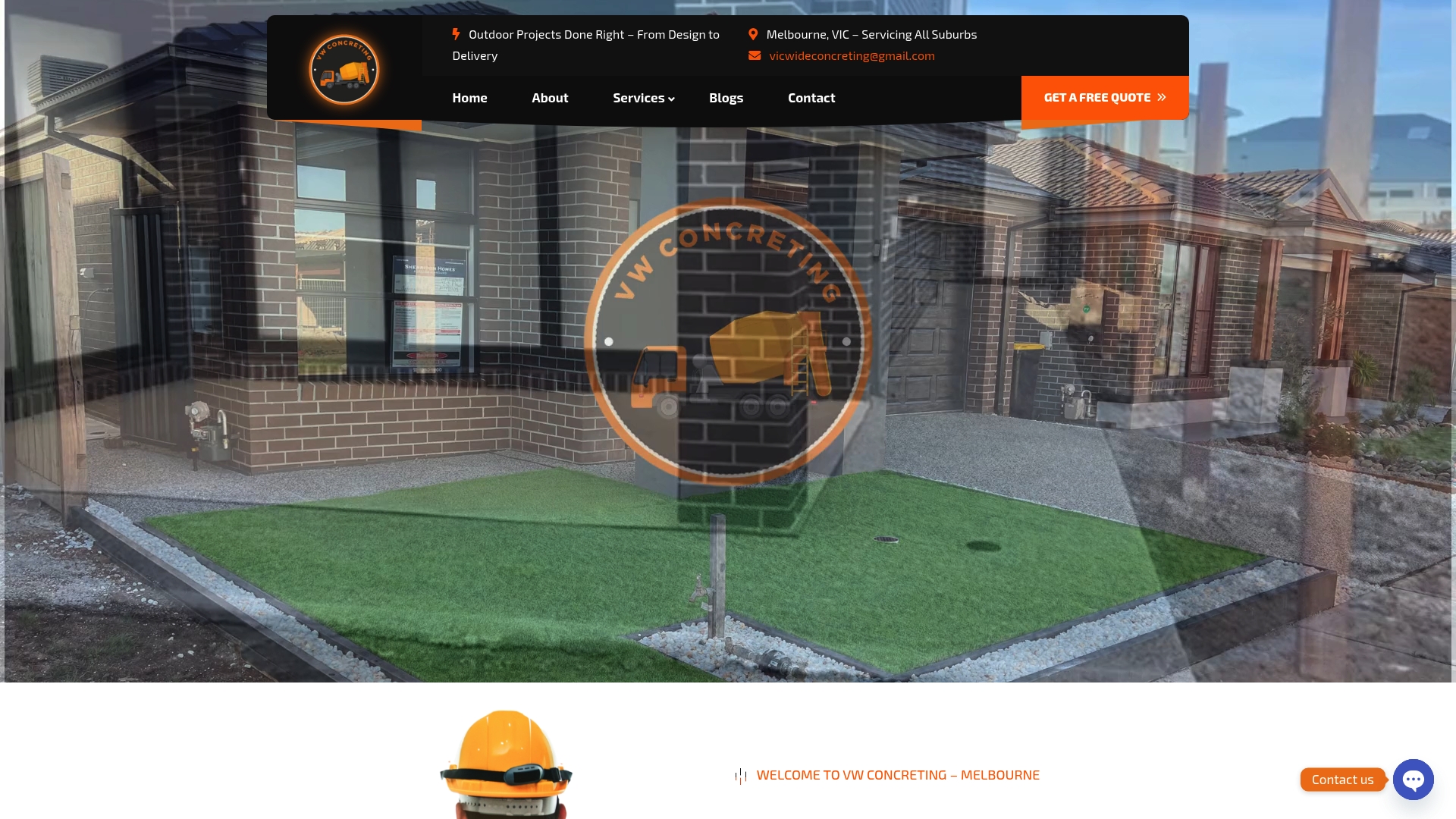
A fence is only as strong as what it sits on. Concrete footings, paths, and slabs directly affect fence stability and drainage. VW Concreting plans these elements together so your fence posts are set correctly and your yard drains properly. Explore our concreting services in Melbourne to see how we approach outdoor projects from the ground up. For homeowners planning a full yard upgrade, our landscaping services bring fencing, turf, paving, and concreting together under one plan.
FAQ
What are the most common types of residential outdoor fencing?
The most common types are wood, vinyl, chain link, aluminum, wrought iron, and composite. Each material suits different priorities: wood and vinyl for privacy, aluminum and wrought iron for security and curb appeal.
How long does a residential fence last?
Lifespan depends on material. Wrought iron lasts over 50 years, vinyl and cedar last 20–30 years, and pressure-treated wood lasts 15–25 years with proper maintenance.
Do I need a permit to build a fence in Melbourne?
A permit is typically required for fences over 6 feet tall. Local councils may also require permits based on location, material, or heritage overlays, so always check before you build.
What fence type is best for privacy?
Solid timber panels, board-on-board wood fencing, and vinyl privacy panels are the best options for full screening. A 6-foot solid panel blocks sightlines from neighboring properties and the street.
Is vinyl fencing worth the higher upfront cost?
Yes, for most homeowners. Vinyl does not rot, warp, splinter, or require painting, which eliminates the ongoing maintenance cost that makes wood more expensive over a 10-year period.
Leave A Comment