
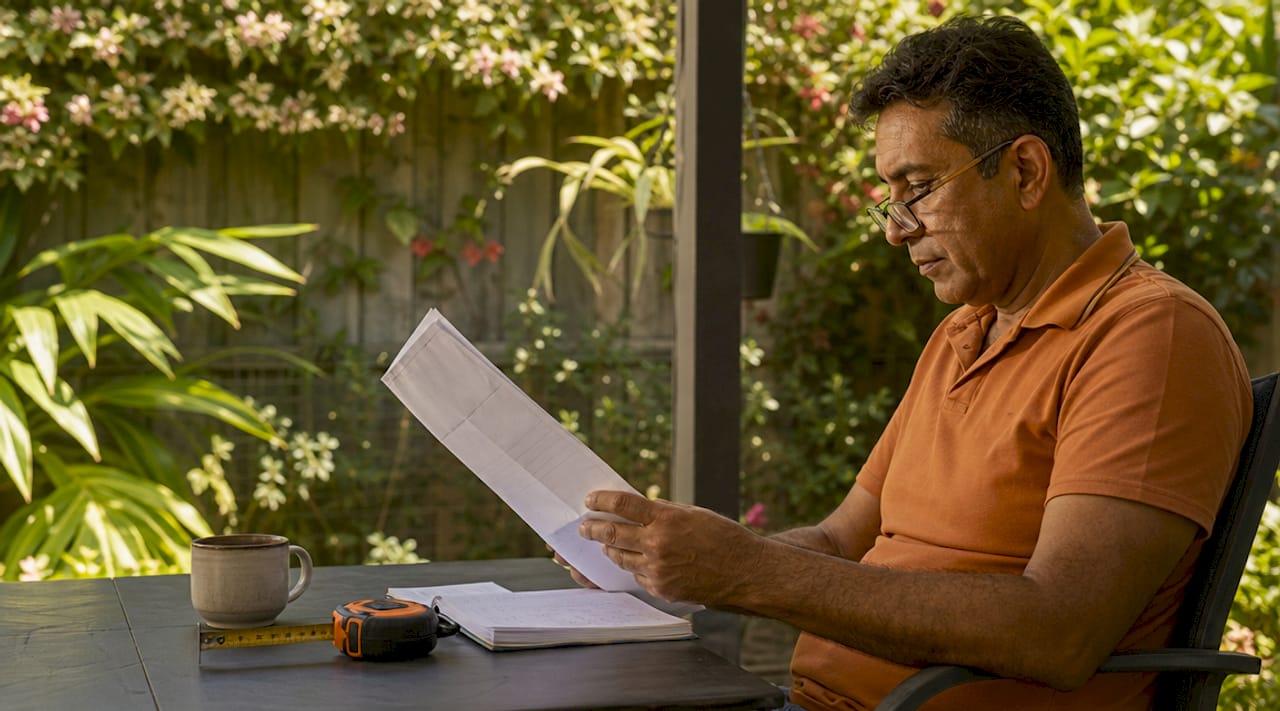
A residential concrete quote is a written pricing document that specifies the full scope, materials, labor, and specifications for a concrete installation at your home. Most Melbourne homeowners request one before starting a driveway, patio, or slab project, yet many don’t know what a complete quote should actually contain. A quote missing key line items is not just incomplete. It’s a financial risk. This guide breaks down every component of a solid concrete quote, explains residential concrete pricing in real terms, and shows you how to compare bids without getting burned.
What is a residential concrete quote and what must it include?
A residential concrete quote is a legally binding written document that commits a contractor to a defined scope of work at a stated price. The industry term you’ll hear from contractors is a “concrete proposal” or “concrete scope of works,” but homeowners commonly call it a quote. Both terms refer to the same document. The difference between a professional quote and a rough estimate is specificity.
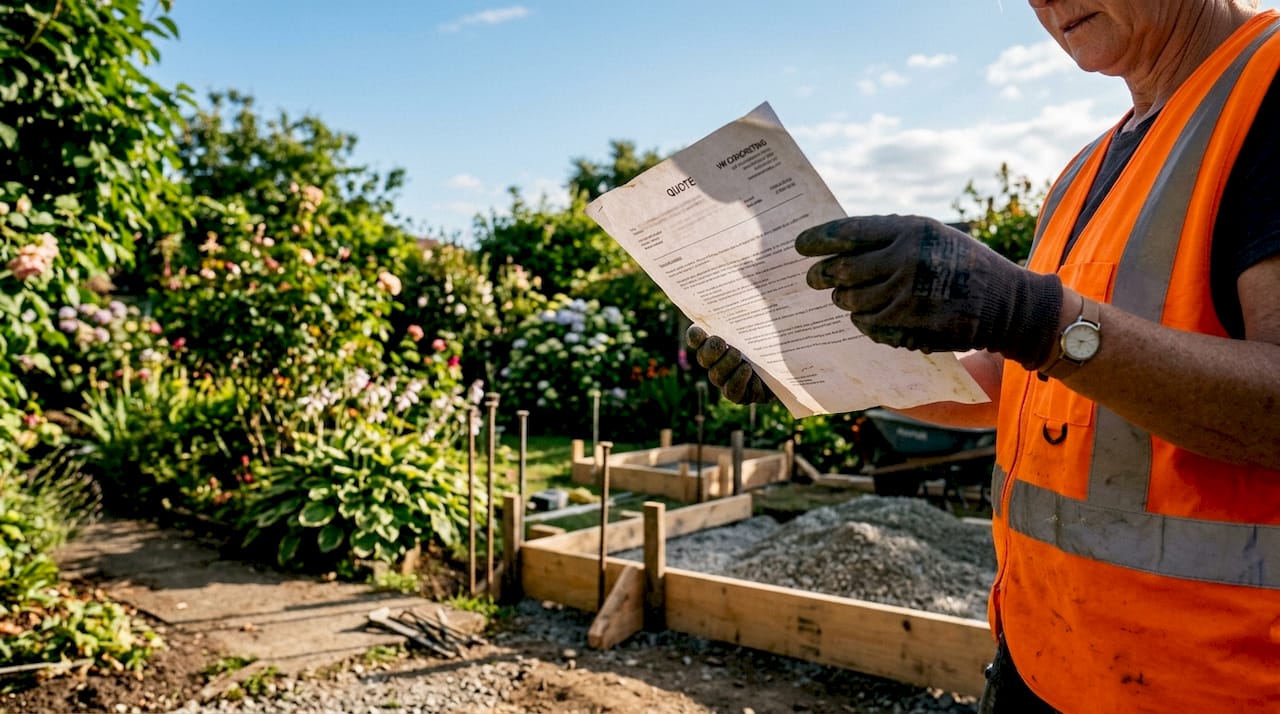
A complete quote covers the entire installation process, from site excavation through curing, with clear timelines and weather delay disclaimers. That level of detail protects you if disputes arise later.
What are the mandatory components of a concrete quote?
A comprehensive residential concrete quote must include nine specific written components. Each one directly affects the structural outcome and the final price.
- Square footage: The total area being poured. This is the base measurement for all cost calculations.
- Slab thickness: Typically 4 inches for patios and 5–6 inches for driveways. Thickness drives both material volume and load capacity.
- Concrete PSI: The compressive strength grade. Residential work typically calls for 3,000–4,000 PSI for durability under vehicle and foot traffic.
- Air entrainment: Specifies whether air-entrained concrete is used. This matters in climates with freeze-thaw cycles and affects long-term surface integrity.
- Reinforcement details: Whether the slab uses rebar, wire mesh, or fiber reinforcement. Omitting this line item is a red flag.
- Subgrade preparation: Describes how the base will be compacted and graded. Poor subgrade prep is the leading cause of slab cracking.
- Joint and finish plan: Specifies control joint placement and the surface finish type, such as broom, exposed aggregate, or stamped.
- Demolition and haul-off: States whether removal of existing concrete or materials is included in the price.
- Payment and warranty terms: Defines deposit amounts, progress payments, and the warranty period for workmanship.
Pro Tip: If a quote omits subgrade preparation or reinforcement details, ask for them in writing before signing. These two items are the most commonly skipped, and skipping them leads to cracked slabs within a few years.
A vague bid that lists only a total price with no line items gives you no way to verify what you’re paying for. Detailed quotes also make it easier to compare two contractors on equal terms.
How is residential concrete pricing structured?
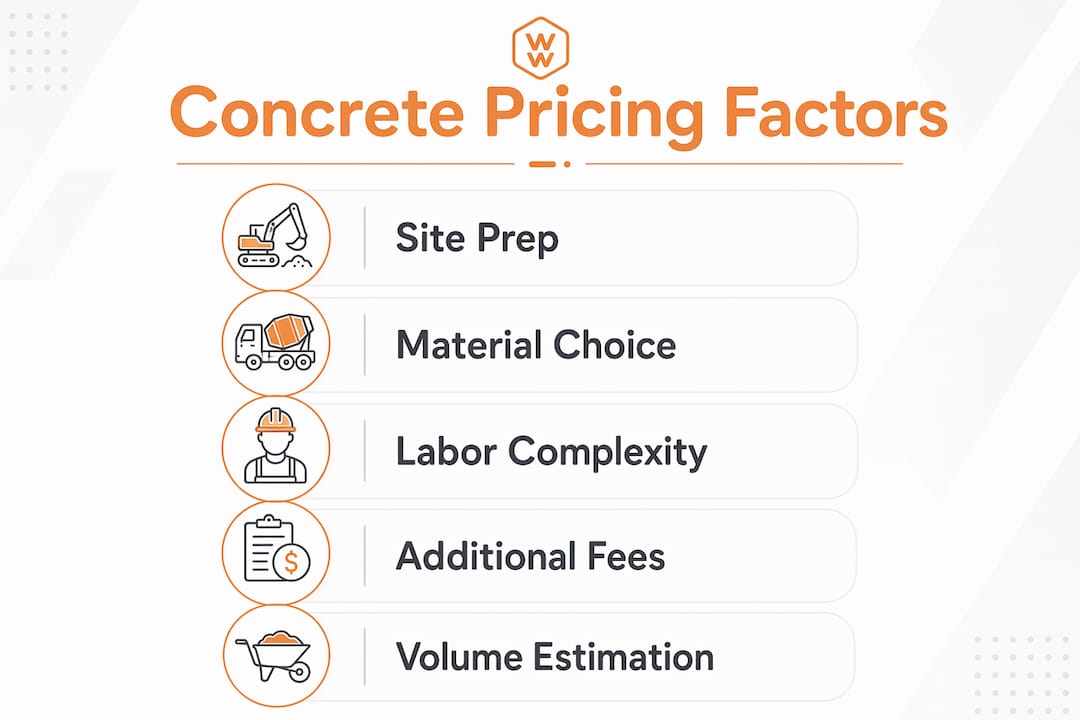
Residential concrete pricing depends on several layered cost factors, not just the size of the pour. Understanding each one helps you read a quote accurately and spot anything that looks off.
Material costs
Residential concrete flatwork in 2026 ranges from approximately $6.50 to $16 per square foot, depending on region, slab thickness, and finish type. That range is wide because a plain broom-finish patio sits at the low end, while a stamped concrete driveway with color sits at the high end. Decorative finishes like stamped concrete add $4 to $10 per square foot above the base cost. The national average for ready-mix concrete was $179.89 per cubic yard in 2024, with 3–6% annual increases projected. That volatility is why most contractors issue quotes valid for only 15–30 days.
Labor and site complexity
Labor costs vary based on site access, slope, and the complexity of formwork. A flat, open driveway with direct truck access costs less to pour than a rear courtyard requiring a concrete pump. Contractors price labor by the hour or as a fixed component within the per-square-foot rate. Always confirm which method your quote uses.
Additional fees to watch for
| Cost Factor | What It Covers | Typical Impact |
|---|---|---|
| Short-load fee | Orders below 8–10 cubic yards | $50–$150 per cubic yard surcharge |
| Demolition and haul-off | Removing old concrete or base material | Varies by volume |
| Decorative finish premium | Stamped, exposed aggregate, or colored concrete | $4–$10 per sq ft above base |
| Subgrade preparation | Grading, compacting, and base material | Priced separately or bundled |
| Pump hire | Required for difficult access sites | Fixed daily or hourly rate |
Short-load fees apply when your project requires less than a full truckload of ready-mix concrete. They can significantly increase the per-yard cost for small pours like a garden path or a single step landing. A professional quote lists these fees as a separate line item rather than burying them in a miscellaneous total.
Pro Tip: Ask your contractor whether your project volume triggers a short-load fee. If it does, ask whether batching the pour with another nearby job could reduce the surcharge.
How to estimate concrete volume for your project
Verifying the volume calculation in your quote is one of the best ways to confirm a contractor is pricing your job accurately. The formula is straightforward.
- Measure the area. Multiply the length by the width of the surface in feet to get square footage.
- Convert thickness to feet. A 4-inch slab equals 0.33 feet. A 5-inch slab equals 0.42 feet.
- Calculate cubic feet. Multiply square footage by the thickness in feet.
- Convert to cubic yards. Divide the cubic feet total by 27, since one cubic yard equals 27 cubic feet.
- Add a waste allowance. Concrete cannot be returned once poured, so professional quotes factor in a 5–15% waste allowance to cover spillage and uneven ground.
A standard 4-inch slab uses roughly 1.23 cubic yards per 100 square feet. That figure is a reliable benchmark. A 400-square-foot patio at 4 inches deep needs approximately 4.92 cubic yards before waste. With a 10% waste allowance, the order should be around 5.4 cubic yards.
Pro Tip: Run this calculation yourself before your quote arrives. If the contractor’s volume figure is significantly lower than yours, ask them to walk you through their measurement. Underordering concrete mid-pour creates cold joints, which are structural weak points that shorten slab life.
For driveway concrete specifications, thickness typically increases to 5 or 6 inches to handle vehicle loads, which raises the cubic yard requirement and the total cost proportionally.
What should you look for when comparing concrete quotes?
Comparing quotes is not just about finding the lowest number. A quote is a strategic risk assessment that reflects how a contractor plans to manage your site, your materials, and your timeline. A higher quote may indicate better preparation and fewer surprises during the job.
Warning signs in a concrete quote
- A bid with no line items, just a single total price
- No mention of concrete PSI or reinforcement type
- Subgrade preparation listed as “included” with no description of method
- No payment schedule or warranty terms
- A price significantly below the local market range
Quotes priced unrealistically low often indicate corner-cutting on concrete grade, reinforcement, or base preparation. These shortcuts produce slabs that crack, settle, or spall within a few years, and repair costs typically exceed the original savings.
Questions to ask before you sign
Ask the contractor to confirm the concrete PSI they plan to use and why. Ask whether the quote includes all site preparation or whether that’s a separate cost. Confirm the warranty period and what it covers. Ask how weather delays are handled and whether the timeline is fixed or estimated. Understanding the concrete pour process also helps you ask better questions about sequencing and curing time.
A written quote with clear answers to these questions is the standard you should expect from any professional contractor. Verbal estimates carry no legal weight and leave you with no recourse if the final bill looks different.
Key Takeaways
A residential concrete quote is a written, itemized document that defines every cost and specification for your project. Accepting anything less puts your budget and your slab at risk.
| Point | Details |
|---|---|
| Nine mandatory components | Every professional quote must list PSI, reinforcement, subgrade prep, and payment terms in writing. |
| Volume verification | Use the length × width × thickness formula and add 5–15% waste to check your contractor’s figures. |
| Short-load fees matter | Orders below 8–10 cubic yards trigger surcharges of $50–$150 per cubic yard. |
| Low bids carry real risk | Quotes below market range often signal lower-grade concrete or skipped subgrade preparation. |
| Quote validity is short | Most quotes are valid for only 15–30 days due to ready-mix price volatility. |
What I’ve learned about concrete quotes after years on Melbourne sites
Most homeowners come to me with one question: “Is this quote fair?” The honest answer is that fairness depends entirely on what’s inside the document, not the total at the bottom.
The most common mistake I see is homeowners comparing two quotes where one includes demolition and subgrade prep and the other doesn’t. They look at the totals and think the cheaper one is the better deal. It never is. The contractor who left those items out will either charge for them later or skip them entirely, and you’ll see the result in cracked concrete within three years.
Melbourne’s outer western suburbs, where a lot of new residential development happens, have seen real material cost pressure over the past two years. That makes the 15–30 day validity window on quotes more important than ever. I’ve seen homeowners wait six weeks to decide, then get hit with a revised price that’s 8–12% higher. Lock in your quote when the pricing is right.
My strongest advice is this: demand the full nine-line breakdown before you sign anything. If a contractor won’t provide it, that tells you everything you need to know about how they’ll manage your project. The concrete driveway finish options you choose matter, but only if the foundation beneath them is built correctly.
— Vic
Trusted concrete quotes for Melbourne homeowners
VW Concreting has completed over 145 residential and commercial projects across Melbourne since 2001. Every quote we provide includes a full line-item breakdown covering PSI, reinforcement, subgrade preparation, finish type, and payment terms. Nothing is buried in a lump sum.
Whether you’re planning a new driveway, a rear patio, or a full outdoor slab, our team gives you a written proposal that covers the complete scope of work with no surprises. You can view examples of our driveways and slabs work to see the quality we deliver across Melbourne. Contact VW Concreting for a free, detailed quote and get the clarity your project deserves from day one.
FAQ
What is included in a residential concrete quote?
A complete residential concrete quote includes square footage, slab thickness, concrete PSI, reinforcement type, subgrade preparation, joint placement, surface finish, demolition scope, and payment and warranty terms. Any quote missing these nine components is incomplete.
How long is a concrete quote valid?
Most professional concrete quotes are valid for 15–30 days due to fluctuating ready-mix concrete prices, which have seen 3–6% annual increases in recent years. Lock in your quote quickly to avoid price revisions.
What is the average cost per square foot for residential concrete in 2026?
Residential concrete flatwork ranges from approximately $6.50 to $16 per square foot in 2026, depending on slab thickness, finish type, and site conditions. Decorative finishes like stamped concrete add $4 to $10 per square foot above the base rate.
Why is a low concrete quote a warning sign?
Quotes priced significantly below the local market average often indicate shortcuts such as lower-grade concrete, skipped reinforcement, or inadequate subgrade preparation. These omissions lead to cracking and costly repairs within a few years.
How do I calculate how much concrete I need?
Multiply the length by the width by the slab thickness in feet, then divide by 27 to convert to cubic yards. Add a 5–15% waste allowance, since concrete cannot be returned once poured.
Leave A Comment