
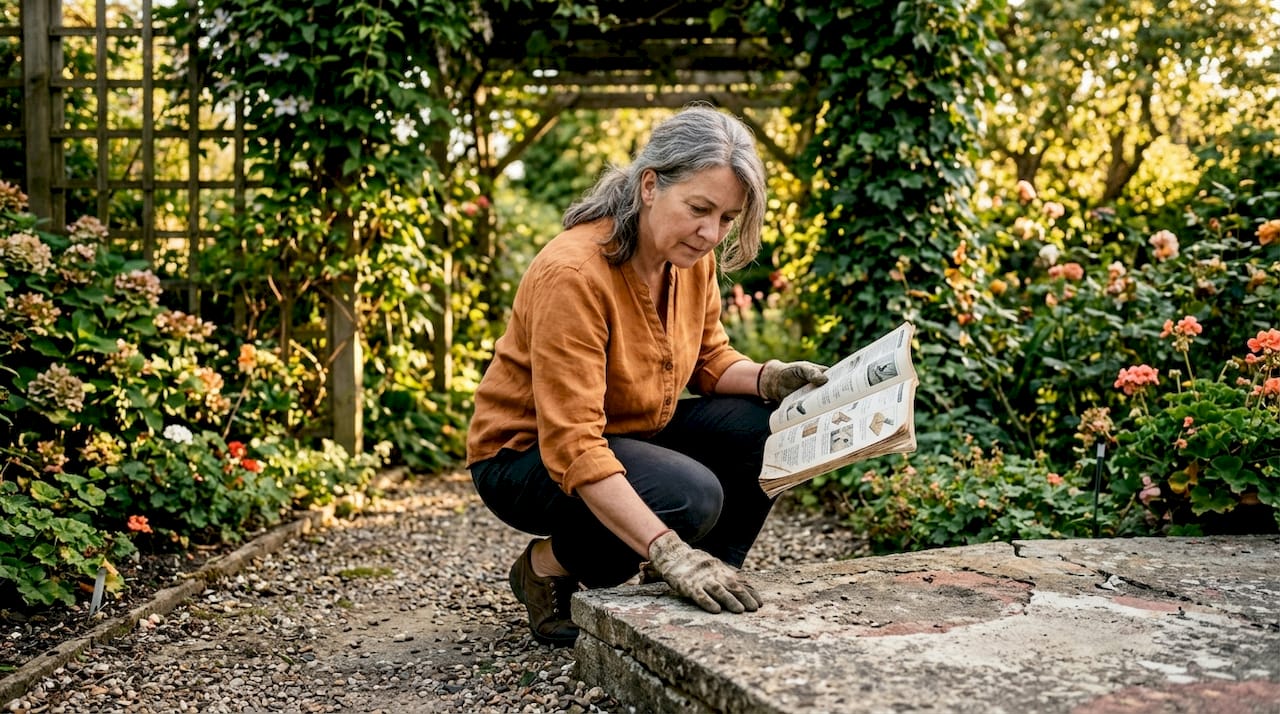
Outdoor concrete color fades primarily because UV radiation breaks down the protective sealer layer, not because sunlight burns the pigment directly. Once that sealer degrades, moisture, dirt, and weather cycles attack the surface underneath, accelerating visible color loss. The industry term for this process is photodegradation of the coating layer, and it explains why concrete color loss outdoors often looks sudden even when the damage has been building for years. Understanding why concrete colour fades outdoors gives you the power to act before the damage becomes permanent. Properly maintained concrete can retain color for 10–20 years, while unsealed concrete shows fading within 2–4 years.
Why does concrete color fade outdoors?
The sealer acts as a sacrificial barrier that protects pigment from UV damage. When that barrier wears away, sunlight reaches the pigment and the concrete surface directly, causing the washed-out look homeowners notice on driveways and patios. This is the single most important thing to understand about concrete color loss outdoors: the sealer fails first, and the color follows.
UV radiation is the primary driver, but it does not work alone. Moisture intrusion, temperature swings, chemical exposure, and surface buildup all compound the damage. Melbourne’s climate, with its intense summer sun and wet winters, creates ideal conditions for accelerated sealer wear. Concrete surfaces in full sun face the worst of it.
The causes of concrete discoloration fall into several distinct categories:
- UV radiation: Breaks down acrylic and polyurethane sealers through photodegradation, leaving pigment exposed.
- Moisture intrusion: Water penetrates micro-cracks and carries calcium salts to the surface, producing white deposits called efflorescence.
- Temperature cycles: Repeated freeze-thaw or heat-cool cycles expand and contract the concrete, opening pathways for water and chemicals.
- Chemical exposure: Fertilizers, pool chemicals, and road salts strip sealers and stain the surface.
- Dirt and grime buildup: A layer of organic material traps moisture against the surface, speeding up sealer degradation and altering the perceived color.
Pro Tip: Position shade structures, pergolas, or shade sails over high-traffic concrete areas. Reducing direct UV exposure by even a few hours per day noticeably extends sealer life.
How does poor installation affect concrete color?
Installation quality sets the ceiling for how long your concrete color lasts. Poor curing, added water, or calcium chloride accelerators cause uneven color that looks like fading but is actually a finishing defect. Blotchy or streaky patches on new concrete almost always trace back to what happened during the pour, not to sunlight.
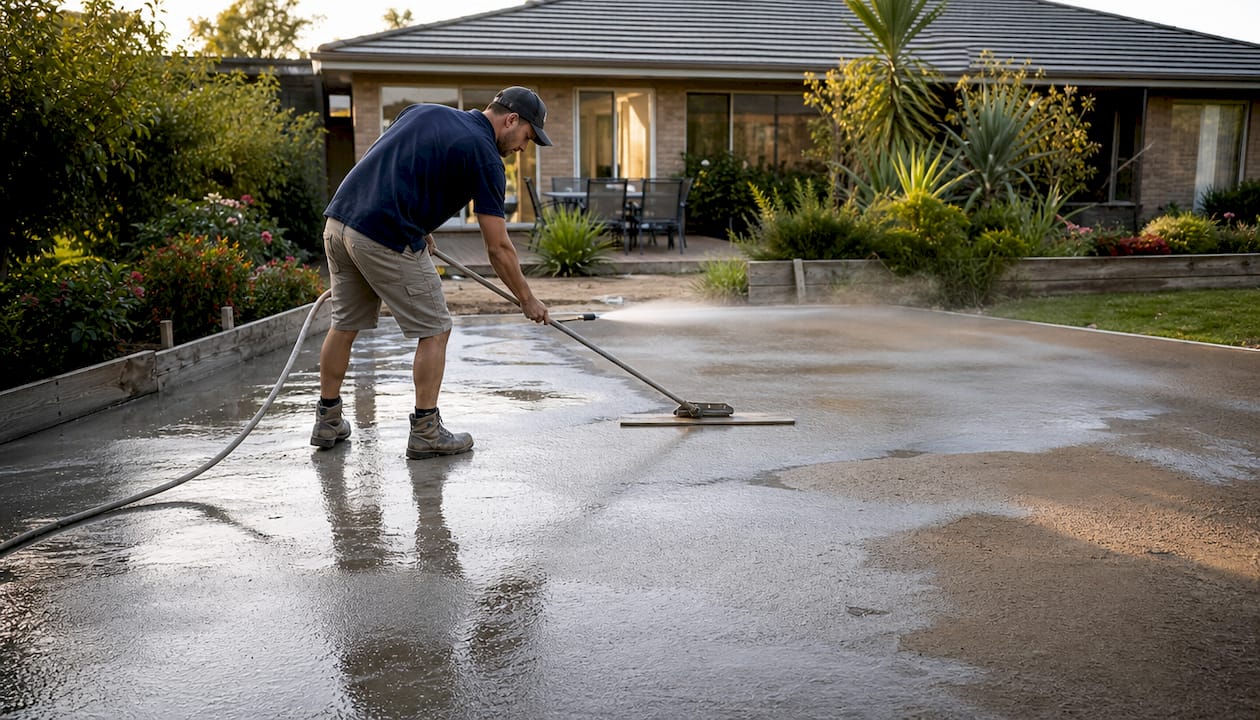
Adding water to a concrete mix at the job site is a common shortcut that weakens the surface layer. A weaker surface layer absorbs sealers unevenly, which means some areas lose protection faster than others. The result is patchy fading that no amount of resealing will fully correct without resurfacing first.
Uneven curing is another culprit. Improper plastic sheeting placement or water pooling during the curing phase creates surface discoloration that often resolves through carbonation over several months. Homeowners who panic and apply aggressive cleaning products at this stage often lock in the discoloration permanently.
Here are the most common installation and maintenance mistakes that worsen outdoor concrete color fade:
- Adding water to the mix on site. This weakens the surface and causes uneven sealer absorption.
- Skipping the curing period. Rushing foot or vehicle traffic onto new concrete disrupts the surface finish.
- Using high-pressure washing. Power washing strips sealers and damages surface texture, making fading worse and repairs more expensive.
- Applying the wrong cleaner. Acidic or bleach-based cleaners eat through sealers and alter pigment chemistry.
- Waiting too long to reseal. Homeowners in high-sun environments should reseal stained concrete every 1–3 years to maintain vibrancy.
Pro Tip: Always test any cleaning product on a small, hidden section of concrete before applying it to the full surface. A 30-second test saves you from a costly mistake.
How do you tell efflorescence from real pigment fading?
Efflorescence and true pigment fading look similar but require completely different fixes. Getting the diagnosis wrong means spending money on the wrong solution and potentially making the problem worse.
Efflorescence appears as a white, powdery deposit caused by moisture carrying calcium salts to the surface. It is cosmetic and typically reversible with the right cleaning approach. True pigment fading, by contrast, is a permanent change to the concrete’s color depth that requires resealing or resurfacing to address.
| Feature | Efflorescence | True pigment fading |
|---|---|---|
| Appearance | White or gray powdery film | Uniform lightening or dullness |
| Texture | Chalky or crystalline on surface | No surface deposit |
| Cause | Moisture moving calcium salts outward | UV breakdown of sealer and pigment |
| Reversible? | Yes, with appropriate cleaning | Partially, with resealing |
| Location | Often near joints, edges, or low spots | Even across sun-exposed areas |
The most reliable at-home diagnostic is the water-bead test. Sprinkle water on the concrete surface. If it beads up and rolls off, the sealer is intact and color is protected. If water soaks in and darkens the concrete, the sealer is gone and the pigment is now vulnerable to UV damage. This test costs nothing and takes 30 seconds.
Efflorescence can also cause pinkish or grayish tinting on darker concrete, where white salt deposits alter how light reflects off the surface. Sunlight exposure makes this effect more visible, which is why homeowners often mistake it for sun-related fading. Proper water drainage management, covered in detail for Melbourne conditions, addresses the root cause of efflorescence rather than just the symptom.
What are the best practices to maintain outdoor concrete color?
Prevention costs a fraction of what restoration does. The goal is to keep the sealer intact so it never stops protecting the pigment underneath.
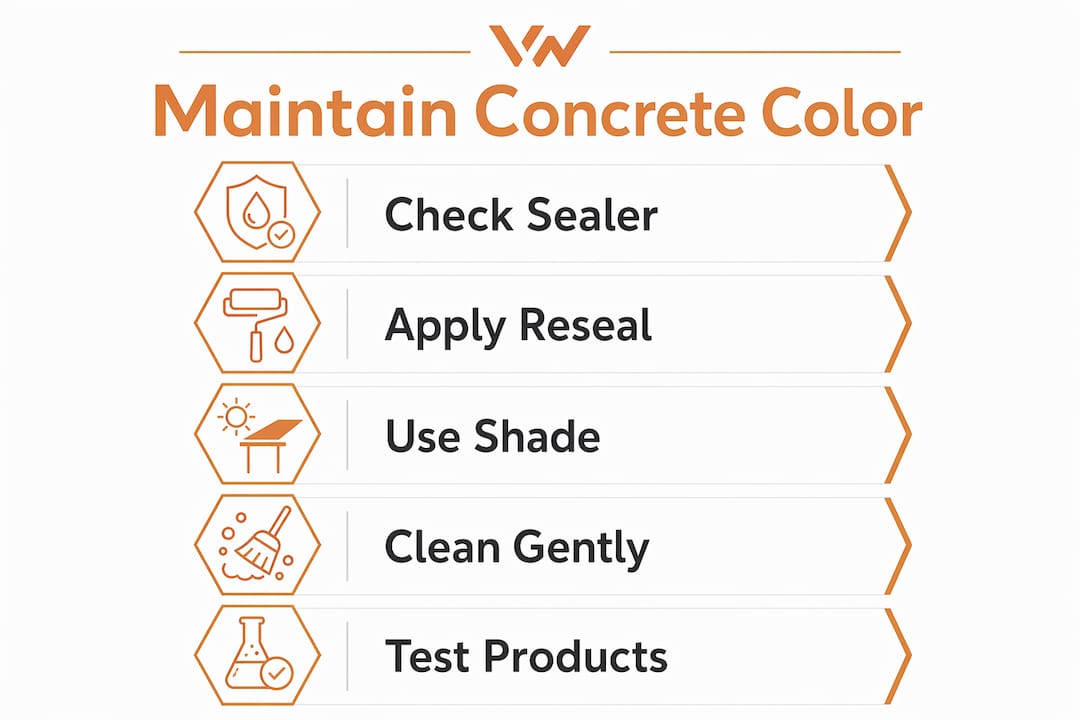
Regular cleaning is the foundation. Use a pH-neutral cleaner and a soft-bristle brush or low-pressure rinse. Avoid pressure washers set above 1,200 PSI on sealed decorative concrete. Remove organic debris like leaves promptly, since decomposing plant matter produces acids that attack sealers.
Resealing on schedule is non-negotiable. The right interval depends on your exposure level:
- Full sun, high traffic: Reseal every 1–2 years.
- Partial shade, moderate traffic: Reseal every 2–3 years.
- Covered or low-traffic areas: Reseal every 3–5 years.
Run the water-bead test twice a year, in spring and fall. If water stops beading, reseal within the next few weeks before UV exposure causes further damage.
For concrete that has already faded, restoration follows a clear sequence. Clean the surface thoroughly to remove dirt, efflorescence, and old sealer residue. Allow it to dry completely, which takes at least 24 hours in dry conditions. Apply a fresh coat of the appropriate sealer for your concrete type, whether acrylic, epoxy, or penetrating silane. For decorative concrete surfaces that have lost significant depth, a professional color hardener or stain application before resealing can restore much of the original vibrancy.
Sealing is not optional for outdoor concrete. Homeowners should view it as essential for preventing moisture-related deterioration that prematurely ages the surface and compromises color. When fading is severe or the surface has cracked and scaled, professional concrete resurfacing is the most cost-effective path to a fresh, color-stable result.
Key Takeaways
Concrete color fades outdoors because UV radiation degrades the protective sealer, leaving pigment exposed to moisture, chemicals, and weather cycles that accelerate visible color loss.
| Point | Details |
|---|---|
| Sealer failure drives fading | UV breaks down the sealer layer first; the pigment underneath fades once that protection is gone. |
| Maintenance interval matters | Reseal every 1–2 years in full sun and every 2–3 years in partial shade to keep color intact. |
| Efflorescence is not fading | White powdery deposits are reversible salt buildup from moisture, not permanent pigment loss. |
| Water-bead test is your early warning | If water soaks into concrete instead of beading, reseal immediately before UV damage sets in. |
| Installation quality sets the baseline | Poor curing or added water during the pour creates color defects that no sealer can fully hide. |
What most homeowners get wrong about concrete color
The most persistent myth I hear is that the sun bleaches concrete the way it bleaches fabric. That framing leads homeowners to the wrong fix. They buy color-enhancing products when what they actually need is a fresh coat of sealer applied before the damage gets worse.
The second mistake I see constantly is aggressive cleaning at the first sign of discoloration. A homeowner notices their patio looking dull, grabs a pressure washer or a bottle of bleach, and strips away whatever sealer was still working. Now the surface is fully exposed, and the next summer does real damage. Gentle cleaning with the right products preserves what you have.
Timing is everything with resealing. I have seen homeowners wait until the concrete looks obviously faded before acting. At that point, resealing restores some sheen but cannot bring back the original color depth. The water-bead test exists precisely to catch sealer failure before it becomes visible fading. Run it twice a year and you will almost never face a restoration job.
The homeowners who get the best long-term results treat sealing the same way they treat painting a fence or servicing a car. It is scheduled maintenance, not a reaction to a problem.
— Vic
VW Concreting: color-stable concrete done right from day one
Color retention starts with how concrete is mixed, poured, and sealed. VW Concreting has completed over 145 projects across Melbourne, and every one of them is built with long-term appearance in mind.
Whether you need a new colored concrete driveway, a reseal on an existing slab, or a full driveway and slab installation that holds its color for years, VW Concreting brings the experience to get it right. The team uses professional-grade sealers and proven installation practices that prevent the early fading and blotchy finishes that plague DIY and cut-rate jobs. For homeowners who want expert advice on their specific situation, VW Concreting’s Melbourne concreting services page is the right starting point.
FAQ
Why does concrete color fade faster in sunny areas?
UV radiation degrades acrylic and polyurethane sealers through photodegradation, removing the protective barrier that shields pigment from direct sunlight. Concrete in full sun loses sealer protection significantly faster than shaded surfaces, requiring more frequent resealing.
Can faded concrete be restored to its original color?
Faded concrete can be partially or fully restored by cleaning the surface, removing old sealer residue, and applying a fresh sealer coat. Severely faded surfaces may need a professional color stain or hardener application before resealing for best results.
What causes white patches on colored concrete?
White patches are typically efflorescence, a powdery deposit formed when moisture carries calcium salts to the concrete surface. Efflorescence is cosmetic and reversible with appropriate cleaning, and it is not the same as permanent pigment fading.
How often should outdoor concrete be resealed?
Concrete in high-sun environments needs resealing every 1–2 years, while partially shaded surfaces can go 2–3 years between applications. Run the water-bead test twice a year to catch sealer failure before visible fading begins.
Does pressure washing damage concrete color?
High-pressure washing strips sealers and damages surface texture, which accelerates fading and can require costly repairs. Use a low-pressure rinse and a pH-neutral cleaner to preserve sealer integrity and slow color loss.
Leave A Comment