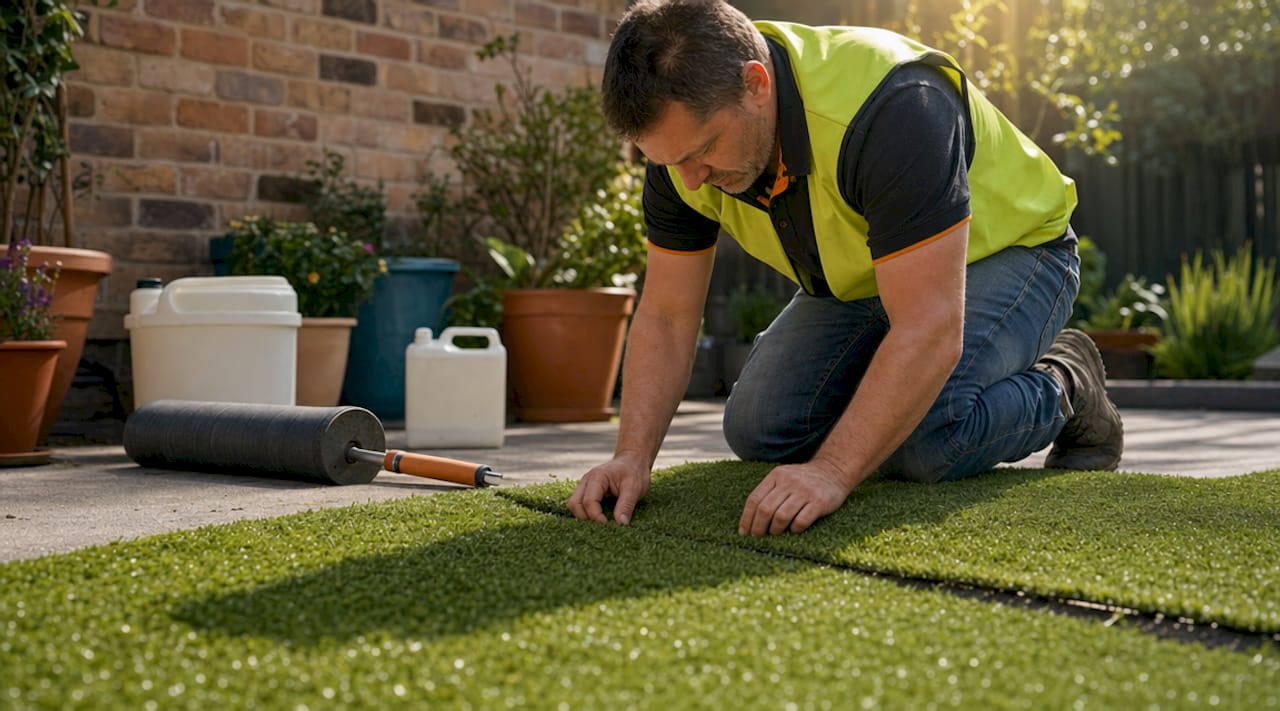
Synthetic turf installation in Melbourne is a multi-step process covering site assessment, base preparation, precision cutting, and professional finishing to deliver a lawn that performs for 10 or more years. The industry term is “artificial grass installation,” though Melbourne homeowners and contractors use both terms interchangeably. Specialists like Reelgrass, Premier Grass, and VW Concreting have made synthetic turf Melbourne’s fastest-growing landscaping upgrade, driven by water restrictions, reactive clay soils, and the demand for year-round green spaces. This guide covers every stage of the process, realistic costs, and what separates a lawn that lasts from one that sags within two years.
What does synthetic turf installation in Melbourne actually involve?
Synthetic turf installation is defined as the complete process of preparing a site, constructing a sub-base, and fixing artificial grass to create a stable, draining, and visually natural lawn surface. The process is not simply rolling out a mat and cutting it to size. A proper installation on Melbourne soil involves excavation, compacted crushed rock, drainage grading, geotextile fabric, and precise seam joining before a single blade of grass is visible.
Melbourne’s reactive clay soils make ground preparation more demanding than in sandier cities. Clay expands when wet and contracts when dry, which means a poorly compacted base will shift, causing the turf above it to buckle and pool water. Installation surfaces include soil, concrete, decking, and rooftops, each requiring a different fixing and drainage strategy. Understanding which surface you are working with determines every decision that follows.
What are the essential site preparation steps for synthetic turf?
Ground preparation is the single most important factor in synthetic turf longevity. Most underperformance issues trace back to base failures, not turf material quality. Getting this stage right protects every dollar you spend on the product itself.
Step-by-step site preparation
-
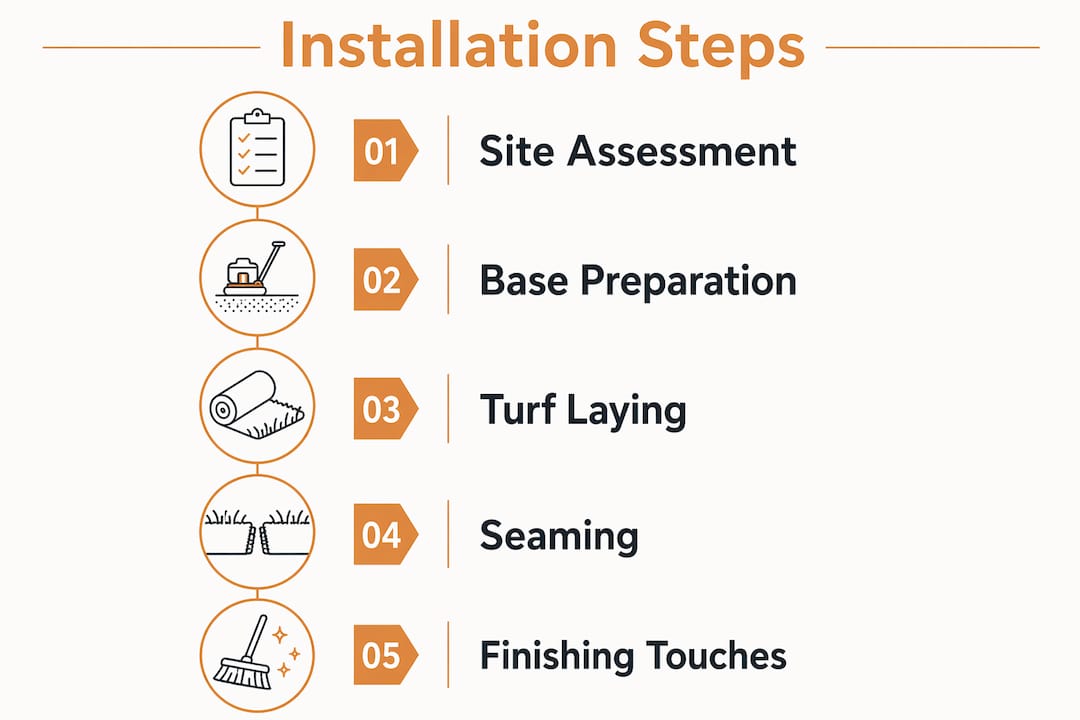
Site assessment and measurement. A professional measures the area precisely, accounting for curves, garden beds, and fixed structures. Custom shapes require careful planning to minimize waste and seam placement.
-
Soil and surface evaluation. Melbourne’s clay-heavy soils require deeper excavation than sandy soils. A site with poor natural drainage needs additional fall grading to direct water away from buildings and structures.
-
Excavation and organic matter removal. Typically 75 to 100mm of soil is removed. All organic matter, roots, and debris must be cleared. Leaving organic material beneath the base causes decomposition, which creates voids and sinking over time.
-
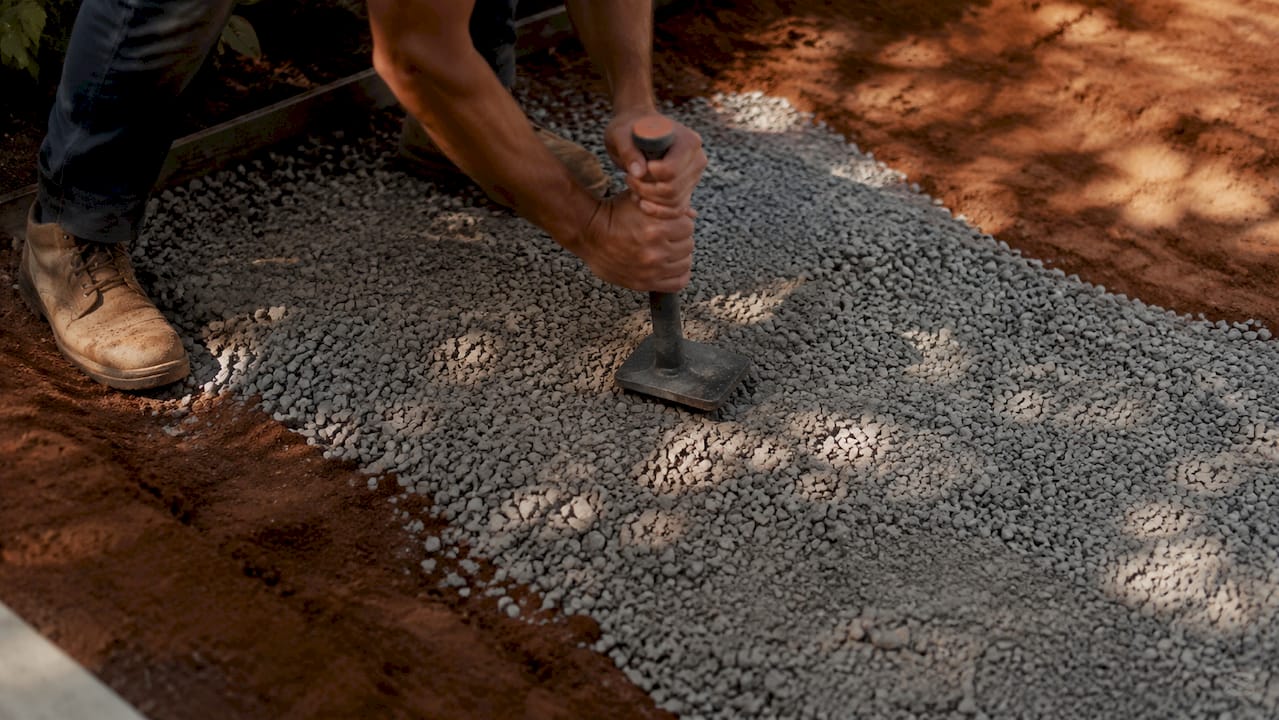
Sub-base installation. Crushed rock or road base is laid and compacted in layers. The depth varies by soil type and intended use. A children’s play area or high-traffic zone needs a deeper, more compacted base than a decorative garden border.
-
Drainage design and fall grading. The base must slope away from buildings at a minimum fall to prevent pooling. Drainage-aware base design is non-negotiable in Melbourne, where heavy rain events are common and reactive clay beneath the base can slow natural water movement.
-
Geotextile fabric installation. A weed barrier fabric is laid over the compacted base before turf goes down. This prevents weed growth from below while still allowing water to pass through freely.
-
Edge restraints. Bender board or treated timber edging is fixed around the perimeter to hold the turf in place and prevent lateral movement over time.
-
Final compaction check. The base is checked for level and firmness before any turf is unrolled. Any soft spots are re-compacted or filled.
Pro Tip: Ask your installer to confirm the sub-base depth and compaction method before work begins. A base that is too shallow for Melbourne clay will shift within the first wet season, and fixing it means pulling up the entire installation.
The most common preparation mistake is under-excavating to save time. Incorrect base compaction and grading lead directly to sinking and lumpiness after installation, according to Reelgrass’s installation research. No amount of quality turf product compensates for a weak foundation.
How to install synthetic turf: step-by-step for Melbourne properties
Once the base is prepared and signed off, the installation phase moves quickly. The sequence matters because errors in early steps create compounding problems at finishing.
-
Roll out and acclimatize the turf. Rolls are laid out and left in the sun for 30 to 60 minutes. Heat relaxes the fibers and backing, making the turf easier to cut accurately and reducing the risk of post-installation shrinkage.
-
Precision cutting. Turf is cut from the back using a sharp utility knife. Cuts follow the grain direction to avoid visible lines. Curved edges require careful scoring and trimming in multiple passes.
-
Seam joining. Where two pieces meet, seams are aligned so pile direction is consistent across the full area. Joining tape and adhesive are used beneath the seam. A poorly joined seam is visible and will lift over time if not bonded correctly.
-
Fixing to the perimeter. Galvanized nails or staples are driven through the turf backing into the edge restraints every 150 to 200mm. On concrete or decking, hard surface fixing methods use adhesive and mechanical anchors rather than nails.
-
Infill application. Silica sand or crumb rubber infill is brushed into the turf fibers using a power broom. Infill adds weight to hold the turf flat, supports the fibers in an upright position, and improves underfoot feel.
-
Final grooming. A stiff brush or power broom lifts the fibers to a natural standing position. This step makes the difference between a lawn that looks installed and one that looks grown.
Key considerations for Melbourne-specific installations:
- Sun exposure: North-facing lawns in Melbourne receive intense afternoon sun. UV-stabilized turf products are required to prevent fiber degradation and color fade.
- Traffic zones: High-traffic areas like pathways or play zones benefit from a denser pile weight (typically 30mm or higher) and a firmer infill layer.
- Rooftop and decking installs: These require adapted drainage strategies and non-penetrating fixing methods to protect waterproof membranes beneath.
Pro Tip: Always confirm that pile direction runs the same way across all turf pieces before cutting. Walking toward the pile direction looks darker and lusher. Walking against it looks lighter. Mixing directions on a single lawn creates a patchwork effect that no amount of grooming fixes.
For a detailed breakdown of Melbourne residential installation types, the approach varies meaningfully between front yards, backyards, and specialty surfaces.
What are the typical costs for synthetic turf installation in Melbourne?
Artificial grass costs in Australia range from $25 to over $100 per square meter for the product alone. This wide range reflects pile height, fiber quality, UV rating, and backing type. Budget products at $25 per square meter are suitable for low-traffic decorative areas. Premium products above $80 per square meter are designed for high-traffic zones, pet areas, and rooftop applications.
| Cost component | Typical range (per m²) |
|---|---|
| Turf product only | $25 to $100+ |
| Base preparation | $20 to $45 |
| Labor and installation | $30 to $60 |
| Total installed cost | $75 to $160 |
Most Melbourne homeowners spend between $90 and $130 per square meter for a complete installation. The breakdown is roughly 40% materials, 30% base preparation, and 30% labor. A standard 50 square meter backyard therefore costs between $4,500 and $6,500 fully installed.
Factors that push costs higher include:
- Difficult site access (narrow side gates, multi-level properties)
- Significant excavation depth required by clay-heavy soil
- Complex shapes with many cuts and seams
- Rooftop or decking installations requiring specialist fixing
- Removal and disposal of existing lawn or paving
Larger projects benefit from economies of scale. A 200 square meter commercial installation will typically cost less per square meter than a 30 square meter residential job because mobilization, base material delivery, and labor setup costs are spread across more area.
DIY synthetic turf installation frequently fails at the base preparation stage, leading to sagging and drainage problems that require professional remediation. The cost of fixing a failed DIY install often exceeds what professional installation would have cost originally. For most Melbourne homeowners, professional installation is the better financial decision over a 10-year horizon.
What maintenance and long-term benefits does synthetic turf offer?
UV-stabilized synthetic turf with quality fiber and backing delivers a lifespan of 10 or more years with minimal upkeep. This is the core value proposition for Melbourne homeowners who want a green lawn without weekly mowing, watering, or fertilizing.
Routine maintenance tasks are straightforward:
- Brushing: Brush fibers upright every few months using a stiff broom or leaf blower. High-traffic areas need more frequent attention.
- Debris removal: Leaves, twigs, and pet waste should be removed promptly. A leaf blower handles most light debris in minutes.
- Rinsing: Occasional hosing removes dust and pet odors. The crushed rock base drains water faster than natural grass, so rinsing does not create pooling.
- Weed control: Geotextile fabric prevents most weed growth. Any weeds that appear through seams or edges are removed by hand or with a non-residual herbicide.
The environmental case for synthetic turf in Melbourne is strong. The average Melbourne lawn uses significant water annually for irrigation. Synthetic turf eliminates that consumption entirely, which matters under Stage 2 water restrictions that apply across much of metropolitan Melbourne.
Pet and child safety is built into premium products. Quality synthetic turf uses non-toxic fibers and infill materials, and the firm, even surface reduces trip hazards compared to uneven natural grass.
Pro Tip: For pet owners, choose a turf product with an antimicrobial backing and a drainage rate above 30 liters per square meter per hour. Melbourne summers concentrate pet waste odors quickly on poorly draining turf.
Key takeaways
Successful synthetic turf installation in Melbourne depends on sub-base quality, drainage design, and professional execution far more than on the turf product selected.
| Point | Details |
|---|---|
| Base preparation is everything | Incorrect compaction and grading cause sinking and pooling regardless of turf quality. |
| Melbourne clay demands deeper excavation | Reactive clay soils require 75 to 100mm excavation and a compacted crushed rock base. |
| Total installed cost ranges widely | Most Melbourne homeowners pay $90 to $130 per m² for a complete professional installation. |
| Lifespan exceeds 10 years with care | UV-stabilized turf with quality backing lasts a decade or more with minimal maintenance. |
| DIY base failures cost more to fix | Professional installation is the better long-term investment for most residential projects. |
What I’ve learned from watching Melbourne turf projects go wrong
After working on outdoor construction projects across Melbourne since 2001, the pattern I see most often is homeowners who invest in premium turf and then cut corners on the base. They spend $80 per square meter on a beautiful product and then lay it over 50mm of poorly compacted road base. Within one wet season, the lawn has soft spots, the seams are lifting, and water is pooling near the house.
The uncomfortable truth is that the turf you see is almost irrelevant to the outcome. What matters is what you cannot see: the depth of excavation, the compaction of the sub-base, and the slope grading. A $40 per square meter turf product on a correctly prepared base will outperform a $90 product on a weak one every single time.
I also see homeowners underestimate the difference between soil-based and hard-surface installations. Laying turf on concrete or decking is not simpler than soil installation. It requires different adhesives, different edge fixing, and a drainage strategy that works without a natural sub-base. Treating it as a shortcut is how you end up with turf that bubbles in summer heat and lifts at the edges after rain.
My advice: spend your budget on preparation first, then on turf quality. Ask any installer you speak with to walk you through their base preparation method specifically. If they cannot describe their compaction process and drainage fall in detail, find someone who can.
— Vic
Ready to get your Melbourne lawn transformed?
VW Concreting has completed over 145 outdoor projects across Melbourne since 2001, including residential and commercial synthetic turf installations, concreting, fencing, and decking. The team brings the same preparation discipline to every turf project, from sub-base design through to final grooming.
Whether you need a professional turf installation for a backyard, a rooftop, or a commercial property, VW Concreting delivers tailored solutions built for Melbourne’s soil and climate. Pairing synthetic turf with concreting and landscaping services creates a fully finished outdoor space in a single project. Contact the team for a custom quote and site assessment.
FAQ
How long does synthetic turf installation take in Melbourne?
Most residential synthetic turf installations in Melbourne take one to three days depending on site size and complexity. Larger or more complex projects involving hard surfaces or significant excavation may take longer.
Is professional installation worth it over DIY?
Professional installation is strongly recommended for Melbourne properties. DIY installations most commonly fail at base preparation, leading to sagging and drainage problems that cost more to remediate than the original professional installation would have.
What base material is used under synthetic turf in Melbourne?
Crushed rock or road base is the standard sub-base material for synthetic grass installation in Melbourne. It is compacted in layers to a depth of 75 to 100mm depending on soil type and provides the drainage and stability the turf needs.
How much does synthetic turf installation cost per square meter in Melbourne?
Total installed costs typically range from $75 to $160 per square meter, with most Melbourne homeowners paying $90 to $130 per square meter. Product quality, site complexity, and access all influence the final figure.
How long does synthetic turf last in Melbourne conditions?
Quality UV-stabilized synthetic turf lasts 10 or more years in Melbourne with routine maintenance. Many premium products carry manufacturer warranties of up to 10 years covering fiber and backing integrity.
Leave A Comment