
TL;DR:
- Choosing the correct collated nails based on nail gauge, length, coating, and collation type is essential for job site efficiency and long-lasting results.
- Paper tape collation is increasingly favored due to its biodegradable debris and cleaner work environment, especially in regulated construction projects.
- Investing in branded nails and ensuring compatibility with your tool prevents jams and damage, ultimately saving time and money.
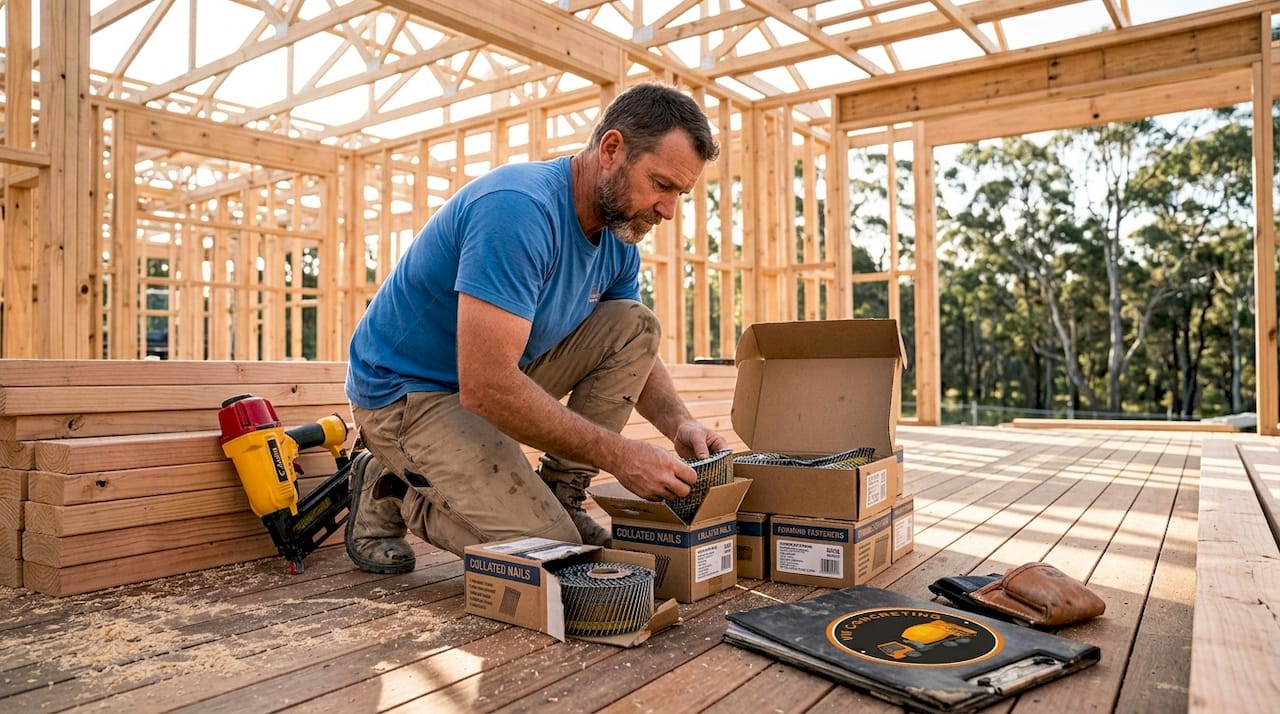
Reach for the wrong strip of collated nails and your nail gun jams, your timber splits, or your fixings fail six months later when moisture gets in. Understanding the types of collated nails available is not a nice-to-have. It directly determines job site efficiency, tool longevity, and whether your finished work holds up for years or causes callbacks. Collated formats represent 55 to 65% of contractor fastener volume, which tells you everything about how the industry has voted. This guide cuts through the noise and gives you a practical framework for choosing correctly every single time.
Table of Contents
- Key takeaways
- 1. Key criteria for choosing types of collated nails
- 2. Paper collated strip nails
- 3. Plastic collated strip nails
- 4. Wire collated coil nails
- 5. Nail material and coating options explained
- 6. Brad nails and finish nails as collated nail types
- 7. Comparison of collated nail types for performance and application
- My honest take on choosing collated nails
- Get the right fasteners for your next project
- FAQ
Key takeaways
| Point | Details |
|---|---|
| Match collation to your nailer | Nail angle and collation type must match your tool’s magazine spec to avoid costly jams. |
| Paper collation is growing | Paper tape collation is gaining ground due to cleaner job sites and reduced plastic waste regulation. |
| Coating matters as much as type | Electro-galvanised suits dry interiors; hot-dip galvanised or stainless steel is required for outdoor or wet areas. |
| Branded nails outperform budget options | Premium collated nails feed more reliably and reduce downtime despite a higher upfront cost. |
| Length must suit your material | Nail length should be at least twice the thickness of the material being fastened for a secure hold. |
1. Key criteria for choosing types of collated nails
Before you pick a nail type, you need a framework. There are several variables that interact, and getting just one wrong can compromise the whole fastening system.
Gauge and length are your starting point. Nail length should be at least twice the thickness of the material being fastened. An 18-gauge brad nail suits light trim work, while a heavier 16-gauge or framing nail handles structural timber. Thinner gauges leave smaller holes, which matters for visible finish work.
Material and coating determine how the nail performs once it is in the timber. Electro-galvanised nails dominate interior dry applications at 55 to 70% of volume, while hot-dip galvanised and stainless steel are preferred for humid or outdoor uses. Stainless steel finish nails are growing at 5 to 7% annually because rust resistance is non-negotiable in coastal or high-moisture environments.
The following criteria are worth checking before every purchase:
- Nail angle and magazine compatibility. Framing nailers require matched angles such as 34 degrees for specific Paslode models. The wrong angle will not load properly and can damage the magazine.
- Collation type. Paper, plastic, and wire collation each have different rigidity, debris profiles, and tool requirements.
- Project environment. Interior dry, exterior, or exposed-to-weather applications each call for a different coating specification.
- Cost versus performance. Stainless steel nails cost 40 to 60% more than standard options, but the investment pays back by preventing rust failure in kitchens, bathrooms, and outdoor trim.
- Volume and speed requirements. High-volume framing calls for coil nails; light finishing work suits strip nails.
Pro Tip: Always check your nailer’s manual for the approved nail angle and collation type before buying a new box. A 34-degree paper strip will not fit a magazine designed for a 28-degree plastic strip, and no amount of force will change that.
2. Paper collated strip nails
Paper tape collation is the method where nails are bonded side by side using a strip of paper tape at a set angle, typically between 28 and 34 degrees. The tape burns away cleanly on firing in pneumatic nailers, leaving almost no debris on the job site.
This is a key practical advantage. Paper collation is growing because it produces cleaner job sites and responds to increasing regulatory pressure around plastic waste. In commercial construction where site cleanliness requirements are strict, paper tape is the preferred choice.
Key characteristics of paper collated strip nails:
- Available in framing nail lengths for structural work and finish nail gauges for trim and moulding.
- Compatible with most angled strip nailers, provided the angle matches the tool’s magazine.
- The paper residue after firing is biodegradable and does not create micro-plastic contamination.
- Slightly less rigid than plastic-collated strips, which can occasionally cause feed issues in humid storage conditions.
- Environmental regulations increasingly favour paper collation due to site cleanup and combustion concerns.
Paper collated nails are the go-to for professional framers working on commercial sites and are well-suited to finish carpenters who want minimal debris around skirting boards, architraves, and cabinetry. For DIY applications, they work just as well provided your nailer is compatible and you store the strips in a dry environment.
3. Plastic collated strip nails
Plastic collated strip nails hold nails together using a rigid plastic carrier at specific angles, commonly 21 degrees for full-round-head framing nails or 28 to 30 degrees for clipped-head versions. The plastic collar breaks apart on firing and is ejected from the nailer.
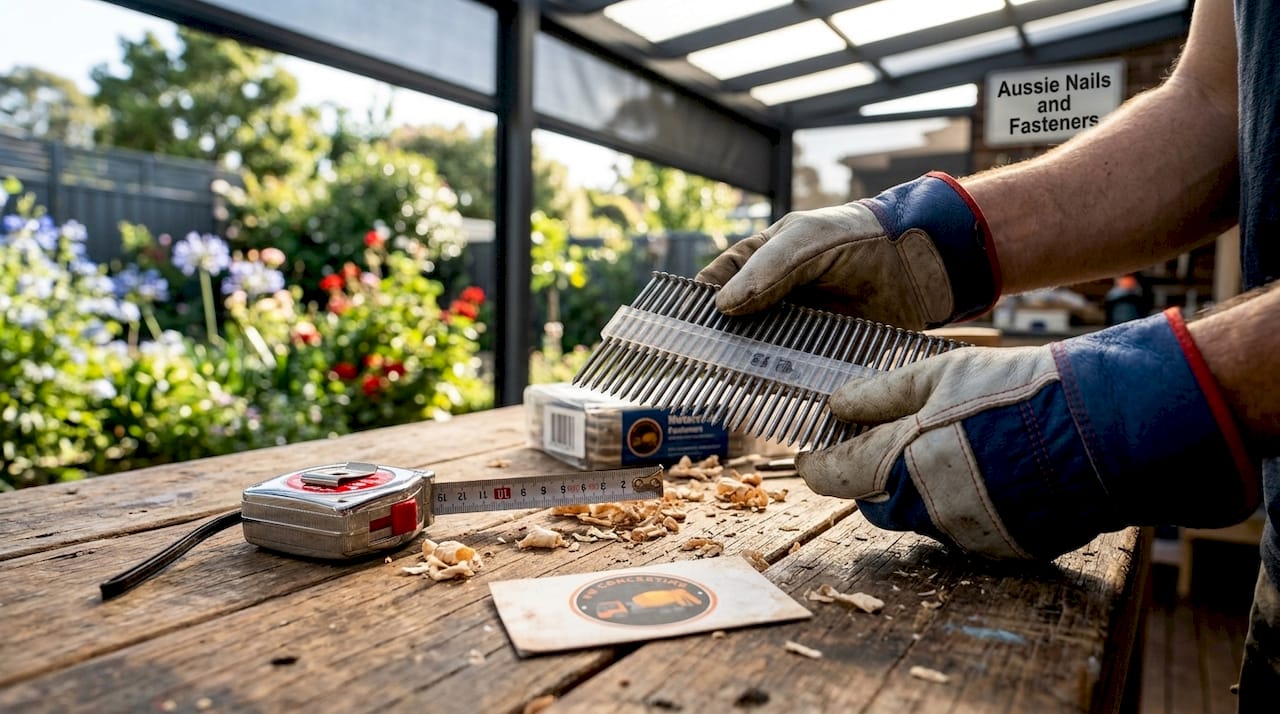
The rigidity of plastic collation is its biggest practical benefit. Strips are less likely to flex or deform during loading and handling on a busy site. This makes plastic collated nails a reliable choice for high-volume framing where you are feeding strip after strip through a hot nailer.
Characteristics worth knowing:
- Plastic strip nails remain popular despite rising paper collation use, primarily because of their durability during loading.
- Plastic debris is generated after firing, which accumulates around the nail gun’s ejection port and on the floor.
- Some jurisdictions and site safety programmes are beginning to discourage plastic-collated nails on environmental and contamination grounds.
- Full-round-head plastic-collated framing nails meet structural code requirements where clipped-head nails may not be accepted.
- The 21-degree angle is very common in framing nailers from major tool brands, giving wide tool compatibility.
Pro Tip: If you are working on a site that requires waste separation or has environmental compliance obligations, check whether plastic collation is permitted before ordering bulk quantities. Switching mid-project is more disruptive than planning ahead.
4. Wire collated coil nails
Wire collated coil nails use a welded wire process to connect nails into a circular coil format rather than a straight strip. The coil sits in a drum magazine, which can hold significantly more nails than a strip magazine, sometimes 200 to 360 nails per load.
This format is built for speed. On high-volume framing and sheathing applications, the extended magazine means fewer reloads and higher throughput. A framing crew nailing wall plates or roof sheathing all day will feel the productivity difference immediately.
Key points about wire collated coil nails:
- Wire collated coil nails are favoured for high-speed framing where productivity per hour is the priority.
- Common collation angles are 15 degrees and 28 to 34 degrees depending on the coil nailer model.
- Wire welding leaves small wire segments behind on firing, which require periodic clearing from the nailer’s exhaust and work area.
- Coil nailers are bulkier and heavier than strip nailers, which matters on finish or tight-access work.
- They excel in heavy timber fastening, pallet manufacturing, and structural framing where nail-per-minute rate matters more than portability.
For most DIY users, a coil nailer is overkill unless you are framing a deck or shed. For site carpenters and framing crews, the wire collated coil format is a genuine productivity tool that justifies the heavier kit.
5. Nail material and coating options explained
Beyond collation type, the material and surface coating of a collated nail determines where it can be used and how long it will last. This is where many builders, particularly on DIY projects, make expensive mistakes by specifying the wrong nail for the environment.
Bright finish (uncoated) nails are the most affordable option and are appropriate for interior framing where the timber is dry and never exposed to moisture. They will rust if used outside or in bathrooms, full stop.
Electro-galvanised nails carry a thin zinc coating applied by electroplating. They resist light moisture but are not rated for direct weather exposure. They suit interior applications and protected exterior work under cladding.
Hot-dip galvanised nails are dipped in molten zinc for a substantially thicker coating. They are the correct specification for decking, fencing, and exterior structural work in Australian conditions. The heavier coating means they can bind slightly in finish nailers, so they are most commonly used in framing and coil guns.
Stainless steel is the premium specification for coastal areas, pools, and any application where rust staining would be visible or where structural integrity under corrosion is critical. The cost premium of 40 to 60% is significant, but the alternative in a coastal build is callback costs that dwarf the upfront saving.
6. Brad nails and finish nails as collated nail types
Not all collated nails are heavy framing fasteners. Two smaller formats deserve their own treatment because they are widely used in finishing work and are sometimes confused with each other.
Collated brad nails are thin 18-gauge nails used specifically for finish work where minimal visibility matters. Brad nails leave small holes that are easy to fill, making them ideal for trim, moulding, and light furniture assembly. Their holding power is limited, so they are not suitable for structural connections.
Collated finish nails are typically 15 or 16 gauge, larger than brad nails but smaller than framing nails. They provide enough holding power for skirting boards, door frames, and heavier trim profiles while still leaving a relatively small hole. They are usually paper or plastic collated and fired from an angled finish nailer. For most finish carpentry on residential builds, 16-gauge finish nails are the standard workhorse.
7. Comparison of collated nail types for performance and application
Choosing between different collated nails guide options is easier when you can compare them side by side. Here is a practical breakdown across the criteria that matter most on site.
| Collation type | Typical angle | Best application | Debris type | Tool compatibility | Environmental impact |
|---|---|---|---|---|---|
| Paper strip | 28° to 34° | Framing, finish work | Biodegradable paper | Most angled strip nailers | Low, preferred by regulators |
| Plastic strip | 21° to 30° | Framing, structural | Plastic fragments | Wide, common in framing guns | Moderate, increasing regulation |
| Wire coil | 15° to 34° | High-volume framing | Metal wire fragments | Coil nailers only | Low to moderate |
| Brad nails (18ga) | Varies | Trim, moulding | Paper or plastic | Finish/brad nailers | Low |
| Finish nails (15/16ga) | Varies | Cabinetry, door frames | Paper or plastic | Finish nailers | Low |
Branded collated nails have tighter manufacturing tolerances that ensure consistent feeding and reduce tool jams compared to commodity nails. Professionals pay 25 to 40% more for branded options because the productivity benefit across a working week is real and measurable. For a DIY project involving a few hundred nails, the difference is less significant. For a framing crew firing 5,000 nails a day, a consistent feed rate is worth every cent of the premium.
My honest take on choosing collated nails
Over years of working on construction projects and specifying fasteners, I have seen the same mistake repeated more than almost any other. Someone buys a cheaper collated nail that is close to the right spec but not quite correct, either a slightly wrong angle, a different collation width, or a lower-quality strip bond. The first hundred nails fire fine. Then the jams start. Then the timeline blows out.
Compatibility between nail angle, collation type, and tool model is not a suggestion printed on a box. It is a mechanical requirement. I have seen quality nailers damaged because someone forced the wrong strip into a magazine rather than going back to the supplier for the correct specification.
My other strong view is on branded versus economy nails. The price gap feels significant when you are buying in bulk. But investing in quality collated nails reduces costly project delays. I have watched crews lose two hours in a single morning clearing jam after jam from cheap nails. At labour rates, that wipes out any saving many times over.
Finally, think about where the industry is heading. Paper collation is the direction regulators and major contractors are moving. If you are setting up a new kit or advising a project, specifying paper collated nails where your tools allow is the practical choice. It is cleaner on site, easier to comply with, and the right nail types for durable builds are increasingly paper-based in professional contexts.
— VW
Get the right fasteners for your next project
At VW Concreting, we know that every successful build depends on quality materials and the right tools for the job. Whether you are framing a new deck, laying a concrete slab, or finishing a landscaping project, the fasteners holding your structure together matter as much as any other component.
Our team has completed over 145 projects across Melbourne, from driveways and outdoor entertainment areas to fencing and decking. We work with contractors and homeowners who take quality seriously. If you want to explore your fastener options for construction or need expert advice on specifying the right collated nails for your application, our knowledge runs deep across all facets of structural and outdoor building work. Get in touch with us to discuss your project requirements and let us help you build something that lasts.
FAQ
What are collated nails?
Collated nails are individual nails joined together in strips or coils using paper tape, plastic, or wire to enable rapid, continuous loading into a pneumatic or gas nailer. They are the standard fastener format across professional construction due to their speed and efficiency.
Which collated nail type produces the least debris?
Paper collated nails produce the least site debris because the tape burns away on firing and the residue is biodegradable. Wire collated coil nails produce small metal fragments, and plastic collated nails generate plastic debris after each nail is fired.
How do I know which collation angle fits my nail gun?
Check your nailer’s specification plate or manual for the approved nail angle and collation type. Using the wrong angle, such as a 21-degree strip in a 34-degree magazine, will cause feed failures and can damage the tool.
Are stainless steel collated nails worth the extra cost?
For outdoor, coastal, or high-moisture applications, yes. Stainless steel nails cost 40 to 60% more than standard options but prevent rust failure that would otherwise require costly repairs or replacements in environments like decking, bathrooms, and exterior trim.
Can DIY users benefit from collated nails?
Absolutely. Collated nails improve speed and reduce hand fatigue compared to loose nails and a hammer. For larger DIY projects like decks, pergolas, or timber framing, a coil or strip nailer with the correct collated nail specification delivers professional results with far less effort.
Recommended
- Construction nail types and their uses for Australian projects – Aussie Nails and Fasteners Warehouse
- Nails vs staples: choose the right fastener fast – Aussie Nails and Fasteners Warehouse
- Nail types for Melbourne DIY and landscaping projects
- Screws vs nails checklist: How to choose the right fastener – Aussie Nails and Fasteners Warehouse
Leave A Comment