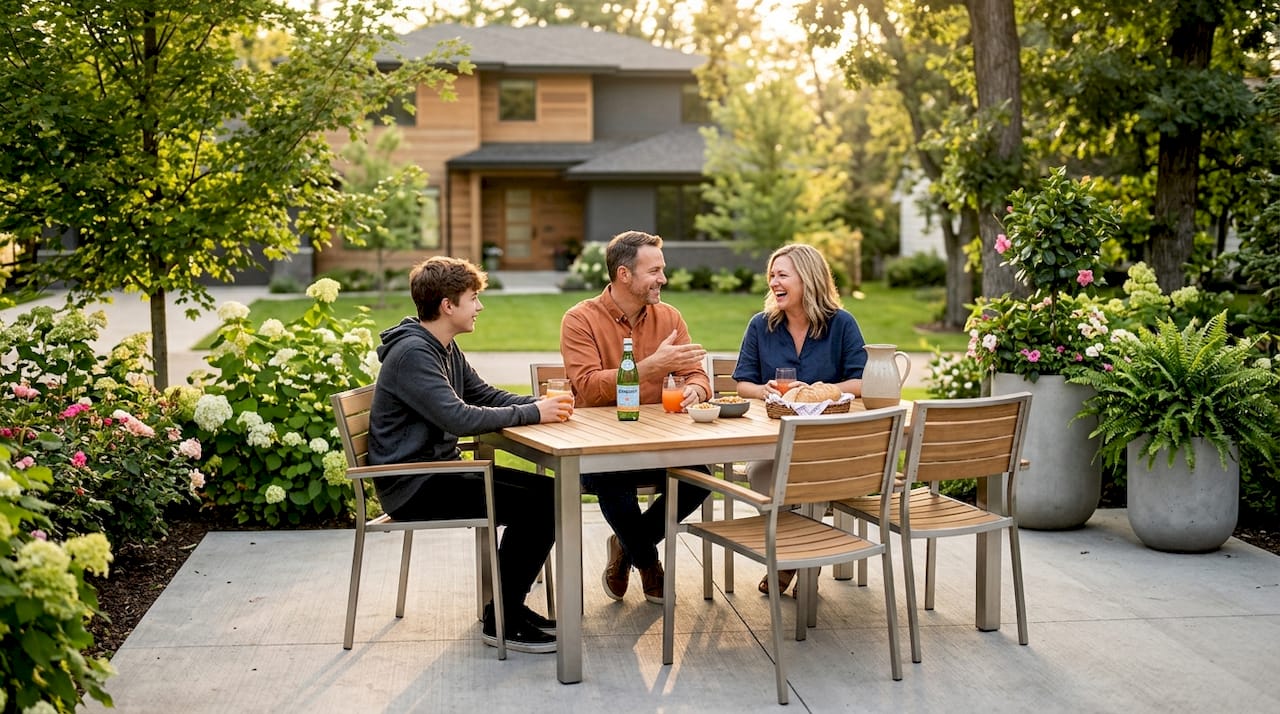
Most homeowners assume concrete means gray slabs and utility. They picture parking lots, not patios. But the role of concrete in outdoor rooms is far more nuanced than that. Concrete is one of the most adaptable outdoor room materials available, capable of mimicking stone, taking on rich color, or forming furniture that lasts decades. When done right, it grounds a space structurally and visually, giving designers and landscapers a foundation that no other material matches for sheer versatility.
Table of Contents
- Key takeaways
- The role of concrete in outdoor rooms: durability and function
- Design versatility: concrete as a creative surface
- Safety and maintenance for outdoor concrete
- Integrating concrete with landscaping
- What I’ve learned from watching concrete projects go wrong
- Ready to transform your outdoor space?
- FAQ
Key takeaways
| Point | Details |
|---|---|
| Concrete is highly versatile | Beyond flat slabs, concrete works as flooring, seating, countertops, and decorative features in outdoor rooms. |
| Finish choice affects safety | Textured finishes like broom finish reduce slip risk outdoors, especially in wet conditions. |
| Sealing extends lifespan | Regular sealing and cleaning protect concrete from cracking and staining in garden environments. |
| Design blending matters | Pairing concrete with wood, plants, or stone softens its industrial look and creates cohesive outdoor spaces. |
| Professional installation pays off | Proper grading, drainage, and curing during installation prevent costly long-term damage. |
The role of concrete in outdoor rooms: durability and function
Concrete earns its place in outdoor living spaces first through performance. It handles heavy furniture, foot traffic, and weather without flinching. Unlike timber decking that warps or pavers that shift over time, a properly laid concrete slab stays level and solid for decades.
The cost story is also compelling. Basic patio installation runs roughly $10 per square foot, making it one of the more affordable outdoor space flooring options compared to natural stone or premium hardwood. A straightforward patio project typically lands between $2,000 and $3,000 total, which is hard to beat for a surface that lasts 30 or more years.
Here is where concrete truly pulls ahead as a functional material:
- Patios and entertainment areas: Concrete slabs give you a flat, load-bearing base for outdoor kitchens, dining sets, and fire pits without movement or settling.
- Walkways and pathways: Using concrete for landscaping paths creates defined circulation routes that stand up to garden hose washdowns, root pressure, and UV exposure.
- Outdoor countertops: Cast-in-place concrete benches and kitchen surfaces resist heat and moisture better than many indoor materials.
- Retaining walls and edging: Concrete holds soil in place and defines garden beds cleanly, combining structural and aesthetic roles in one.
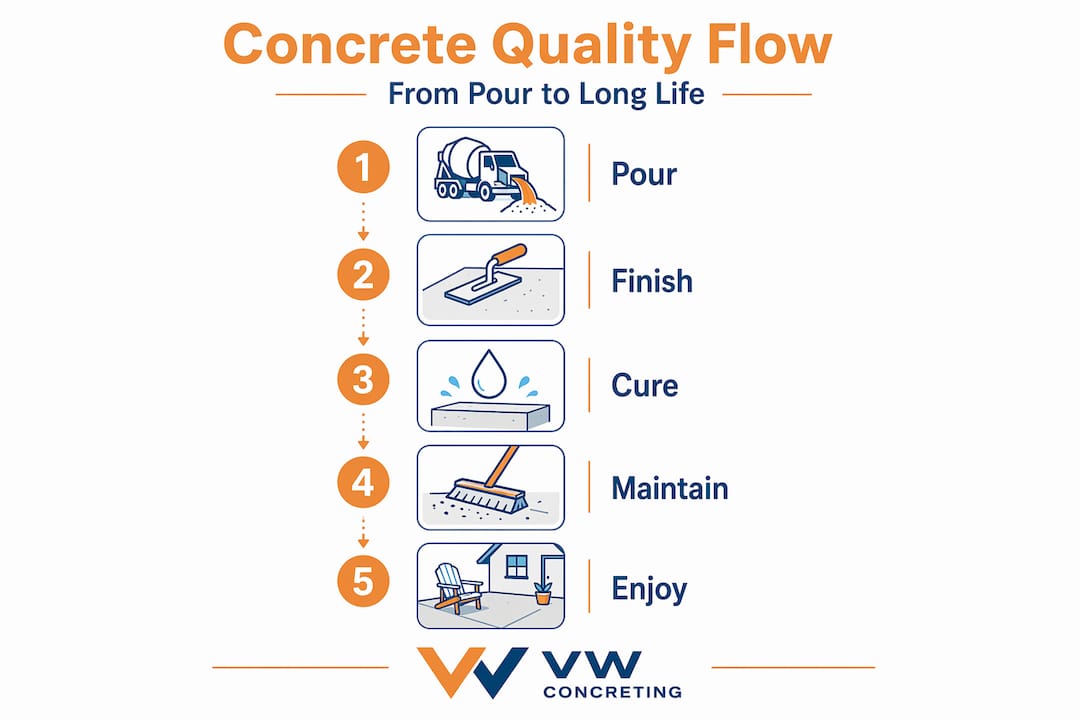
The catch is installation quality. Proper curing techniques determine whether a decorative slab holds its finish and strength long term. Rushing the cure or skipping protection from early drying creates a slab that looks great at first and chips apart within a few years.
Pro Tip: When getting quotes for a concrete patio, ask specifically about curing methods. A contractor who mentions wet curing or curing compounds is telling you they care about the finished product, not just the pour.
Design versatility: concrete as a creative surface
The benefits of concrete patios go well beyond function when you factor in what modern finishes can achieve. The same material can look like rough-hewn stone, polished marble, warm terracotta, or earthy wood grain depending on how it is treated. That design range is almost unmatched by any single outdoor room material.
Here is a quick comparison of the most popular finish options:
| Finish type | Appearance | Best use case | Relative cost |
|---|---|---|---|
| Broom finish | Textured, matte | High-traffic patios, pool surrounds | Low |
| Stamped concrete | Mimics stone, brick, or wood | Decorative patios, entertainment areas | Medium to high |
| Stained concrete | Rich color tones, translucent | Feature areas, modern outdoor designs | Medium |
| Polished concrete | Smooth, reflective | Covered outdoor rooms, enclosed spaces | High |
| Exposed aggregate | Textured with stone visible | Driveways, paths, casual patios | Medium |
Stamped concrete costs 30 to 50 percent more than plain concrete, but it delivers the look of natural stone with far greater durability. For homeowners who want the visual warmth of pavers without the long-term maintenance, it is a logical trade-off.
Color opens up even more possibilities. Products like decorative colored concrete let you coordinate your outdoor floor with the tones of your home exterior, garden beds, or fence materials. When the flooring connects visually with the rest of the space, the outdoor room feels intentional rather than improvised.
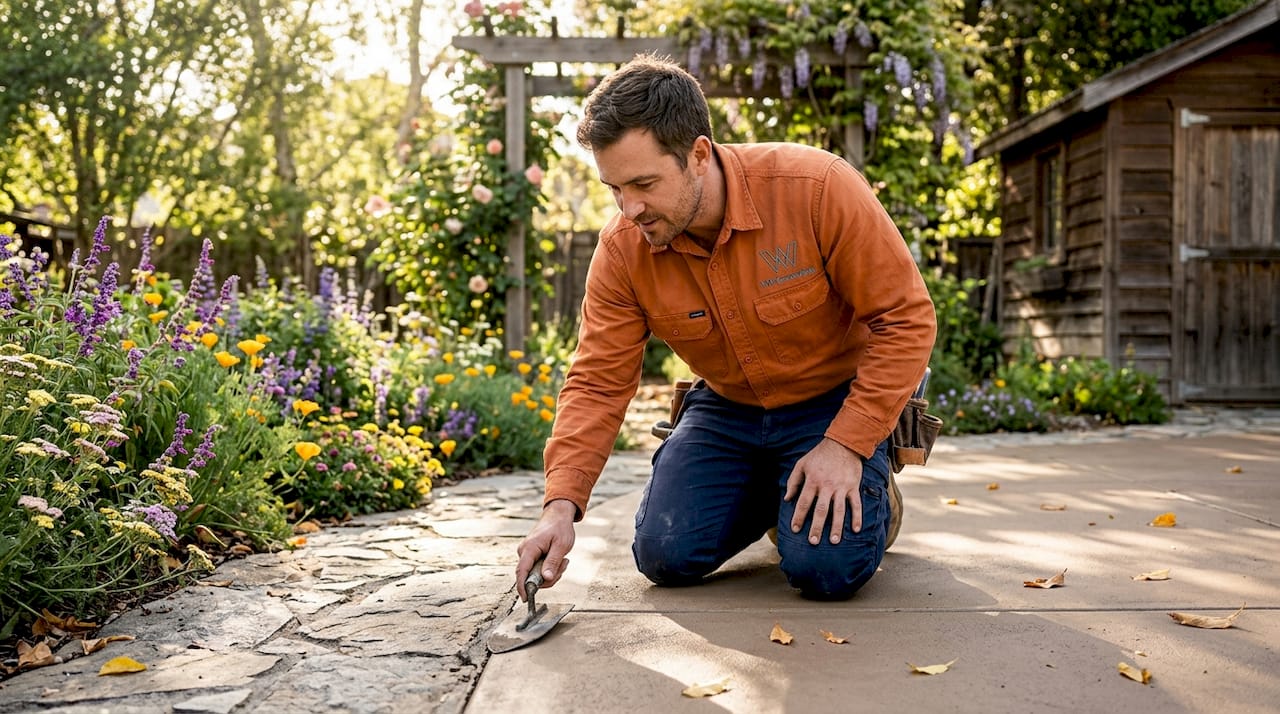
How to incorporate concrete outdoors in a way that avoids a cold, industrial feel comes down to material pairing. Experts consistently recommend mixing concrete with organic materials like teak, weathering steel, or vintage ironwork to balance its starkness. A concrete patio flanked by timber screening and native plantings reads completely differently from a bare slab in an open yard.
Pro Tip: If you are using a pale or polished concrete finish outdoors, add texture through the surrounding landscape. Ornamental grasses, rough-cut stone borders, and dark timber furniture all prevent the space from feeling like a showroom floor.
Safety and maintenance for outdoor concrete
Knowing how to incorporate concrete outdoors responsibly means taking safety seriously from the start. Smooth concrete becomes dangerously slippery when wet. That is not a minor concern on a patio near a pool or in a garden where sprinklers run regularly.
Broom-finished concrete solves this directly. Dragging a stiff-bristled broom across freshly placed concrete creates shallow ridges that grip shoe soles even when the surface is soaking wet. The timing is precise: brushing must happen after the bleed water evaporates but before the concrete sets fully, which requires an experienced hand to get right.
Ongoing maintenance is straightforward but cannot be skipped:
- Seal every 2 to 3 years: Sealing outdoor concrete blocks moisture penetration that causes cracking and staining over time.
- Clean regularly: A stiff broom and occasional pressure wash removes dirt, organic debris, and algae before they degrade the surface.
- Check expansion joints: Joints allow slabs to move with temperature changes. Cracked or missing sealant in joints lets water in, which accelerates damage in freeze-thaw cycles.
- Address cracks early: Small surface cracks filled quickly with concrete caulk stay small. Ignored, they grow and allow water to undermine the slab base.
- Manage drainage: Proper drainage design prevents water pooling on the surface, which is both a safety hazard and the primary cause of concrete deterioration outdoors.
The durability of concrete in gardens depends almost entirely on how well these basics are handled. A concrete patio that gets sealed annually and cleaned seasonally will outlast virtually any other outdoor surface option.
Integrating concrete with landscaping
Concrete does not exist in isolation. The spaces where concrete outdoor design truly shines are those where the hardscape and softscape work as a system. Getting that balance right requires deliberate planning.
Here is a practical sequence for integrating concrete with your broader outdoor space:
- Map your hardscape first. Decide where concrete surfaces will go before planting. This prevents having to cut beds awkwardly around poured slabs or retrofit drainage later.
- Account for tree placement carefully. Roots from established trees can lift and crack concrete slabs within a few years. Keep concrete at least 3 to 4 feet from mature tree trunks, or use root barriers during installation.
- Choose complementary furniture and materials. Concrete outdoor furniture works best when it anchors a space rather than filling it. A single concrete bench or fire table can act as the focal point, with lighter materials like aluminum and teak furniture filling in around it.
- Plan for lighting early. In-ground or surface-mounted lighting installed during the pour costs a fraction of retrofitting. Well-placed lighting at ground level transforms a concrete patio at night into something genuinely atmospheric.
- Incorporate water features strategically. Concrete-edged ponds, channels, or fountains tie the hardscape to a water element, and stylish paving solutions can extend the visual language of the concrete into surrounding paths.
- Soften edges with planting. Ground cover plants at the perimeter of concrete slabs blur the boundary between hard and soft surfaces. Creeping thyme or dwarf mondo grass planted along concrete edges creates an organic transition that makes the whole space feel designed.
Professional installation is where this integration actually gets executed correctly. Grading, drainage slopes, and joint placement all need to account for the surrounding landscape, not just the concrete slab in isolation.
What I’ve learned from watching concrete projects go wrong
I’ve seen hundreds of outdoor concrete projects at VW Concreting, and the pattern in the ones that underperform is almost always the same. The homeowner focused entirely on the finish and skipped the conversation about drainage. Six months later, water is pooling against the house foundation or tracking across the patio surface instead of away from it.
My honest take: the finish choice matters, but the concrete’s relationship with water is what determines whether the project works long term. Before you spend time in a showroom picking between stamped and stained finishes, spend five minutes with your contractor talking about where water goes during a heavy rain. If they cannot answer that question clearly, that is your signal.
I also think the material pairing piece is underrated. I’ve watched clients fall in love with a polished concrete finish and then fill the space with all-concrete furniture, only to feel like they are sitting inside a parking structure. Concrete acts as an anchor in outdoor spaces, and anchors need contrast to work. One concrete element per zone, surrounded by timber, textiles, and plants, creates a space that feels both grounded and livable.
The homeowners who get the most out of using concrete for landscaping are the ones who treat it as part of an ecosystem, not a standalone product. Concrete that connects visually and functionally to what surrounds it transforms an outdoor area in a way that no other material can replicate at the same price point.
— Vic
Ready to transform your outdoor space?
If you have been thinking about a new patio, entertainment area, or landscaped outdoor room, the right concrete work makes everything else possible.
VW Concreting has completed over 145 outdoor projects across Melbourne, handling everything from foundational driveways and slabs to decorative finishes and full landscaping integration. Whether you need a stamped concrete patio, a polished outdoor entertaining area, or a complete outdoor landscaping solution, the team brings the technical depth to get every detail right. Get in touch with VW Concreting to discuss your project and see what is possible for your outdoor space.
FAQ
What is the main role of concrete in outdoor rooms?
Concrete serves as the structural and visual foundation of outdoor rooms, providing durable flooring, seating, countertops, and pathways that withstand weather and heavy use for decades.
What concrete finish is safest for outdoor patios?
Broom finish is the most practical choice for outdoor safety. The shallow ridges created during the finishing process provide grip even when the surface is wet, reducing slip risk significantly.
How do you maintain outdoor concrete long term?
Seal the surface every two to three years, clean it regularly with a pressure washer, and address cracks early with concrete caulk. Proper maintenance prevents the moisture damage that shortens concrete’s lifespan outdoors.
Can concrete work well with garden plantings and soft landscaping?
Yes. Concrete works best when paired with organic materials like timber, plants, and stone. Planting ground cover along concrete edges and using natural materials for furniture soften the industrial look and create cohesive outdoor spaces.
Is stamped concrete worth the extra cost for patios?
Stamped concrete costs 30 to 50 percent more than plain concrete but delivers the appearance of natural stone or brick with greater structural durability. For homeowners prioritizing aesthetics and longevity, the investment makes sense.
Leave A Comment