TL;DR:
- Choosing the correct screw grade, thread system, and type is essential for Australian projects, especially in coastal or harsh environments. Premium stainless steel and galvanised fasteners prevent corrosion, while matching screw design to materials ensures strength and durability. Proper pre-drilling, verifying thread compatibility, and selecting suitable head types are critical to successful construction and long-lasting results.
Walk into any hardware store in Australia and you’ll find an overwhelming wall of screws. Knowing which ones to grab for your specific project is the difference between a job that holds for decades and one that fails at the worst moment. The types of screws used in Australia span everything from fine wood screws for furniture through to heavy structural lag bolts and coastal-grade 316 stainless steel fasteners designed to survive salt air. This guide cuts through the confusion with practical, specific information on screw selection for DIY projects, professional builds, and everything in between.
Table of Contents
- Key takeaways
- 1. Types of screws used in Australia: the selection criteria
- 2. Wood screws for timber projects
- 3. Machine screws for metal and pre-tapped holes
- 4. Self-tapping and self-drilling screws
- 5. Lag screws for heavy structural connections
- 6. Stainless steel screws: grade 304 vs 316
- 7. Hot-dip galvanised screws
- 8. Comparison of major screw types used in Australia
- 9. Practical recommendations for common Australian projects
- What I’ve learned from years on Australian building sites
- Get your fastener selection right from the start
- FAQ
Key takeaways
| Point | Details |
|---|---|
| Grade matters near the coast | Use 316 stainless steel in coastal or marine zones; 304 grade is insufficient for salt-heavy atmospheres. |
| Thread systems differ | Australia uses both metric and imperial threads; always confirm compatibility before purchasing. |
| Screw type follows material | Wood screws, machine screws, and self-drilling screws each suit specific materials and should not be swapped arbitrarily. |
| Pilot holes extend screw life | Pre-drilling prevents timber splitting and gives screws maximum holding strength. |
| Cost reflects environment | Budget screws work fine indoors; harsh outdoor or coastal sites justify premium stainless or galvanised options. |
1. Types of screws used in Australia: the selection criteria
Choosing the wrong screw for an Australian project does not just create extra work. It creates structural risk, premature corrosion, and costs that compound over time. Before you look at any specific screw type, you need to understand the four criteria that drive every smart selection decision.
Corrosion resistance is the most critical factor for Australian outdoor projects. The continent’s diverse climate means some sites face extreme coastal salt spray while others deal with harsh UV and temperature swings. 316 grade stainless steel contains molybdenum, which resists the chloride-induced pitting that degrades 304 grade near shorelines. For inland, sheltered applications, 304 grade or even galvanised screws provide adequate protection at lower cost.
Material compatibility determines thread design and screw profile. Softwood timber needs a coarser thread pitch with more aggressive flights to grip fibres. Metal demands finer threads or a self-tapping tip. Masonry needs a completely different fastener category altogether. Mixing these up strips the material and destroys holding power.
Thread system is an underappreciated source of frustration in Australian workshops. Both metric and imperial threads are in active use here, particularly in older machinery and imported equipment. Metric threads are labelled by diameter (M5, M6) while imperial threads use UNC or UNF designations. Force-fitting the wrong thread into a tapped hole damages both the screw and the workpiece.
Head and drive type affects both the tools you need and the holding behaviour of the fastener. Phillips heads are common but cam out under high torque. Torx and Pozidrive heads transfer more torque without slipping, which matters when you are driving dozens of screws with a power tool.
- Corrosion resistance: match grade to environment (316 for coastal, 304 for general outdoor, zinc for indoor)
- Material compatibility: use the thread profile designed for the base material
- Thread system: confirm metric or imperial before buying in bulk
- Head type: choose Torx or Pozidrive for power tool applications
- Screw length: as a rule, embed at least two thirds of the screw length into the base material
Pro Tip: When buying screws for an outdoor deck in a coastal suburb, do not rely on the packaging description alone. Check the grade number stamped on the head or request a material certificate from the supplier.
2. Wood screws for timber projects
Wood screws are the workhorses of Australian residential construction and furniture making. Their partially threaded shank is a deliberate design feature, not a cost-cutting measure. The smooth upper section allows the top timber piece to be drawn tight against the base piece as the thread pulls down. A fully threaded screw in the same situation can jack the two pieces apart.
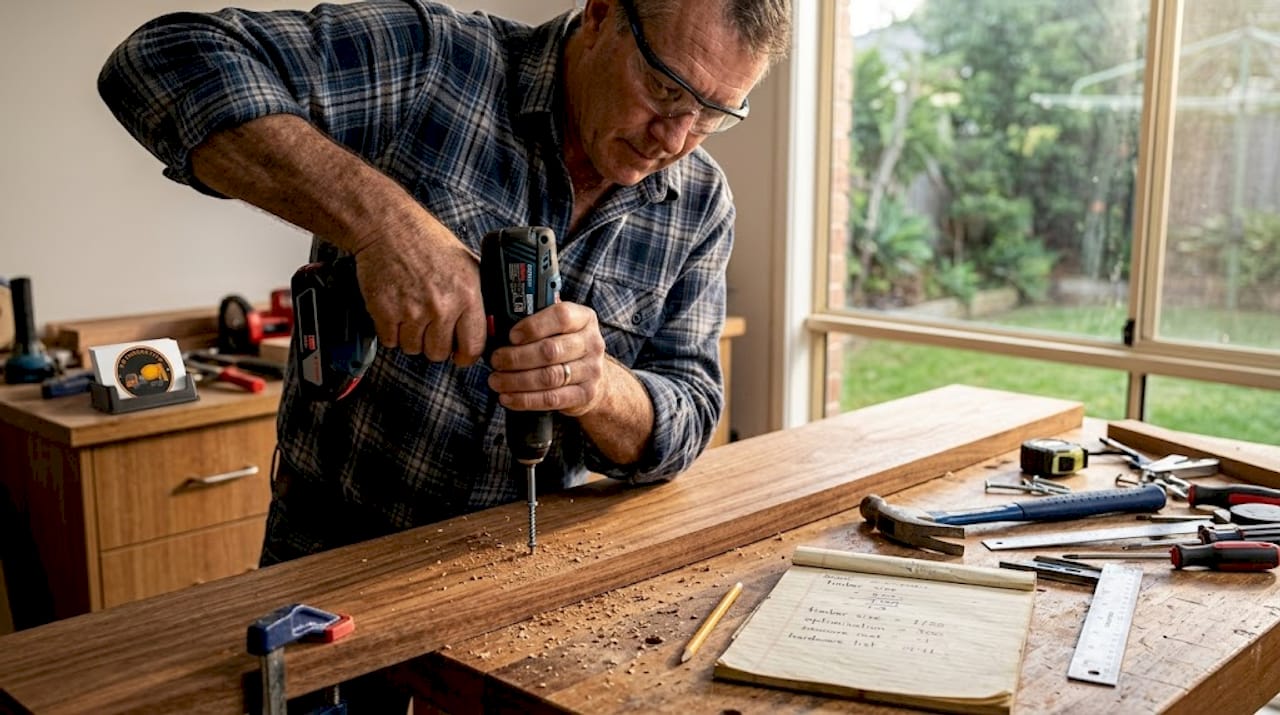
The coarse thread pitch bites aggressively into timber fibres, generating excellent pull-out resistance. Bugle-head wood screws are the dominant form in Australian construction, designed to sink flush into timber without a countersink bit. Chipboard screws use a finer, fully threaded design suited to particle board, MDF, and plywood where the fibres are shorter and denser.
For screw varieties in woodworking, match the screw length to the job. A 65mm screw joining 19mm decking boards to a 90mm joist gives you around 46mm of thread penetration into the joist, which is solid. Going shorter than two thirds penetration reduces holding power noticeably.
Pro Tip: Always pre-drill hardwoods like Blackbutt and Spotted Gum. These timbers will split along the grain without a pilot hole, and the split is rarely visible until the project is finished.
3. Machine screws for metal and pre-tapped holes
Machine screws have a consistent thread from tip to head, designed to thread into pre-tapped holes or used with a matching nut. They are the correct choice when you are joining metal components, attaching brackets to pre-drilled steel, or working on any application requiring precise thread engagement.
M3 to M6 machine screws cover the most common range in Australian construction and DIY. M3 suits electronics and fine instrument work. M4 handles medium furniture brackets and light engineering. M5 is standard for automotive components. M6 moves into heavy structural furniture and machinery.
Head profiles vary widely. Pan head screws sit above the surface and suit applications where a flush finish is not required. Countersunk heads sit flush with the surface, important for moving parts or anywhere the head could catch. Hex head machine screws accept a spanner, which is preferred when high torque is needed.
4. Self-tapping and self-drilling screws
Self-tapping screws cut their own thread as they are driven, eliminating the need to pre-tap a hole in sheet metal or plastic. They are fully threaded for exceptional holding power and are widely used in roofing, cladding, and steel-frame construction across Australia.
Self-drilling screws (often called Tek screws on Australian building sites) go a step further. The drill-point tip bores through steel without pre-drilling, then the thread follows immediately behind. This makes them fast and convenient for light gauge steel framing and metal roofing. The trade-off is that the drill point adds cost and can snap in thicker steel if the wrong point class is selected.
Bimetal screws combine a carbon steel drill point with a stainless steel shank and head. This gives you the drill-through capability of carbon steel with the corrosion resistance of stainless, making them the preferred choice for coastal roofing and cladding applications.
5. Lag screws for heavy structural connections
Lag screws (also called coach screws in Australia) are the largest and strongest fasteners in most DIY toolkits. They feature a coarse thread, a hex or square drive head, and a blunt tip designed to be driven with a spanner or socket set rather than a screwdriver. They are used for heavy timber-to-timber connections, attaching beams to posts, fixing retaining wall timbers, and securing heavy hardware to structural timber.
A typical lag screw used in Australian residential construction might be 10mm in diameter and 100 to 200mm long. They require a pilot hole to avoid splitting the timber and to make driving manageable. The holding strength of a correctly installed lag screw is significantly higher than any wood screw, making them the right choice for load-bearing applications like pergola frames, decks, and retaining walls.
6. Stainless steel screws: grade 304 vs 316
Not all stainless steel screws are equal, and in Australia this distinction is particularly important given the length of the coastline and the prevalence of coastal construction. 304 grade offers good general corrosion resistance but falls short in severe marine atmospheres where salt spray is constant. You will see characteristic rust streaks (called tea staining) on 304 screws within months in coastal zones close to the waterline.
316 grade adds molybdenum to the alloy, which closes the electrochemical pathways that chloride ions exploit to cause pitting corrosion. For any project within one kilometre of breaking surf, 316 is the minimum acceptable grade. Jetties, boat sheds, beachfront decking, and coastal fence posts all fall into this category.
410 grade stainless is a different category entirely. It is a heat-treatable martensitic steel with high strength suitable for self-drilling into hardwood and metal, but its corrosion resistance is well below 304 or 316. Reserve 410 for dry, protected environments where strength is the priority over corrosion resistance.
For those wanting a deeper understanding of why stainless fasteners are preferred for Australian outdoor builds, the grade-to-environment match is the single most important concept to absorb.
7. Hot-dip galvanised screws
For construction projects where 316 stainless steel is cost-prohibitive but 304 is inadequate, hot-dip galvanised screws sit in a useful middle ground. Hot-dip galvanising creates a thicker zinc coating than electro-zinc plating, giving meaningfully better corrosion protection. Galvanised screws are commonly used in treated pine retaining walls, fencing, and general outdoor framing where the timber treatment itself (ACQ or CCA) would corrode uncoated steel rapidly.
One important caveat: many treated timbers react with electroplated zinc coatings and accelerate corrosion. Hot-dip galvanised or 316 stainless are the only appropriate choices in contact with treated pine.
8. Comparison of major screw types used in Australia
| Screw type | Best material | Corrosion resistance | Strength | Relative cost |
|---|---|---|---|---|
| Wood screw (zinc plated) | Timber, MDF | Low (indoor only) | Medium | Low |
| Machine screw (304 SS) | Metal, pre-tapped holes | Good (general outdoor) | Medium to high | Medium |
| Self-drilling Tek screw | Sheet steel, cladding | Good (304 or 316 grade) | Medium | Medium |
| Lag/coach screw (galv.) | Structural timber | Good (treated pine safe) | Very high | Medium |
| 316 stainless wood screw | Decking, coastal timber | Excellent | High | High |
| Bimetal self-drilling | Steel roofing, coastal | Excellent | High | High |
| 410 stainless self-drill | Hardwood, dry metal | Low | Very high | Medium |
Phillips drive suits general DIY. Torx drive handles high-torque power tool applications without cam-out. Pozidrive is common on European-made screws and requires a Pozidrive bit, not a Phillips bit (they look similar but perform very differently). Hex head screws accept standard sockets, which is useful when working at awkward angles.
9. Practical recommendations for common Australian projects
Choosing the right screw becomes much easier when you think in terms of project category rather than individual specifications.
- General indoor DIY and furniture: Zinc-plated wood screws or machine screws in M4 or M5 are completely adequate. Invest in quality Torx-drive screws to reduce cam-out frustration.
- Outdoor timber decking (inland): Hot-dip galvanised or 304 stainless decking screws, 65mm to 75mm length for standard 90mm joists. Pre-drill hardwood species without exception.
- Coastal decking and outdoor furniture: 316 stainless steel screws are non-negotiable within one kilometre of the ocean. The price premium is recovered quickly by avoiding replacement costs.
- Steel frame and metal roofing: Self-drilling Tek screws in the appropriate point class for the steel thickness. Bimetal variants for coastal sites.
- Retaining walls and structural timber: Hot-dip galvanised lag screws. Never use bright zinc-plated coach screws in contact with treated pine.
- Drywall and plasterboard: Dedicated drywall screws with a bugle head and coarse thread for timber framing, fine thread for steel framing.
- Concrete and masonry anchoring: Masonry screws (often called Tapcons) with a hex head and hardened tip designed to bite directly into concrete without a plug.
Pro Tip: When using a cordless driver for decking, buy screws with Torx drive heads. The driver market in Australia is shifting toward compact 3-in-1 cordless tools that handle drilling, driving, and impact modes, but cam-out from Phillips heads will chew through all that versatility in a single afternoon.
For metric versus imperial confusion on older imported machinery, always verify thread compatibility before driving anything. The cost of a tapped-out hole far exceeds the cost of checking.
What I’ve learned from years on Australian building sites
In my experience, the single most expensive mistake made on Australian construction projects is under-specifying screws for coastal environments. Builders will spend thousands on quality timber and hardware, then save forty dollars by using 304 stainless instead of 316. Two years later the decking boards are stained rust-orange and the client is unhappy.
I’ve also seen the thread system confusion cause real damage. Force-fitting an imperial screw into a metric hole strips the thread completely. The fix costs five times more than doing it right the first time. Always confirm the thread system before ordering bulk fasteners for any project involving older or imported equipment.
Self-tapping screws are genuinely underutilised on Australian sites. Many builders default to drilling and pre-tapping metal when a quality self-tapper would do the same job in half the time. The installation guide for Australian projects I point new tradespeople toward emphasises this, and I agree with its approach.
My personal go-to for most outdoor timber work is a 316 stainless Torx-drive bugle head screw in 65mm. It works on hardwood and softwood, handles coastal and inland conditions, and the Torx drive means I am not fighting cam-out when I am on my third hour of decking installation.
— VW
Get your fastener selection right from the start
At VW Concreting, we understand that durable outdoor construction starts with the right materials at every level, from the concrete slab beneath your feet to the fasteners holding your deck, fence, or pergola together. With over 145 completed projects across Melbourne, our team has worked through the full range of Australian environments and material requirements. Whether you are planning a new driveway or outdoor slab and need guidance on how all the structural elements fit together, our experienced crew can point you in the right direction. Reach out to VW Concreting to discuss your next project and get advice grounded in real Melbourne building experience.
FAQ
What are the most common screws used in Australian construction?
Wood screws, self-drilling Tek screws, machine screws, and hot-dip galvanised coach screws are the most frequently used types on Australian residential and commercial building sites.
What screw grade do I need for a coastal deck in Australia?
Use 316 (A4) grade stainless steel screws for any decking or outdoor project within one kilometre of the ocean. 304 grade is insufficient in marine atmospheres and will show corrosion within months.
Are metric or imperial screws standard in Australia?
Metric screws are the current standard for Australian construction and manufacturing. However, both systems are in use, particularly in older machinery and imported equipment, so always confirm thread type before purchasing.
Can I use the same screws for timber and metal?
No. Wood screws have a coarse thread designed for timber fibres and are unsuitable for metal. Metal applications require machine screws with pre-tapped holes or self-tapping screws designed to cut threads into sheet metal.
What is the difference between self-tapping and self-drilling screws?
Self-tapping screws cut a thread into a pre-drilled hole. Self-drilling screws (Tek screws) have a drill-point tip that bores the hole and cuts the thread in a single operation, making them faster for sheet steel and metal cladding applications.
Recommended
- Screw types explained: Complete guide for Australian builders – Aussie Nails and Fasteners Warehouse
- Essential fastener types for Australian construction: 8 key picks – Aussie Nails and Fasteners Warehouse
- Best woodworking fastener types for Australian projects – Aussie Nails and Fasteners Warehouse
- How to choose fasteners and screws for Victorian projects
Leave A Comment