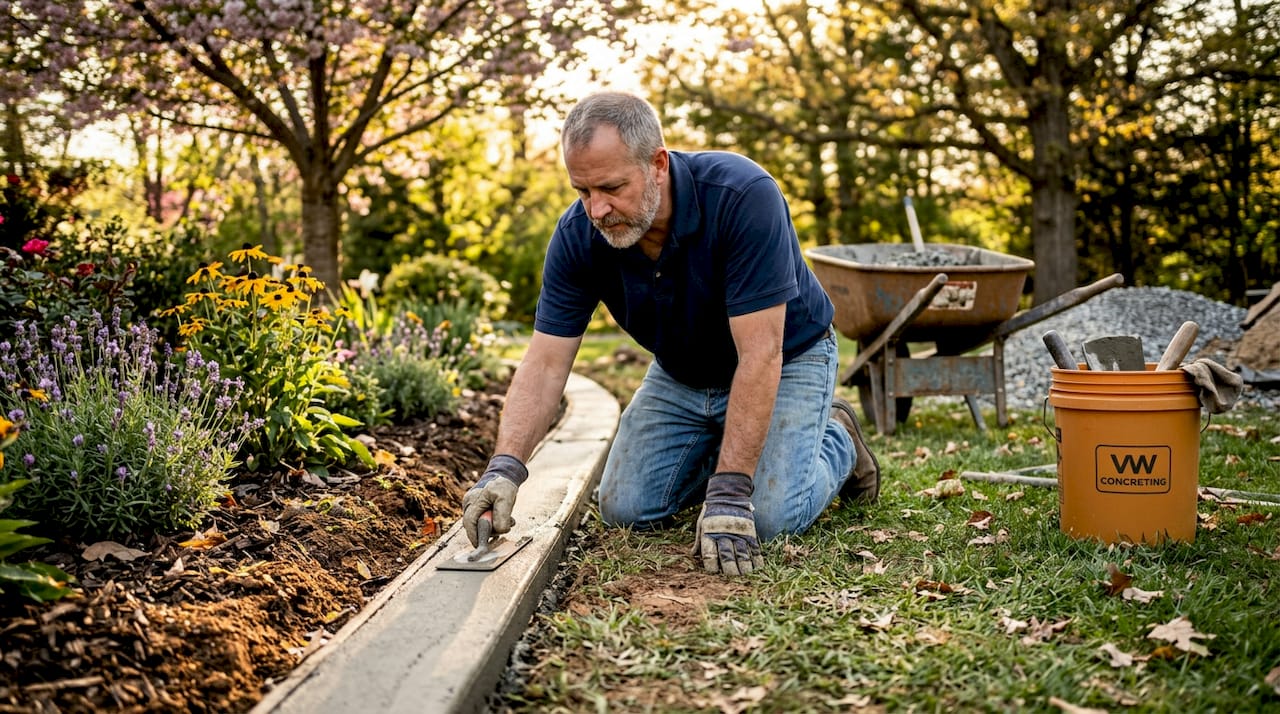
Most homeowners think concrete edging is a finishing touch. Something you add at the end of a landscaping project to make everything look tidy. That assumption costs people money, time, and a garden that slowly deteriorates. The role of concrete edging landscaping goes far deeper than appearance. Done right, concrete edging controls erosion, stops grass from invading your garden beds, reduces maintenance by a meaningful margin, and directly increases what your property is worth. This article breaks down how it works, what types exist, how to install it properly, and how to keep it looking sharp for decades.
Table of Contents
- Key takeaways
- The role of concrete edging in landscaping
- Types and styles of concrete edging
- Installation essentials and common mistakes
- Maintaining your concrete edging
- How concrete edging adds property value
- My honest take on concrete edging
- Ready to get your edging done right?
- FAQ
Key takeaways
| Point | Details |
|---|---|
| Functional, not just decorative | Concrete edging controls erosion, stops weed intrusion, and simplifies mowing along garden borders. |
| Long lifespan with low upkeep | Concrete edging can last 30+ years with basic sealing and seasonal inspection. |
| Installation base matters most | A compacted 4-inch gravel base prevents cracking and ensures stability over time. |
| Edging is not a paver restraint | Landscape edging and structural paver restraints serve different functions and must not be confused. |
| Real property value gains | Well-designed concrete edging can boost property value by up to 10% and curb appeal by around 20%. |
The role of concrete edging in landscaping
Concrete edging does three things at once that most materials cannot. It holds soil in place, creates a hard barrier against spreading turf, and defines the visual structure of your outdoor space. When you understand all three functions working together, you start to see why concrete is the material most professional landscapers reach for first.
The soil retention function is the one people underestimate most. On even a gentle slope, heavy rain gradually shifts topsoil away from planting beds. Concrete edging acts as a low wall that catches and holds that movement. According to research, concrete edging reduces soil erosion by up to 50%. That is not a minor improvement. That is the difference between a thriving garden bed after three years and a depleted, patchy one.
The second major function is turf control. Grass is relentless. Without a solid barrier, runners from your lawn push under mulch and into your planting beds within a single growing season. Concrete edging sits deep enough in the ground that grass roots cannot cross it. That means less hand-pulling weeds, less herbicide, and less frustration every weekend.
The third function is what ties it together aesthetically and practically. A clean concrete edge defines exactly where your lawn ends and your garden begins. That line gives your mower a clear path to follow, which means cleaner mowing paths along garden borders and far less damage to plant roots from errant wheel passes. The result is a garden that looks intentional, not accidental.
- Prevents soil from washing out of raised beds and sloped garden areas
- Blocks grass runners and weed rhizomes from entering planting zones
- Reduces overall garden maintenance effort by approximately 30% compared to unedged beds
- Creates consistent mowing lines that protect plant stems and root zones
- Provides a stable edge that holds mulch in place through wind and rain
Pro Tip: If your yard has even a slight grade, install your concrete edging with a slight outward lean away from the bed. This redirects water flow and reduces the pooling that causes frost heave over winter.
Types and styles of concrete edging
Concrete is not a one-size answer. The concrete landscape edging benefits you get depend on matching the right style to your garden’s character and your home’s architecture.
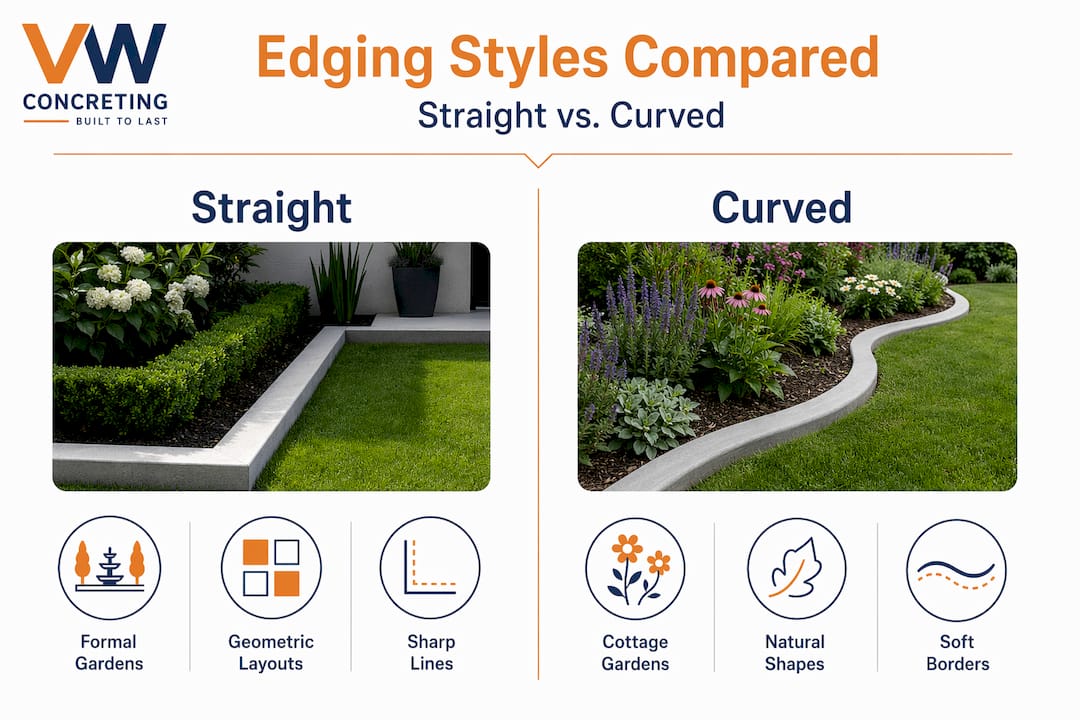
Straight edging works best for formal gardens, modern landscapes, and properties with geometric layouts. It projects order and intention. Pair it with low ornamental grasses or trimmed hedges and the whole yard feels architecturally considered.
Curved edging softens a yard considerably. It suits cottage gardens, naturalistic plantings, and homes with rounded architectural features. Curved concrete edging takes more forming effort during installation, but the payoff is a yard that feels organic rather than rigid.
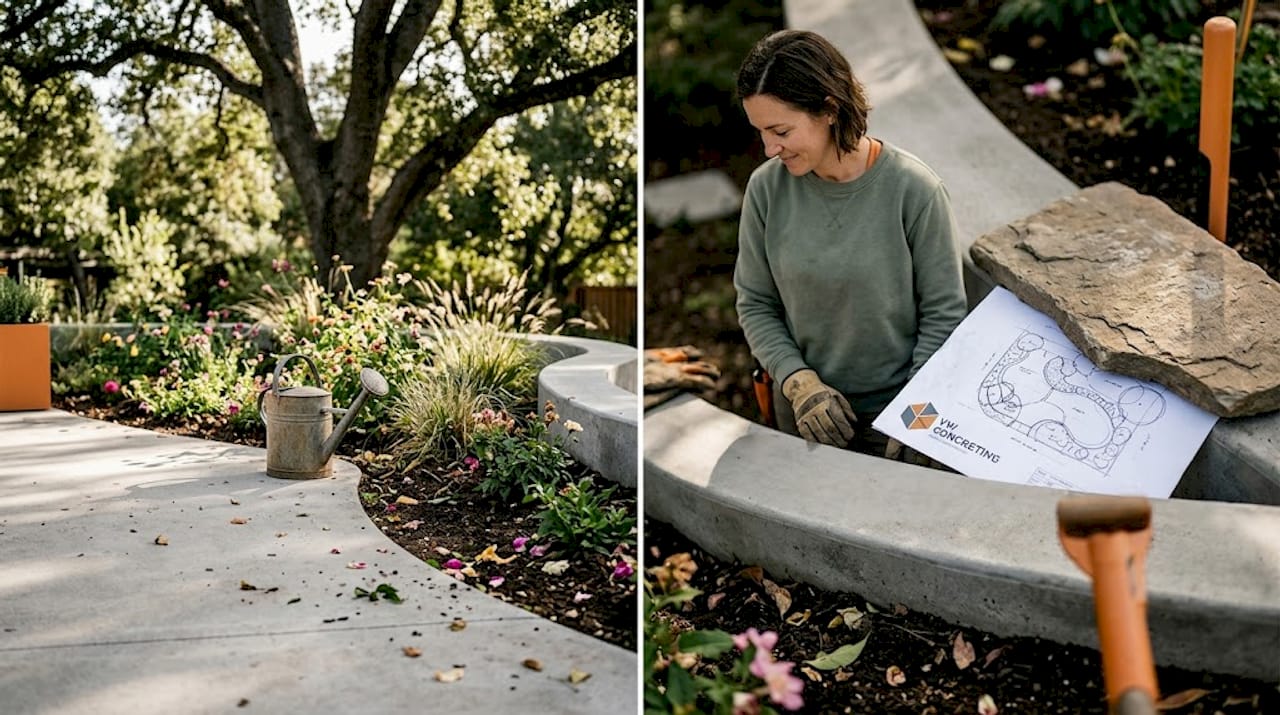
Stamped and decorative concrete edges are where things get genuinely interesting. Stamped concrete mimics the look of natural stone, brick, or timber at a fraction of the replacement cost. The textures hold up well because stamped concrete edging requires sealing to lock in the pattern and protect it from surface wear. Without sealing, those textures erode within a few seasons and the investment fades with them. For color options and how sealing interacts with pigmented concrete, the colored concrete finishes offered by VW Concreting show how much personality a well-finished edge can add.
Colored concrete edging lets you match or contrast with your home’s palette. Earthy reds and warm tans complement brick homes beautifully. Gray and charcoal tones suit rendered or painted exteriors. The color is mixed into the concrete itself, so it does not chip or peel the way painted alternatives do.
| Edging type | Best for | Durability | Maintenance level |
|---|---|---|---|
| Straight concrete | Formal, modern gardens | Very high | Low |
| Curved concrete | Cottage, naturalistic designs | Very high | Low |
| Stamped concrete | Character gardens, premium finishes | High (sealed) | Medium |
| Colored concrete | Coordinated, custom designs | High (sealed) | Medium |
| Metal edging | Sleek, minimal looks | Medium | Low to medium |
| Plastic edging | Budget, temporary borders | Low | Medium to high |
| Natural stone | Rustic, heritage gardens | High | High |
Pro Tip: When choosing between stamped and plain concrete, ask yourself how much sun the edge gets. South-facing edges in full sun expand and contract more aggressively through seasons, so a sealed, plain concrete profile will outlast a stamped one in high-UV positions without regular resealing.
Installation essentials and common mistakes
Good concrete edging starts below ground. Most failed installations trace back to shortcuts taken at the preparation stage, not problems with the concrete itself.
Here is the correct sequence for a durable installation:
- Mark your edge line using a garden hose or spray paint. Walk away and look at it from multiple angles before you dig. Curves that look right up close often look awkward from the house.
- Dig your trench to a minimum depth of 4 to 6 inches and a width that matches your planned edging profile. Consistency matters more than speed here.
- Compact the base. A 4-inch gravel base compacted firmly underfoot prevents the freeze-thaw cracking that destroys edging in colder climates. Do not skip this step or substitute loose soil.
- Set your forms. Flexible timber boards or purpose-made concrete forms hold the shape while the concrete cures. Secure them with stakes every 18 inches to prevent bowing.
- Pour and finish. Work in manageable sections. Tamp the concrete down to remove air pockets, then float the surface smooth. For curved sections, pour in shorter lengths so you can adjust the form as you go.
- Cure and seal. Allow at least 48 hours before removing forms and at least 28 days before applying a penetrating sealer. Rushing either step causes surface cracking.
The single most expensive mistake in concrete edging is confusing decorative landscape edging with structural paver restraints. These are not interchangeable. Landscape edging lacks the anchoring depth and vertical surface required to hold pavers in place under load. If you use decorative edging to restrain a paved surface, the pavers will migrate. Industry experts specifically note that structural-grade restraints are required for any hardscape installation. Use the right product for each application.
Other common errors that shorten edging life:
- Ignoring drainage slope, which causes water to pool against the edge and accelerate erosion behind it
- Pouring concrete directly onto unprepared soil without a gravel base
- Forming edges too narrow for the application, which creates fragile profiles that chip under mower contact
- Skipping the curing period and walking on or loading the edging within the first 24 hours
Maintaining your concrete edging
Concrete edging earns its reputation for longevity. The 30-plus year lifespan is realistic, but only if you put in a small amount of regular care.
Cleaning is the foundation of that care. Sweep your edging monthly to remove debris, leaf matter, and soil that hold moisture against the surface. Twice a year, pressure wash the edge with a low-to-medium setting. Avoid high-pressure blasting on stamped or textured surfaces, as it can gradually erode the pattern. For moss or algae buildup, a diluted white vinegar solution works well without damaging the concrete or the soil around it.
Sealing is the most important maintenance task. Apply a quality penetrating concrete sealer every two to three years. Properly sealed concrete edging resists staining, water intrusion, and UV fading far better than unsealed surfaces. This matters especially for colored and stamped profiles where the aesthetic value is closely tied to surface condition.
Seasonal inspections take ten minutes and prevent expensive repairs. After winter, check the full length of your edging for:
- Cracks wider than a hairline, which allow water infiltration and accelerate failure
- Sections that have shifted upward or settled unevenly, often caused by root pressure or drainage issues
- Weed growth at the base, which signals that mulch or soil has filled the gap between the edge and the lawn
Pro Tip: Fill hairline cracks immediately with a flexible concrete crack filler rated for exterior use. A crack left unsealed through one wet season widens significantly and may require full section replacement.
How concrete edging adds property value
Well-executed concrete edging is one of the few landscaping investments that pays a measurable return. Research shows that structured landscape edging boosts property value by up to 10% and curb appeal by roughly 20%. Those numbers reflect something real that buyers and appraisers respond to: a property where the outdoor space looks cared for, designed, and durable.
The visual effect is immediate. Clean concrete borders tell prospective buyers that the garden has been managed with intention. It removes the “project house” feeling that unedged, undefined gardens project. Landscaping with concrete borders signals permanence. Buyers do not worry about replacing or repairing it in the near term, which removes an objection before it forms.
Concrete edging’s advantages over cheaper alternatives compound over time. Plastic edging warps and yellows. Metal edging corrodes in wet climates. Natural stone shifts and fills with weeds. Concrete, correctly installed and sealed, holds its form and color for decades. That durability is a selling point in any market condition.
- Clean borders communicate a standard of outdoor care that elevates the whole property’s perceived value
- Defined planting beds make garden photography dramatically more appealing for listings
- Long-lasting materials reduce the “maintenance list” that buyers negotiate against in price discussions
- Decorative concrete landscape edges add visual detail that simple lawn alternatives cannot replicate
My honest take on concrete edging
I’ve spent enough time on landscaping projects to say this plainly: concrete edging is the element homeowners most often underfund and then most regret. What I’ve seen consistently is that people spend generously on plants, mulch, and lawn, then use cheap plastic edging to hold it all together. Within two years, the plastic has buckled, the beds are invaded with grass, and the whole investment looks tired.
The distinction between landscape edging and structural paver restraints is the one I stress with every client. In my experience, mixing these up is a $1,000 mistake waiting to happen. Using the wrong edging type for a paved surface causes paver migration that looks terrible and costs real money to fix.
What I’ve learned is that the base preparation determines 80% of the outcome. A DIY concrete edging project with careful base compaction will outlast a professionally poured edge on a poor base every single time. If you are going the DIY route, spend your time and energy on the gravel and compaction before you think about what the finished edge looks like.
My take is that concrete edging is one of the smartest dollar-for-dollar investments in any outdoor project. It earns back its cost in reduced maintenance and real property value, and it does it quietly for thirty years.
— Vic
Ready to get your edging done right?
If you’ve been putting off your garden edging project because the prep work feels overwhelming, VW Concreting is worth a call. With over 145 completed projects across Melbourne, the team handles everything from site preparation to final sealing on concrete edging installations of any size or style.
Whether you need straight borders for a contemporary front yard or custom stamped edges for a feature garden, VW Concreting delivers results that last. Explore the full range of landscaping services in Melbourne or review project-specific concreting work to get a sense of what’s possible. Contact the team to book a consultation and get a clear quote tailored to your property.
FAQ
What is the main role of concrete edging in landscaping?
Concrete edging defines garden borders, controls soil erosion, blocks grass and weed intrusion, and creates clean mowing lines. It functions as both a physical barrier and a structural garden element, not just a decorative finish.
How long does concrete garden edging last?
Concrete edging has a lifespan of 30 or more years with basic maintenance, including regular sealing every two to three years and prompt repair of any cracks.
Can I use landscape edging to restrain concrete pavers?
No. Landscape edging lacks the structural properties needed to hold pavers in place. Paved surfaces require structural-grade paver restraints anchored into a compacted base.
What base is needed for concrete edging installation?
A compacted gravel base of at least 4 inches in depth is the standard recommendation. This foundation prevents cracking from freeze-thaw cycles and keeps the edge level over time.
Does concrete edging increase home value?
Yes. Research indicates that well-installed concrete edging can increase property value by up to 10% and improve curb appeal by approximately 20%, making it one of the better-performing landscaping investments for homeowners.
Leave A Comment